UK Inflation Falls Sharply to 3.2% as Slowing Food Prices Clear Way for Rate Cut
UK CPI inflation fell to 3.2% in November 2025 from 3.6% in October — below the 3.5% forecast and the lowest in eight months — as food prices eased and Black Friday discounts bit. Core inflation cooled to 3.2%, financial markets priced in a more than 90% chance of a quarter-point Bank of England cut from 4%, and the pound fell 0.7% against the dollar.
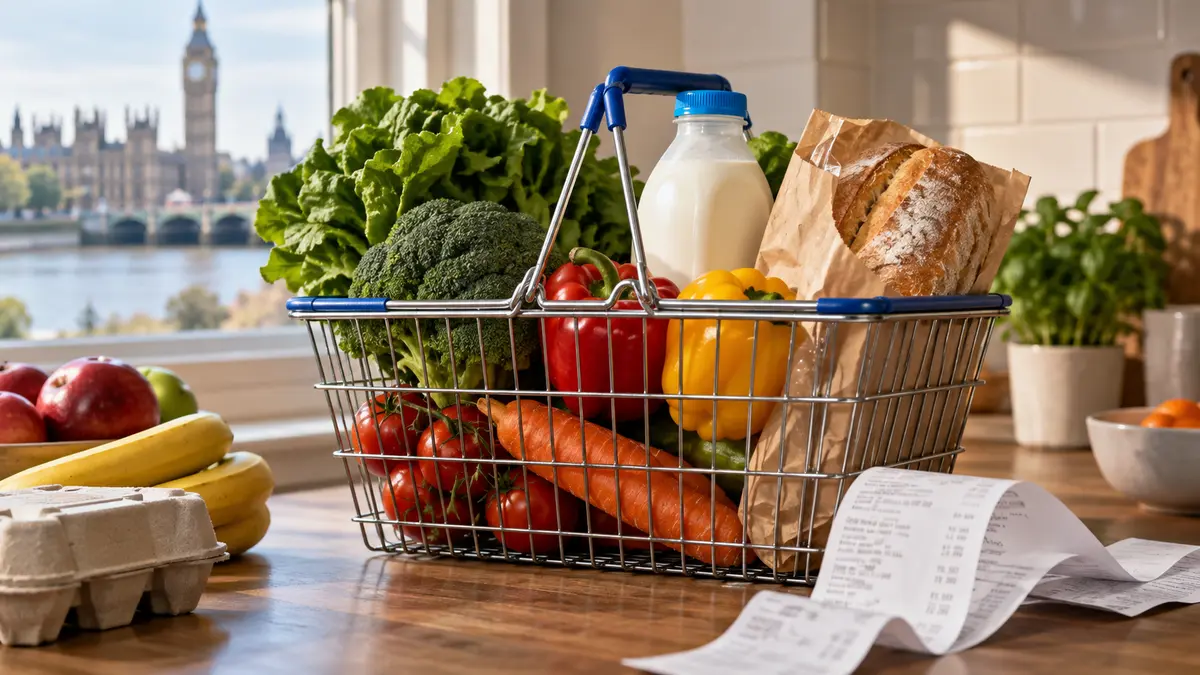
UK inflation fell by more than expected in November to the lowest level in eight months amid a slowdown in food prices, clearing the way for the Bank of England to cut interest rates on Thursday. In a crunch week for the economy, the Office for National Statistics (ONS) said the consumer prices index rate eased to 3.2% last month from 3.6% in October. City economists had forecast a modest drop to 3.5%, so the slowdown to the lowest reading since March came as a surprise and strengthened the case for the Bank to cut borrowing costs for a sixth time.
Food prices and Black Friday discounts led the fall
Grant Fitzner, the ONS chief economist, said lower food prices — which traditionally rise at this time of the year — were the main driver of the fall, with decreases seen particularly for cakes, biscuits and breakfast cereals. Tobacco prices also helped pull the rate down after a large rise a year ago, and the fall in the price of women's clothing was another downward driver. The latest reading showed food and drink price inflation slowed from 4.9% in October to 4.2%.
Kris Hamer, the director of insight at the British Retail Consortium, said extensive discounting across the Black Friday month had contributed to the decline, alongside big pre-Christmas promotions: “As a result, there were deals to be had, with bigger discounts seen for some meat products such as pork, lamb and chicken.” Some food products tumbled sharply compared with a year earlier:
- olive oil — down 16.2%;
- flours and other cereals — down 6.1%;
- pasta products and couscous — down 4.2%.

A rate cut “all-but nailed on”
Analysts said a cut in the Bank's base rate was “all-but nailed on” before its policymakers meeting on Thursday, as faltering economic growth and rising unemployment bear down on inflationary pressures. Core inflation, which excludes volatile items including energy and food and is closely monitored by the Bank, also cooled from 3.4% to 3.2%. “November's drop in UK inflation is just the latest sign that price pressures are abating and that the Bank of England has more work to do. We expect a rate cut on Thursday and two more next year,” said James Smith, the developed markets economist at ING.
The pound fell by 0.7% against the dollar on the currency markets. Trading in financial markets reflects a more than 90% chance of a quarter-point cut in the base rate from the current level of 4%, and government borrowing costs also fell.
Budget measures and remaining risks
The chancellor, Rachel Reeves, made tackling the cost of living a major target of last month's autumn budget, alongside £26bn of tax increases to help repair the public finances and fund the end of the two-child benefit cap. The Bank has said it expects the chancellor's measures — including relief on energy bills, prescription charges and fuel duty — could cut headline inflation by as much as half a percentage point next year. “Getting bills down is my top priority,” Reeves said. “I know families across Britain who are worried about bills will welcome this fall in inflation.”
Despite the slowdown, UK headline inflation remains significantly above the 2% target set by the government, and some economists warned that lingering pressures could limit how far the Bank can cut in 2026. Mel Stride, the shadow chancellor, said prices were still rising well above the target rate, “which will be deeply concerning for families”. Chris Belfield, the chief economist at the Joseph Rowntree Foundation poverty charity, said 7 million households were heading into Christmas unable to afford essential items, while unemployment is up to pre-pandemic levels and real earnings are barely growing. The story was reported by Richard Partington for The Guardian. The rate path now shapes borrowing costs for households and businesses across the United Kingdom.

















Leave a comment
Your comment is awaiting moderation.