Russia Sets Record Oil Exports to China in 2024 at 108.5 Million Tonnes, Widening Lead Over Saudi Arabia
Russia retained its status as China's top oil supplier in 2024, setting a new record of 108.47 million tonnes (2.19 million bpd) worth $60.2 billion, according to China's General Administration of Customs. Saudi Arabia remained second but saw shipments fall 8.5% to 78.64 million tonnes, while Malaysia rose to third with a 28.4% jump to 70.33 million tonnes as a transit hub for Iranian and Venezuelan crude.
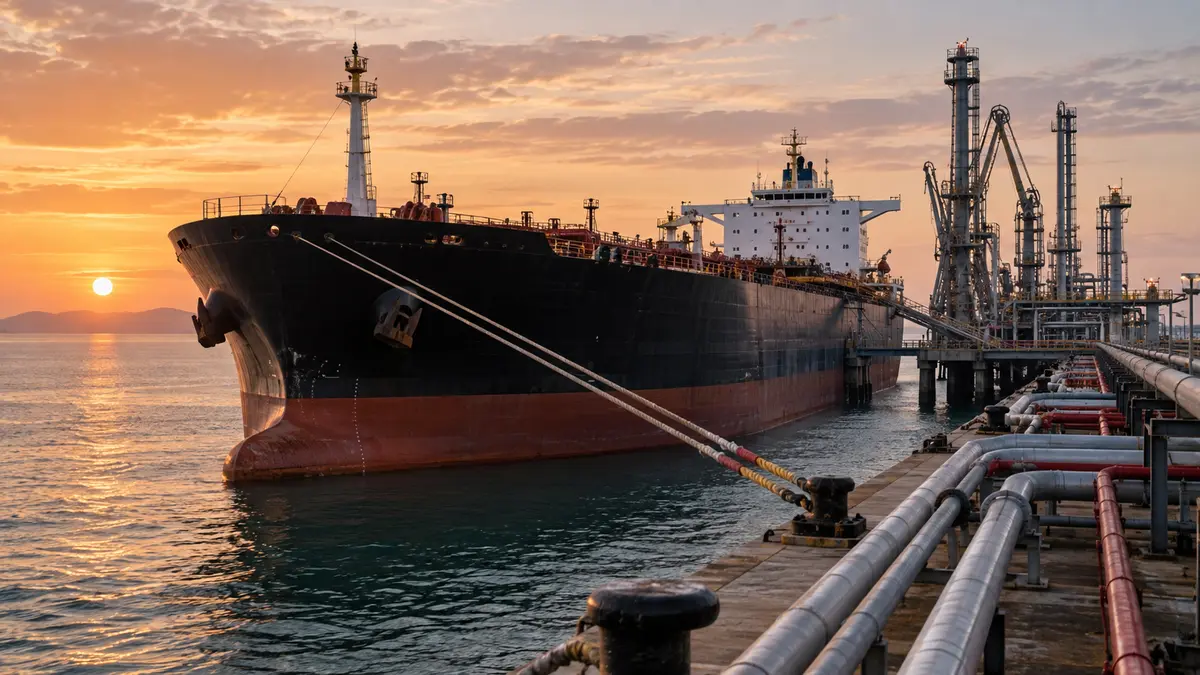
Russia retained its position as the leading oil exporter to China in 2024, increasing shipments to a new record of 108.47 million tonnes, according to data from China's General Administration of Customs reported by Interfax on 20 January 2025. In daily terms, Russian supplies averaged 2.19 million barrels per day, up from 2.14 million bpd in 2023. Beijing paid $60.2 billion for the crude, 2.8% more than the previous year.
Supplier rankings
- Russia: 108.47 million tonnes (2.19 mln bpd), $60.2 billion — record, +2.8% in value
- Saudi Arabia: 78.64 million tonnes (1.55 mln bpd), $47.86 billion — down 8.5% in volume
- Malaysia: 70.33 million tonnes (1.39 mln bpd), $38.3 billion — up 28.4%
- Iraq: 63.64 million tonnes (1.24 mln bpd), nearly $40 billion — up 7.7%

The Malaysia factor
Saudi Arabia's loss of market share is explained by growing supplies from Malaysia, which industry analysts consider a transit point for cheaper crude from Iran and Venezuela. China increased imports from Malaysia by 28.4% in 2024 to 70.33 million tonnes. Iraq dropped out of the top three but still increased shipments by 7.7%.
Overall Chinese imports
China imported 553.4 million tonnes of oil in 2024, 1.9% less than in 2023. In daily terms, supplies averaged 11.04 million bpd against 11.28 million bpd the year before. The cost of purchased crude fell 3.9% to $324.8 billion, reflecting lower average prices despite the record Russian volume. Russia's growing share of the Chinese market underscores the reorientation of its energy exports toward Asia following Western sanctions.
Implications for trade flows
The data underscores a structural shift in global oil trade patterns that accelerated after 2022. With European markets largely closed to Russian crude under embargo and price-cap regimes, Moscow has redirected the bulk of its seaborne and pipeline exports eastward. The ESPO pipeline from Eastern Siberia to the Pacific coast, along with tanker routes from Baltic and Black Sea ports, now feed Chinese refineries at volumes that have more than doubled since 2021. For Beijing, discounted Russian barrels have helped contain input costs for its independent refiners in Shandong province, even as total import volumes dipped slightly on weaker domestic fuel demand and a growing electric vehicle fleet.

















Leave a comment
Your comment is awaiting moderation.