The Cleanest Shirt in a Very Filthy Laundry: Why the US Economy Keeps Defying the Odds
Volkswagen's Transparent Factory in Dresden has closed while BMW runs its biggest plant in the world from Spartanburg, South Carolina — a contrast that frames the puzzle economists keep debating: why the US economy still grows around 2% a year despite tariffs, deportations and an oil shock. RSM's Joe Brusuelas points to capital expenditure at 13.9% of GDP and a halving of oil's unit contribution to output, while Bruegel's Rebecca Christie sees a cultural tolerance for risk — and warns that 4.2% inflation and deep inequality mark the limits of American resilience.
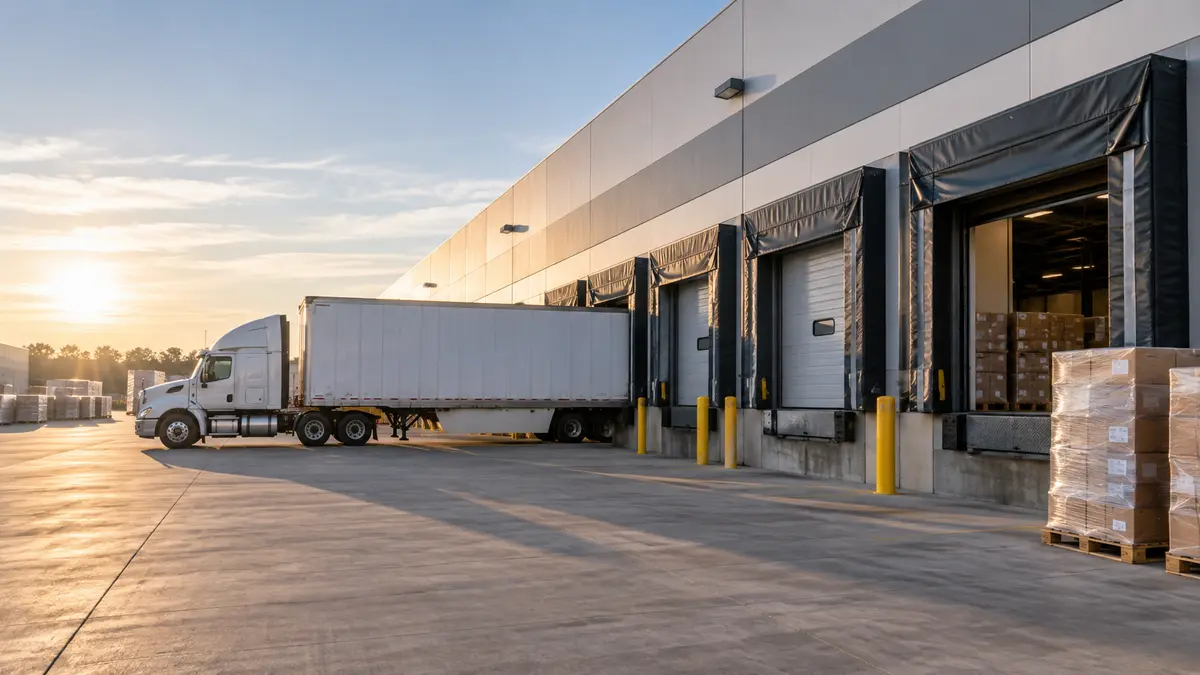
In Dresden, in eastern Germany, the final car rolled off the assembly line late last year at Volkswagen's 'Transparent Factory', a plant built to showcase the pinnacle of European industrial power. Thousands of miles away, in Spartanburg, South Carolina, a different German giant is doing the opposite: BMW is running its biggest plant in the world. Two companies from the same country, facing the same global storms, are moving in opposite directions — and that contrast, according to a BBC News analysis by New York business correspondent Michelle Fleury, helps explain a puzzle economists have been debating for a while: why has the American economy continued to outperform so many of its peers, despite facing the same global shocks?
The question matters far beyond the United States. If the world's largest economy can absorb a tariff war, a restructuring of its labour supply and an oil price shock without slipping into the stagflation that many forecasters feared, then the assumptions economists use to model advanced economies need revisiting. The answers gathered in the BBC's analysis point to three structural advantages — extraordinary capital investment, energy self-sufficiency born of the shale revolution, and a cultural tolerance for risk — but they also point to a warning light that has just started flashing: inflation running at its fastest pace in three years.
A tale of two factories
The Dresden plant was not an ordinary car factory. Volkswagen's 'Transparent Factory' was conceived as a showroom for European manufacturing at its most ambitious, a place where the pinnacle of the continent's industrial power was literally made visible behind glass. Its final car rolling off the line at the end of last year was therefore more than a production milestone; it was the closing of a statement. Meanwhile BMW, facing the same European cost structure and the same global demand conditions, has chosen to run its single biggest plant anywhere in the world from Spartanburg, South Carolina. Whatever else one might say about the two decisions, they capture a divergence that runs through the entire developed world right now: capital is finding the American operating environment easier to bet on than the European one.
That is genuinely puzzling, because the shocks of the past few years were supposed to hurt America just as much as everyone else, if not more. As the BBC analysis notes, much of the developed world has buckled under a succession of blows. President Trump's sweeping tariffs have disrupted global trade. Mass deportations are changing labour markets. And conflict in the Middle East has sent oil prices lurching. Any one of those would normally be enough to knock an economy off its growth path; the United States has been absorbing all three simultaneously.
Many economists expected those pressures to weigh heavily on the US. Instead, the economy has continued to grow at a steady pace. Inflation has proved stubborn at times, but the toxic combination of weak growth and persistently rising prices — the stagflation scenario that dominated forecasts after the tariff announcements — simply hasn't happened. The broader US economy has continued to expand at an annualised rate of around 2%, a pace that many of its peers would envy in the current global climate.
The trade war as proof of dynamism
Joe Brusuelas, chief economist at RSM, argues that the trade war itself became the strongest proof of American resilience. In his reading, the shocks that were supposed to weaken the economy instead demonstrated its underlying capacity to adapt. 'The own goals that the Trump administration has imposed on the US with respect to trade and immigration are probably the single best example of the underlying dynamism of the American economy,' he tells the BBC.
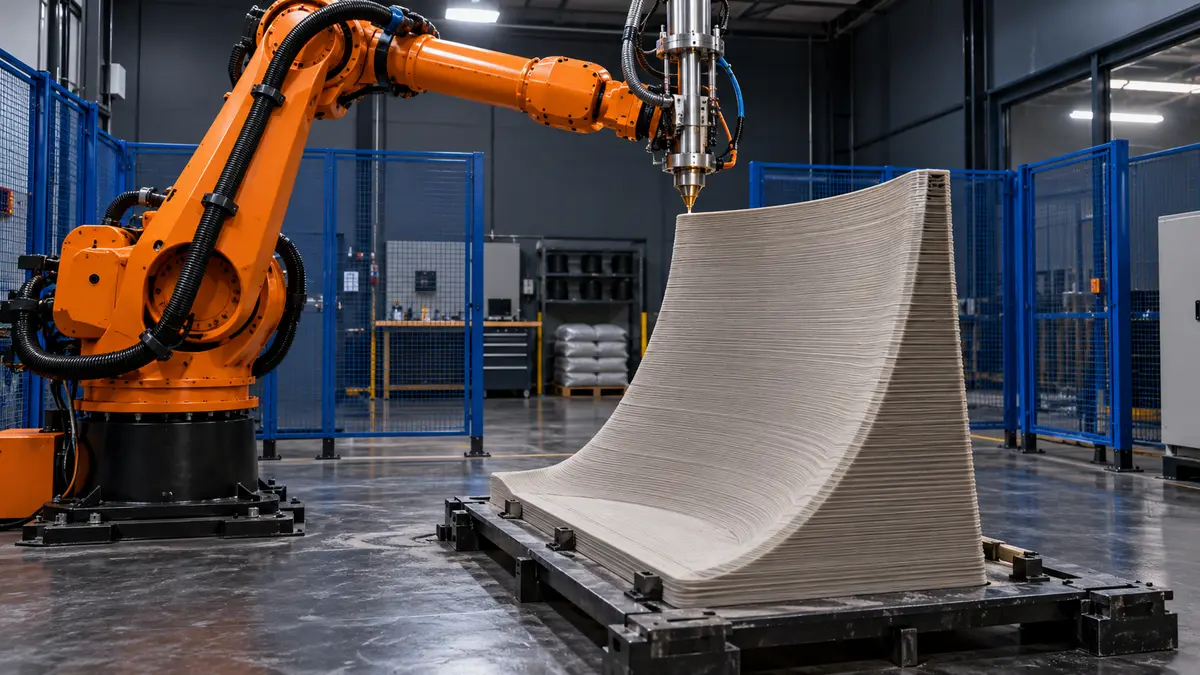
The mechanism he describes is straightforward but remarkable. Faced with a sudden tax on foreign components, US corporations did not do what standard margin arithmetic would predict. They didn't accept lower margins, and for the most part they didn't simply pass the full cost onto consumers and wait for demand to recover. They invested harder. The tariff wall, in effect, became a signal to build, automate and re-engineer supply lines rather than a reason to retrench.
The numbers Brusuelas cites are striking. 'CapEx (capital expenditure) right now is 13.9% of US GDP,' he says. 'That should be slowing, given the mix of supply and demand shocks the economy is absorbing, and it's not.' Capital expenditure at nearly a seventh of national output is a historically elevated share, and the fact that it has not decelerated through a period of trade disruption, labour market restructuring and energy price volatility tells us something important about business confidence. Companies do not commit 13.9% of GDP to plant, equipment and technology unless they expect the demand environment on the other side of the shocks to reward that commitment.
Much of the pressure from the shocks, the analysis suggests, has been offset by a notable rise in productivity. That is the quiet half of the story that deserves more attention. Investment on its own can overheat an economy; investment that translates into productivity growth expands the economy's capacity at the same time it adds demand. The combination is why growth has held around 2% annualised while the inflation impulse from tariffs has been partially absorbed rather than fully passed through — at least so far.
It is worth setting out the offsetting forces side by side, because the resilience is not mysterious once the components are listed:
- The shocks: sweeping tariffs disrupting trade, mass deportations changing labour markets, and Middle East conflict pushing oil prices higher.
- The offsets: capital expenditure running at 13.9% of GDP instead of slowing, a notable rise in productivity, and an energy sector transformed by two decades of shale development.
- The result: growth around 2% annualised, a labour market that added 172,000 jobs in May — smashing expectations — and no stagflation.
The energy shield built by fracking
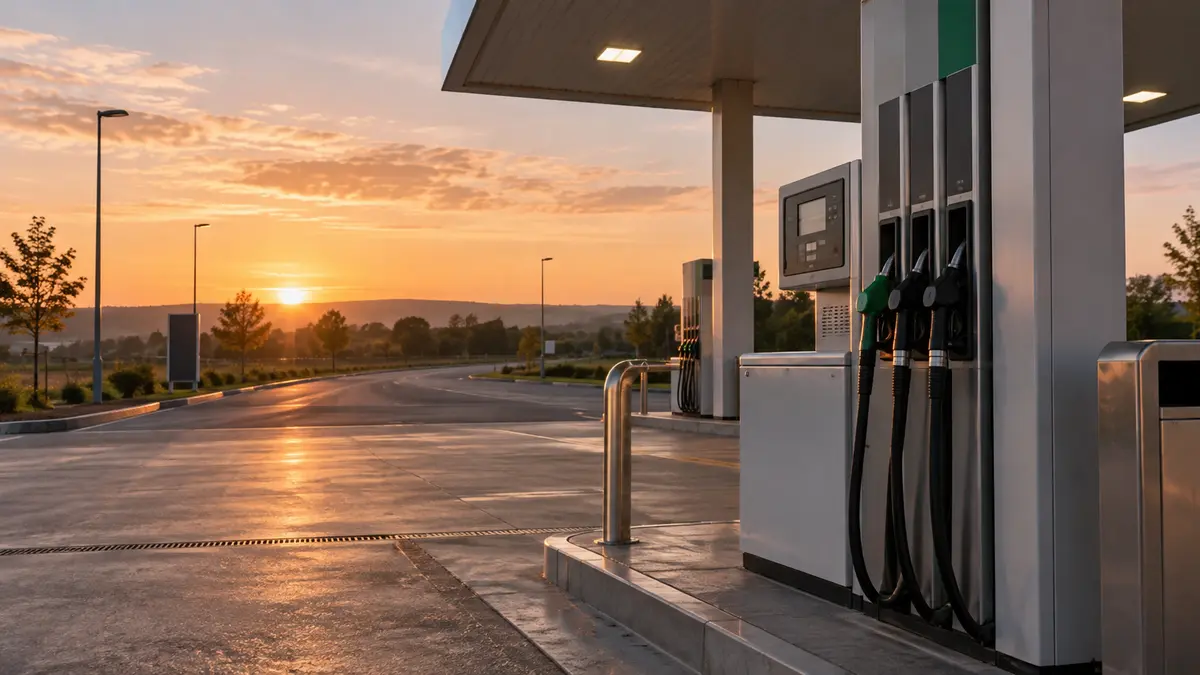
Energy markets offer another explanation for the outperformance, and perhaps the most underappreciated one. The war in the Middle East has pushed oil prices higher — a development that historically would have posed a major threat to US growth. Every oil shock of the post-war era, from the 1970s onward, arrived as a tax on American consumers and industry because the United States depended on imported energy. That transmission mechanism has been fundamentally altered.
The shale revolution changed America's exposure to energy shocks. Over the past two decades, the US has become one of the world's largest oil and gas producers, while businesses have steadily reduced their reliance on petroleum. The result is that a given increase in the oil price now does far less damage to the American economy than the same increase would have done in an earlier era — and, because the country is a major producer, higher prices also generate domestic income that partially recirculates rather than leaking entirely abroad.
'The development since the early 2000s of fracking in the United States, alongside the evolution of alternative fuels, has created the conditions where oil's contribution to GDP per unit has fallen by half over the past 50 years,' says Brusuelas. A halving of oil's unit contribution to output is a structural transformation, not a cyclical convenience. It means the economy can absorb a Middle East supply scare with roughly half the historical sensitivity.
The difference with Europe is clear and instructive. While the US has focused on flexibility — embracing fracking and letting prices respond to the market — Europe has relied on long-term contracts and interconnected supply networks to guarantee energy security. That approach looked prudent for decades. But it left many countries exposed when Russian gas supplies were cut after the invasion of Ukraine, and given the current tensions in the Middle East, that vulnerability remains. Europe's energy model optimised for predictability; America's optimised for adaptability. When the world got more unpredictable, the second model aged better.
Two cultures of risk
For Rebecca Christie, senior fellow at the Brussels think tank Bruegel, the divergence between the two economies is not just about policy choices but about cultural attitudes towards risk. That is a deeper claim than the usual institutional explanations, and it reframes the Dresden–Spartanburg contrast as a difference in temperament as much as in tax rates or regulation.
'Americans are very solutions-oriented and much more comfortable with taking a short-term risk in service of a long-term advantage. Europe as a culture is risk-averse,' Christie says. She recalls being at an event where the EU's own commissioner for financial services observed that in Europe people don't talk enough about the risk of not taking risk — a telling admission from the bloc's own financial regulator that risk aversion itself has become a recognised policy problem.
The distinction matters economically because risk tolerance determines how quickly capital moves towards new opportunities. An economy comfortable with short-term risk in service of long-term advantage will over-invest relative to its peers during uncertain periods — which is precisely what the 13.9%-of-GDP capex figure describes. A risk-averse economy will under-invest during the same period and pay for it in slower capacity growth later. Neither choice is irrational in isolation; but stacked up over a decade of successive shocks, the difference compounds.
Bank loans versus capital markets
Even the difference in how businesses and retirement systems are structured reflects this divide. In much of Europe, companies rely heavily on bank loans for financing, and workers' pensions are often tied to guaranteed insurance contracts that cap both losses and gains. 'If you finance your business with a bank loan, you don't have the same flexibility that you do if you sell shares or attract venture capital,' says Christie.
The logic is worth unpacking. A bank lends against the present: collateral, cash flow, covenants. A bank's own risk aversion is baked into every loan decision, which means a bank-financed economy systematically under-funds ventures whose value depends on an uncertain future. Equity markets and venture capital, by contrast, price that uncertain future directly. A company that sells shares or attracts venture capital can raise money against a promise; a company that borrows from a bank must raise money against an asset. In a decade defined by technological transformation, the ability to finance promises has proven more valuable than the ability to finance assets.
In the US, companies can tap investors and the stock market for financing. That flexibility, even with its ups and downs, gives American firms an advantage over state-backed European models. The same logic runs through the pension system: guaranteed insurance contracts that cap losses also cap gains, producing retirement security but starving the economy of the long-duration risk capital that equity financing provides. America's system produces more volatility and more capacity; Europe's produces more stability and less of both.
What resilience hides
Still, Christie is careful to note that resilience at the macro level can mask genuine pain below it — and this is where the analysis deserves its most serious caveat. Aggregate growth of around 2% is an average, and averages distribute their benefits unevenly.
'The US is a land of very high inequality,' she says. 'If you're struggling, you are really going to have a hard time because the labour market is not adding piles of new jobs, things are getting more expensive, many cities have housing crises.'
Her deeper worry is that inequality hits a tipping point — the moment when macroeconomic indicators and lived experience diverge so far that the economy's structural advantages stop translating into political and social stability. 'Even then having the dollar and fairly stable banks won't help if you have a real jobs crisis in the real economy,' she warns. In other words, the reserve currency and the banking system are shock absorbers, not immunity; they cannot offset a broad-based employment collapse if one arrives.
So far, there is little evidence of that. In fact, American employers added 172,000 jobs in May, smashing expectations. The BBC's reporting notes the hiring came ahead of the US hosting the World Cup, but the scale of the beat matters on its own terms: a labour market facing mass deportations still produced employment growth well above forecast. That single data point does more to defuse the tipping-point scenario than any argument about structural advantages.
Inflation's warning light
But new inflation data this week, showing consumer prices rising at their fastest pace in three years, suggests the limits of America's resilience may be approaching. Prices in May were 4.2% higher than a year earlier, up from 3.8% in April. That is not a marginal drift; it is a half-point acceleration in a single month, and it moves headline inflation further from the comfort zone in which the Federal Reserve can claim the post-shock price surge is fading.
The 4.2% reading reopens the question the resilient growth story had seemed to settle. If tariff costs are being offset by productivity gains and investment, as Brusuelas argues, why are consumer prices accelerating? The most direct candidate is energy: the Middle East conflict has pushed oil prices higher, and even an economy with halved oil sensitivity is not an economy with zero oil sensitivity. Add housing cost pressures in the many cities Christie identifies as being in crisis, and the inflation picture becomes a genuine test of whether productivity-led offsetting can continue indefinitely.
America's economy may be outperforming many of its rivals. That does not mean it is immune. Higher energy prices, stubborn inflation and widening inequality all pose risks that could erode the country's current advantage. The 4.2% inflation print is the first hard evidence that the offsets have limits, and the coming months will show whether the productivity story is strong enough to absorb a sustained price impulse without the growth engine slowing.
The cleanest shirt in a filthy laundry
Even so, compared with many other advanced economies, the US continues to look robust. Its combination of flexible markets, rapid investment, abundant energy and tolerance for risk has helped it weather shocks that have strained its peers. The Dresden factory closing and the Spartanburg factory thriving are two frames of the same photograph.
The honest conclusion is that American resilience is real, structural and conditional. It is real because the capex share, the productivity gains and the employment beat are measurable. It is structural because shale energy, capital-market financing and risk tolerance did not appear this year and will not disappear next year. And it is conditional because 4.2% inflation, high inequality and housing crises describe pressures that compound if they are left unaddressed — the very tipping point Christie worries about.
As Brusuelas puts it: 'It's the cleanest shirt in a very filthy laundry.' The metaphor is deliberately unflattering to everyone, including its subject. Outperforming a struggling field is not the same as being healthy in absolute terms — but in a world where the developed economies are absorbing the same shocks with very different results, investors, companies and policymakers make decisions on relative standing. Right now, the relative standing still favours America.
The full analysis by Michelle Fleury was published by BBC News on 14 June 2026.













Leave a comment
Your comment is awaiting moderation.