Britain's Housing Market Is 'Past Peak Pain' — but 2024 Will Still Test Buyers, Lenders and the Economy
The UK housing market enters 2024 bruised but stabilising: prices fell 1.8% in 2023, far less than the 5–12% declines once feared, and lenders expect a second, milder year of falls of up to 4% before a recovery in 2025. This analysis unpacks what the forecasts from Savills, Nationwide, Halifax, Knight Frank and others really mean for buyers, the 1.5 million households rolling off fixed-rate mortgages, and the wider economy.
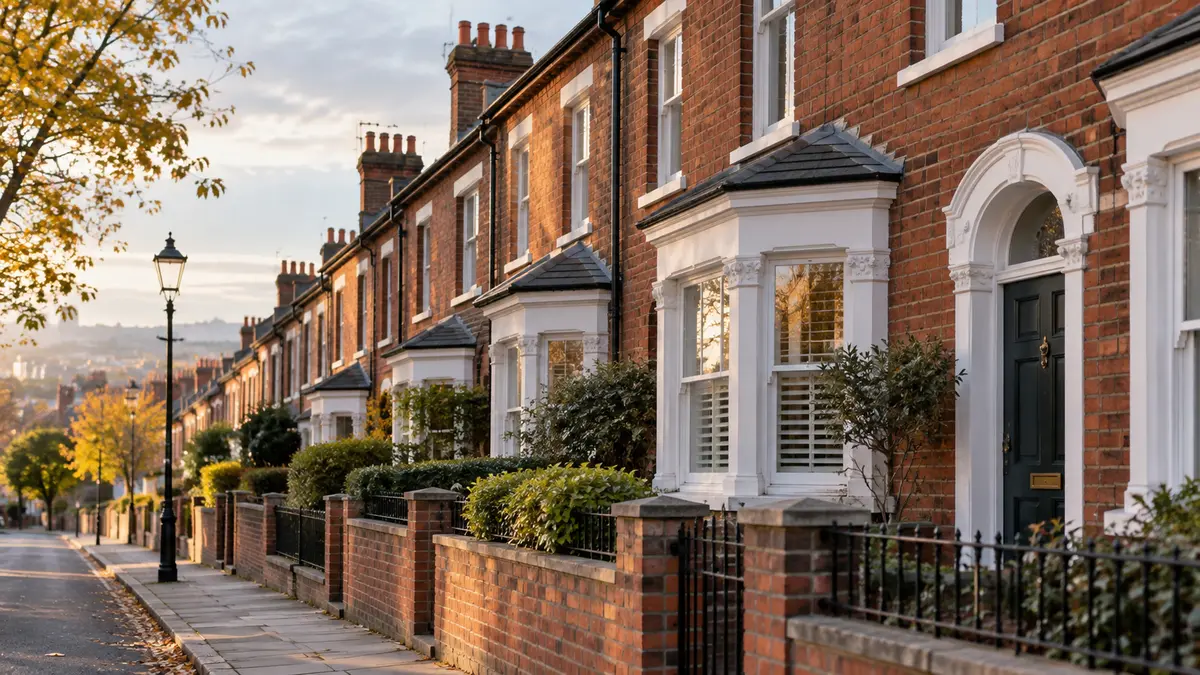
Britain's housing market is "past peak pain", the upmarket estate agent Savills has said — a verdict that captures the mood of the property world as it turns the page on a punishing 2023 and braces for a second, gentler year of falling prices. The big mortgage lenders Halifax and Nationwide building society have recorded monthly house price gains in recent months, which have taken some by surprise. But that does not mean the annual declines in property prices are over. What 2024 brings for the market will matter far beyond estate agents' windows: housing sits at the intersection of monetary policy, household balance sheets and consumer confidence, and its direction helps set the tone for the whole economy.
Just over 60% of households — about 16 million — own their homes in England and Wales, and property has been an engine of economic growth since the financial crisis ushered in an era of low interest rates, with the wealth it creates fuelling spending on goods and services. When house prices rise, homeowners feel richer and spend more; when prices fall, the opposite happens, and the drag ripples through retail, construction and financial services alike. So what will 2024 bring for the all-important housing market, and which geographic areas are likely to attract the most interest from buyers?
A second year of falling prices — but a milder one
The forecast from lenders and estate agents is mixed: 2024 is set to be a second year of falling house prices in the UK, with values expected to drop by up to 4% year on year, despite a likely recovery in the second half underpinned by lower borrowing costs as the Bank of England begins to reverse its long cycle of rate increases. That is a very different story from the one told at the start of 2023, when the sharpest rise in mortgage rates in decades led many analysts to brace for a rout.
Robert Gardner, chief economist at Nationwide, says: "People are becoming a little bit more optimistic. It's still going to be difficult for households but hopefully the squeeze on incomes will continue to lessen because growth is outpacing inflation." Coupled with lower mortgage rates, affordability should improve, although this would take time, he adds. "Affordability is still stretched." The point about incomes matters: housing affordability is not only a function of house prices and mortgage rates, but also of wages. If earnings continue to grow faster than prices, the ratio of mortgage payments to income slowly repairs itself even while nominal prices drift down.
A few days into the new year, HSBC has become the latest high street lender to lower its mortgage deals, and brokers predict the price war among lenders will continue. At the same time, with the economy on the brink of recession and with the ongoing cost of living pressures, and sharply higher interest rates than in recent years, many people, particularly first-time buyers, will still struggle to buy a home in the coming months. The combination of a weak macroeconomic backdrop and still-elevated borrowing costs means the market's stabilisation is fragile, and any setback on inflation could quickly reverse the recent improvement in mortgage pricing.
What 2023 actually delivered
In 2023, UK house prices fell by 1.8%, according to Nationwide; the drop was much smaller than expected at the start of last year, when experts forecast declines of between 5% and 12%. Mortgage approvals fell by a quarter last year and housing transactions fell by nearly a fifth; both figures are the lowest in at least a decade. Most regions of the UK posted falls apart from Northern Ireland, where prices rose by 4.5%, and Scotland, up by 0.5%.
The contrast between expectations and outcomes is the defining feature of the market's recent history. When the Bank of England began raising its base rate aggressively to fight inflation, the consensus view was that higher mortgage costs would force a sharp correction in prices. Instead, the market froze rather than crashed: sellers withdrew rather than accept steep discounts, buyers waited, and transaction volumes collapsed while prices edged down only modestly. A market with very few sales produces noisy price indices, which partly explains why different measures of house prices have told somewhat different stories over the past year.
Most property companies are predicting further small declines in 2024, ranging from a flat outcome to a 4% drop, followed by a return to growth in 2025. Knight Frank expects prices to fall by 4% in 2024, less than the 5% it forecast earlier, as the economy stabilises and attention turns to when the first interest rate cut will come. Lower-than-expected inflation has fuelled expectations of a series of rate cuts next year. The City is expecting as many as six quarter-point cuts, taking the Bank of England's base rate from 5.25% to about 3.75% by the end of 2024. Financial markets are betting that the first reduction will come by May.
Many lenders have already started trimming their mortgage rates, to an average of 5.92% for a two-year fix and 5.53% for a five-year fix, according to Moneyfacts. Intensifying competition meant many would-be buyers could get much better deals than those headline rates. The mortgage lender John Charcol says: "Lenders will be looking to capitalise on the pent-up purchase demand and those coming to the end of their fixed rate in the first half of 2024, so we should expect to see continuous battle amongst lenders." That competition is one of the quiet supports of the 2024 outlook: even before the central bank moves, lenders fighting for market share tend to price mortgages more keenly.
A wide spread of forecasts — and what they agree on
Halifax is expecting house prices to fall between 2% and 4% in 2024, and Nationwide says they could be flat or fall by a small single-digit figure. Savills and Jones Lang LaSalle (JLL) are predicting a drop of 3%, while the property websites Zoopla and Rightmove have predicted drops of 2% and 1%. JLL explains that price falls earlier in the year would outweigh any increases in the second half, meaning single-digit annual falls by the end of 2024.
- Halifax: a fall of between 2% and 4% in 2024.
- Nationwide: flat to a small single-digit decline.
- Savills and JLL: a drop of 3%.
- Zoopla: a 2% fall; Rightmove: a 1% fall.
- Knight Frank: a 4% decline, revised down from an earlier 5% forecast.
Frances McDonald, a director in Savills' residential research team, says: "We're expecting the housing market to bottom out in the first half of 2024, because that's when you begin to see more meaningful cuts to lending costs on the back of Bank base rate cuts." The shape of the year — softness early, recovery later — is the common thread running through almost every forecast. The disagreement is over the depth of the trough, not its timing.

First-time buyers: the group that feels it most
Of all the participants in the 2024 housing market, first-time buyers face the steepest climb. With the economy on the brink of recession, ongoing cost-of-living pressures and interest rates sharply higher than in recent years, many people, particularly first-time buyers, will still struggle to buy a home in the coming months. For someone who has never owned property, there is no existing home to sell and no equity to recycle: the deposit must be saved from scratch, and every extra percentage point on the mortgage rate raises the monthly payment that must be serviced from a salary that has itself been squeezed by the cost-of-living crisis.
Affordability, as Robert Gardner notes, is still stretched, and even if it improves gradually, the improvement takes time. That is why the lender price war matters so much for this group: when banks compete for borrowers, the deals available to a well-prepared first-time buyer can be meaningfully better than the average rates quoted in the headlines. The pent-up purchase demand that John Charcol refers to includes a large cohort of renters who have been waiting on the sidelines for two years, saving deposits while watching rates rise. If mortgage costs continue to drift lower through 2024, that cohort is likely to re-enter the market in the second half of the year — which is exactly the dynamic that underpins the consensus forecast of a soft first half and a firmer second half.
The wealth effect: why housing moves the whole economy
To understand why economists watch house prices so closely, it helps to remember how large the housing market is in British economic life. Just over 60% of households — about 16 million — own their homes in England and Wales, and property has been an engine of economic growth since the financial crisis ushered in an era of low interest rates, with the wealth it creates fuelling spending on goods and services. When house prices rise, homeowners feel wealthier on paper and tend to spend more freely; when prices fall, confidence cools and spending follows. That is the economic ripple effect the Savills analysis refers to, and it runs in both directions.
The ripple extends well beyond consumer sentiment. A functioning housing market keeps people moving — and moving generates spending on everything from removals and furniture to repairs and redecoration. It also keeps the construction and financial-services sectors busy, from builders and surveyors to mortgage brokers and solicitors. When transactions fall by nearly a fifth, as they did in 2023, all of that activity slows with them, which is one reason the housing market's health is treated as a leading indicator of the wider economy. The modest declines expected in 2024, followed by a return to growth in 2025, would therefore not only repair household balance sheets but also help restart the chain of spending that a frozen market has held back.
The refinancing wave: 1.5 million fixed-rate deals expire
About 1.5 million homeowners will come to the end of their fixed-rate mortgage deals this year, and many will have to refinance at much higher rates than they have been used to in recent years. Last year, 1.6m fixed-rate deals expired, according to the Financial Conduct Authority. So far, the market downturn has not been as severe as expected. The UK's structure of short fixed-rate mortgages — typically two or five years — means the full force of a rate-hiking cycle reaches households with a lag, as deals roll over one by one. That lag is why the refinancing wave of 2024 is watched as closely as the price data itself.
Tom Bill, the head of UK residential research at Knight Frank, says: "Price declines have not been as steep as forecast in most residential markets. Low transaction volumes may skew the numbers but there are other factors supporting prices. A strong jobs market, the availability of longer mortgages, the fact more homes are owned outright than with a mortgage (35% versus 29% according to the latest English Housing Survey) and the absence of forced selling due to tighter mortgage stress-testing rules since the global financial crisis have all helped avoid steeper declines." Each of these factors acts as a cushion. A strong labour market keeps incomes flowing; longer mortgage terms spread payments over more years; outright owners are not forced sellers; and stress-testing rules introduced after the financial crisis mean that borrowers entering the market in recent years were assessed against rates higher than the ones they actually paid, leaving them with a margin of safety as rates rose.
Geography matters: where prices fall most — and least
This year, forecast price falls will be steepest in London, the south-east and east, down between 3.5% and 4%, while the north-east, Scotland, Wales and West Midlands are set to post the smallest declines: between 1.5% and 2%, according to Savills' projections. The pattern is familiar from previous cycles: the most expensive markets, where prices had risen fastest and affordability had stretched furthest, tend to correct most, while cheaper regions prove more resilient. Among the towns and cities that have done well is Huddersfield, where house prices rose 8.7% last year, adding £22,137 to the average price of a home, according to Halifax. Bradford came second with 8.5% growth, followed by Falkirk in Scotland with 6% growth, and Hillingdon in London, where property values rose 4.5%.
For buyers, the geographic spread means the national headline number hides very different local realities. For the wider economy, it matters because housing activity — moving, furnishing, renovating, lending — is distributed unevenly across the country, and a soft London market weighs on a different set of local businesses than a resilient one in the north-east. The United Kingdom housing market is, in effect, several markets moving at different speeds.
Why the downturn has not turned into a crisis
McDonald says: "Lender forbearance has been much better than we've seen during previous downturns" and that there had not been a surge in forced sales. Under the government's mortgage charter, struggling mortgage holders are given a 12-month grace period before their home is repossessed as well as the option to switch to interest-only payments. She says the wider economic picture should help, with a healthy jobs market meaning borrowers could keep up with repayments. "Unemployment isn't expected to increase very much and that's why we're not forecasting any more significant falls."
The mortgage charter is a relatively quiet but important part of the 2024 story. By giving borrowers breathing room — a grace period before repossession and a temporary move to interest-only payments — it reduces the chance that temporary hardship turns into forced sales, and forced sales are precisely the mechanism by which housing downturns can spiral: distressed supply pushes prices down further, which pressures more borrowers, which produces more distressed supply. Breaking that loop early is what separates a correction from a crisis.
None of this means the pain is over. Affordability remains stretched, first-time buyers still face steep hurdles, and 1.5 million households must confront a refinancing bill far larger than the one they signed up for. But the balance of evidence points to a market that has absorbed the worst of the rate shock without breaking: prices falling modestly rather than collapsing, lenders competing rather than retreating, and borrowers protected by forbearance rules and a resilient labour market. If the Bank of England does begin cutting rates as markets expect, the second half of 2024 could mark the turn — the moment when Britain's housing market moves from "past peak pain" to genuinely recovering.
Source: The Guardian (4 January 2024).


















Leave a comment
Your comment is awaiting moderation.