Russia Faces Stagflation Risk as High Central Bank Rate Breaks the Investment Calculus, CMACP Analysts Warn
Analysts at the Center for Macroeconomic Analysis and Short-Term Forecasting (CMACP) warned that the Bank of Russia's high key rate and the prospect of further hikes create risks of recession and a slide into stagflation, saying the rate must fall to roughly 15-16% by mid-2025 to avoid negative annual GDP growth. The central bank disagrees, arguing that hikes are precisely what prevents stagflation.
Russia's economy has effectively been placed before the threat of stagflation — simultaneous stagnation or even decline combined with high inflation — because of the Bank of Russia's high key rate and its signalled readiness to keep raising it, according to analysts at the Center for Macroeconomic Analysis and Short-Term Forecasting (CMACP / ЦМАКП). Their conclusions were set out in a review titled "On the Risks of Stagflation in the Russian Economy" and reported by Interfax on 13 November 2024.
The warning carries weight because it comes not from a political platform but from one of Russia's best-known independent centres of macroeconomic research, and because it directly challenges the logic of the tight monetary policy the central bank has been defending throughout the year. The stakes are concrete: on CMACP's own calculations, made with the help of leading-indicator tools, the key rate would need to be reduced to roughly 15-16% by the middle of 2025 to prevent the Russian economy from sliding into negative year-on-year GDP growth.
The stagflation warning
"The current high level of the key rate and the prospects for its further increase outlined by the central bank have created the risk of an economic downturn and a collapse in investment in the very near future," the review states. This policy, CMACP argues, is "only of limited effectiveness in bringing down inflation" while carrying "unacceptably high risks of provoking a recession and of unbalancing reproduction processes in the real sector" — above all in low-margin industries and in sectors with long project-implementation cycles, first and foremost mechanical engineering.
The analysts do not soften the aggregate conclusion: "As a result of the CBR's actions, Russia's economy has effectively been placed before the threat of stagflation — simultaneous stagnation (or even decline) and high inflation." In their framing, stagflation is not a distant hypothetical scenario but a state the economy is already approaching, because monetary tightening is simultaneously choking growth while — for the reasons CMACP enumerates — failing to suppress the rise in prices.
The arithmetic of an 18.4% risk-free yield
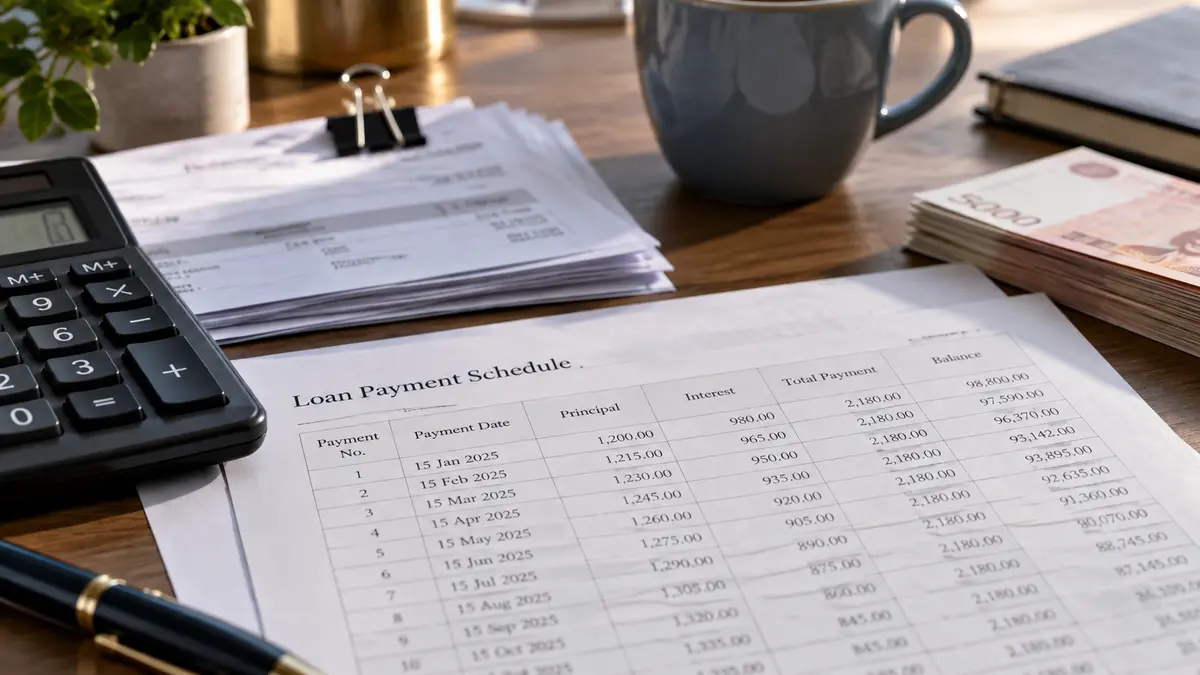
At the heart of the review lies a simple investment calculation. With the risk-free yield currently at 18.4% per annum on five-year OFZ federal loan bonds (ОФЗ), an investment project with an average payback period of up to five years must, over that span, not merely reach payback but also deliver cumulative net profit of at least 130% of the funds committed at the start — "otherwise such projects lose their economic meaning for their initiators," CMACP notes.
The implication is a dramatic raising of the hurdle rate for any real-sector investment in Russia. A project that in nominal terms barely breaks even, or earns a respectable single-digit margin, turns out to be worse than doing nothing: the risk-free OFZ yield alone would have produced more for the initiator. The most exposed are industries with long project cycles — above all mechanical engineering, which CMACP singles out — because their multi-year ventures must ultimately clear a five-year profitability test priced off an 18.4% risk-free curve. For low-margin sectors the review flags the same logic as an acute risk of "unbalancing reproduction processes": renewal and expansion programmes simply stop making financial sense.
Financial constraints become the binding constraint
CMACP grounds the argument in business-survey data. The share of manufacturing enterprises citing the high cost of credit as a factor limiting the growth of production has exceeded 40% — roughly double the 20-25% range typical of previous years, according to Rosstat (Росстат) survey data cited in the review.
More pointed still is the analysts' claim that the dominant constraint on output has changed in nature. "It is precisely financial — not 'capacity' — constraints on output growth that have now become the key ones," the review states, a formulation that implicitly contests the position of the Bank of Russia, which emphasises supply-side limits. The survey shares CMACP cites are:
- 47% of companies name a shortage of financial resources as a growth constraint, and the share is rising quickly;
- 44% point to the high cost of commercial credit, a figure that is also rising quickly;
- 42% cite a shortage of qualified workers — already slightly below the financial indicators;
- only 25% name the shortage and wear of equipment, and that share is rising slowly.
The ordering matters for policy. If the economy were chiefly capacity-constrained, tight money could cool demand without doing much damage to supply. But if the binding constraint is financial, then every rate increase strikes directly at the production side — exactly the "unbalancing of reproduction processes" the review warns about — while doing little to relieve the labour and equipment bottlenecks that monetary policy cannot eliminate in any case. In CMACP's reading, the survey evidence shows the transmission running the wrong way: instead of tempering an overheated economy, the rate is now the main factor holding output back.
Defaults, non-payments and the liquidity squeeze
The stress is already visible in corporate balance sheets and payment discipline. By CMACP's estimate, the share of manufacturing enterprises whose interest payments sit at a risky level — exceeding two-thirds of EBIT — will more than double by the end of 2024 compared with 2023 and surpass 20%. "This creates a high potential for corporate defaults and bankruptcies," the review concludes.
The knock-on effect shows up in arrears. According to surveys by the RSPP (РСПП, the Russian Union of Industrialists and Entrepreneurs), in the third quarter of 2024 the share of companies encountering non-payments from counterparties jumped sharply to 37%, against an average of 20-22% over the preceding 2021-2024 period.
One of the most important causes, CMACP argues, is a fall in the liquidity of economic circulation: access to credit has become difficult, and the dynamics of funds in enterprises' ruble settlement accounts have slowed sharply — their year-on-year growth now stands at just 3%, far below the rate of inflation. In other words, companies' working-capital buffers are shrinking in real terms at the very moment when replenishing them with borrowed money has become prohibitively expensive. The spread of mutual non-payments, the analysts warn, will not only strike production but also lead to a decline in the transparency of businesses, and may generate negative social consequences.
Why rate hikes no longer tame inflation, in CMACP's view
The most provocative part of the review is its assertion that the central bank's rate increases "no longer seem to be leading to a reduction in the level of inflation in the economy." CMACP gives four reasons:
- Supply-side shocks dominate. A substantial part of current price growth is linked to factors that do not fall under the influence of demand dynamics but are caused by situational supply-side shocks of various kinds: the price dynamics of seasonal and imported food, increases in regulated service tariffs, and the growing complication of logistics and international settlements.
- Rate hikes feed costs straight into prices. Tightening raises not only interest expenses but also large-scale "quasi-interest" costs for producers and sellers — leasing payments for transport and other equipment, rent for retail and warehouse space — which flow into consumer-goods prices. By CMACP's estimate, the pro-inflationary effect of rising interest and quasi-interest payments is at least twice the analogous effect of accelerated wage growth.
- Consumer credit barely responds. Because of the insufficient financial literacy of the population and a strong "deferred consumption" effect, demand for consumer lending reacts weakly to rate increases; it can only be restrained through the introduction of restrictive macroprudential lending limits — an administrative tool rather than the rate itself.
- The budget channel works in reverse. A higher general level of rates leads to accelerating growth in budget spending on debt servicing and on subsidising already-running programmes of preferential lending and investment-project co-financing, which contributes to a larger budget deficit.
The budget channel and money emission
CMACP traces the fourth reason to its monetary conclusion. Given the undesirability of attracting new, "expensive" borrowings from the market, the widening deficit will increasingly be covered by drawing down the balances held on budget accounts at the Bank of Russia — including the National Wealth Fund (ФНБ). Spending down those balances, the review argues, leads to an increase in money emission and therefore to additional inflationary pressure. In this reading, prolonged tightening is not merely ineffective against inflation: through the fiscal-monetary channel it becomes a source of it — the classic stagflation mechanism of a deficit being monetised while the real economy is squeezed by the cost of credit.
The central bank's diametrically opposite view
The Bank of Russia holds diametrically opposed views. Its governor, Elvira Nabiullina (Эльвира Набиуллина), said at a press conference in September that the key rate is being raised precisely in order to avoid the risks of stagflation, and that the rate has not lost its effectiveness.
"Yes, one can imagine a situation of, in essence, fiscal dominance, when the key rate largely loses its effectiveness. But, in my view, we are very far from that situation thanks to the fact that we have low government debt. That is why it is very important to keep the level of government debt within manageable bounds," she said — addressing the very mechanism that CMACP describes.
On stagflation itself, Nabiullina argued that the central bank is acting to prevent it: "As for the risk of stagflation, probably all central banks fear it. And not only central banks, but also governments. It is when inflation is rising while economic growth has stopped, in a situation of overheating and labour shortage. It is very important for us to avoid this scenario. And that is why we are taking decisions to raise the key rate — so that no preconditions arise for moving onto this scenario."
The regulator has nonetheless acknowledged that growth will slow markedly: in 2025 the pace of GDP growth will decelerate to 0.5-1.5% — but, the central bank stresses, that will still be growth rather than decline.
Forecasts that diverge
The official forecasts frame the disagreement. The Bank of Russia expects the Russian economy to grow by 3.5-4% in 2024, then sees growth slowing to 0.5-1.5% in 2025, 1-2% in 2026 and 1.5-2.5% in 2027. The Ministry of Economic Development is more optimistic across the medium term: 3.9% in 2024, 2.5% in 2025, 2.6% in 2026 and 2.8% in 2027.
The gap between the ministry's and the central bank's GDP forecasts for 2025-2027 reflects different estimates of potential growth, Deputy Economic Development Minister Polina Kryuchkova (Полина Крючкова) has explained: the Bank of Russia assesses Russia's long-term potential GDP growth rate at 1.5-2.5%, while the ministry considers it higher.
- GDP 2024: CBR 3.5-4%; Ministry of Economic Development 3.9%; Interfax analysts' consensus (early November) 3.7%.
- GDP 2025: CBR 0.5-1.5%; Ministry 2.5%; Interfax consensus 1.9%.
- Inflation 2025: CBR 4.5-5%; Ministry 4.5%; Interfax consensus 5.6%.
Even the consensus — 1.9% growth for 2025 — sits between the two official positions, while the consensus inflation forecast of 5.6% overshoots both official 2025 targets, suggesting that surveyed analysts expect price pressure to persist longer than the authorities project. Notably, none of the three forecasters expects a contraction in 2025 — the outcome CMACP says the current rate trajectory risks unless easing begins.
What the dispute means for business and policy
Read together, the two positions amount to two diagnoses of a single economy. The central bank sees overheating — a tight labour market and strong demand — and believes that tightening now is the price of avoiding stagflation later, with low government debt insulating policy from the fiscal-dominance trap. CMACP sees the trap already closing: financial constraints dominate capacity constraints, an 18.4% risk-free yield has broken the investment calculus, interest burdens are pushing more than a fifth of manufacturing enterprises toward default territory, non-payments are spreading through the economy, and rate increases are feeding prices through quasi-interest costs and the deficit-money-emission channel.
The review leaves behind concrete markers to watch. The first is the rate path itself: on CMACP's leading-indicator estimates, the key rate must come down to roughly 15-16% by mid-2025 if negative annual GDP growth is to be avoided. The second is payment discipline — whether the RSPP's 37% share of companies facing counterparty non-payments keeps climbing from the 20-22% norm of 2021-2024. The third is corporate resilience: whether the share of manufacturers spending more than two-thirds of EBIT on interest — already set to exceed 20% by the end of 2024 — converts into an actual wave of defaults and bankruptcies. And the fourth is the quiet monetary signal buried in the settlement-account data: with ruble account balances growing just 3% year on year, far below inflation, they show whether working capital in the real economy is still expanding or quietly contracting.
















Leave a comment
Your comment is awaiting moderation.