Inflation May Look Like It Is Easing, but It Is Still a Huge Problem
Headline inflation in the United States is drifting back toward the Federal Reserve's 2% target, yet the cumulative price increases since 2021, stubborn services and housing costs, and rising household debt mean the cost-of-living squeeze is far from over.
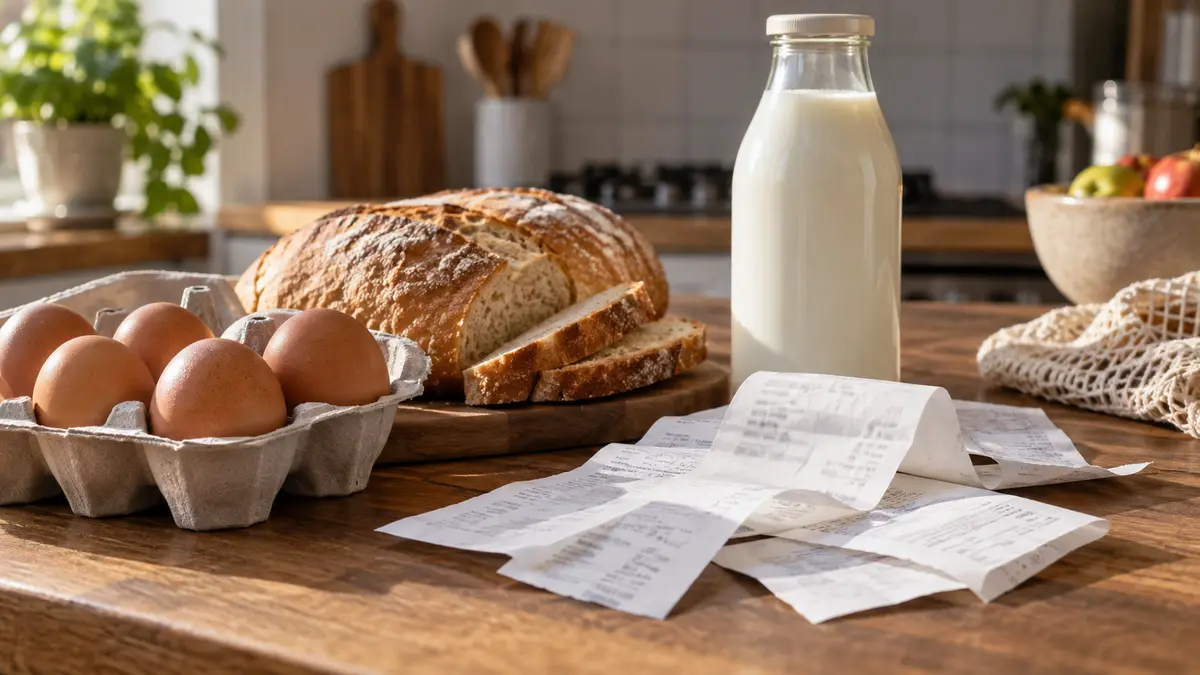
The story of inflation over the past year reads, at first glance, like a success. The annual rate of consumer price inflation in the United States stood at 2.4% in September, a vast improvement over the 9.1% peak recorded in June 2022. Recent price reports, though a touch stronger than forecasters expected, point to a twelve-month inflation rate that is getting close to the Federal Reserve's 2% target. Goldman Sachs has even estimated that when the Bureau of Economic Analysis publishes its figures on the central bank's preferred gauge, the personal consumption expenditures price index, the reading could be close enough to round down to that 2% level. On paper, the worst of the inflation shock appears to be behind us.
But inflation is a mosaic, and no single yardstick can capture it fully. The headline number that fills headlines tells only part of the story. For households, businesses and policymakers alike, the high price of goods and services across the economy continues to pose a real burden. The rate of inflation and the cumulative effect of more than three years of rising prices are two very different things, and it is the second of these that most people actually feel in their wallets. By many metrics, prices remain well above where most Americans, and indeed some Federal Reserve officials, feel comfortable.
The headline number hides the cumulative hit
There are two things to keep in mind when reading any inflation figure. The first is the rate of inflation, the twelve-month change that draws the headlines. The second is the cumulative effect that the more than three-year run of price increases has had on the economy and on household budgets. Looking only at the annual rate provides a limited view, because it measures how fast prices are rising right now, not how much higher they already are than they used to be.
Inflation first passed the Federal Reserve's 2% objective in March 2021. For months it was dismissed by officials as a transitory product of pandemic-specific factors that would soon recede. Federal Reserve Chair Jerome Powell, in his annual policy speech at the Jackson Hole summit in Wyoming in August, joked about the good ship Transitory and all the passengers it had carried in the early days of the inflation run-up. Inflation, of course, was not transitory. The all-items consumer price index is up 18.8% since the spike began, and the cumulative increases in everyday categories are far steeper than the headline suggests:
- Food prices have surged 22% since early 2021.
- Eggs are up 87% over the same stretch.
- Auto insurance has soared almost 47%.
- Gasoline, though on a downward trajectory recently, is still up 16%.
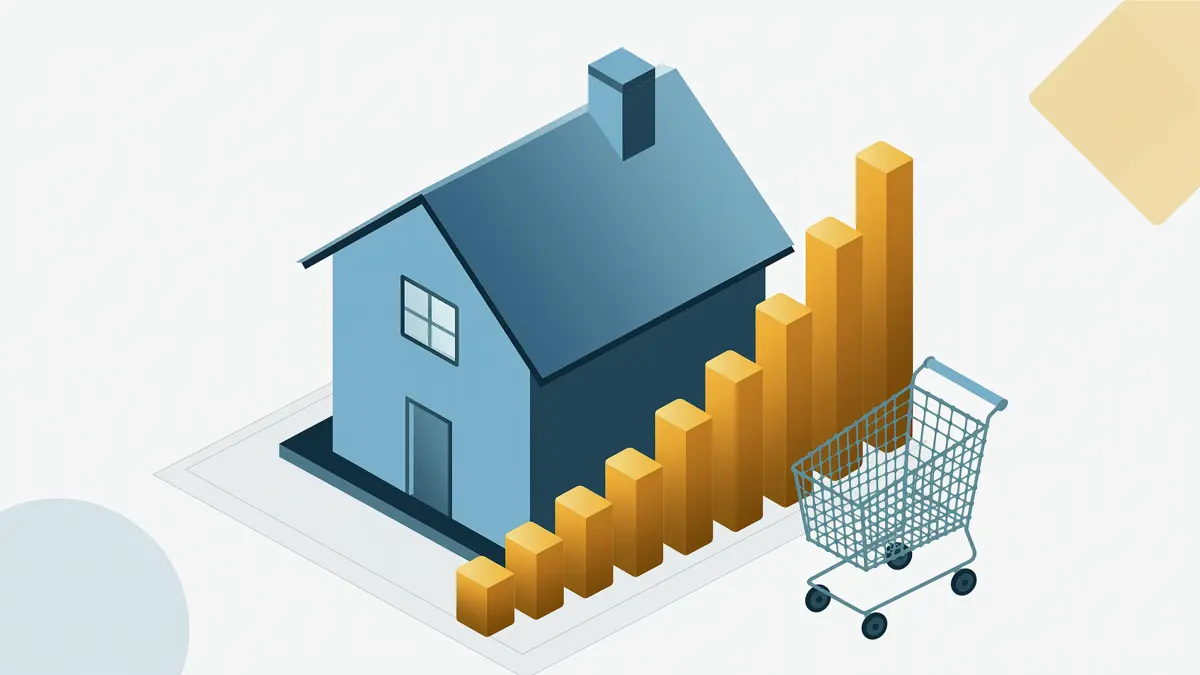
- The median home price has jumped 16% since the first quarter of 2021, and 30% from the start of the pandemic-fueled buying frenzy.
These are the numbers that shape how people experience the economy, regardless of what the latest monthly print says. A household that has watched its grocery bill, its insurance premium and its housing costs climb by double digits does not feel that inflation has been defeated simply because the year-over-year rate has come down. The level of prices, not just the speed of their increase, is what determines whether a family feels they are getting ahead or falling behind.
Sticky prices versus flexible prices
The composition of inflation matters as much as its overall rate. While some broad measures such as the consumer price index and the personal consumption expenditures index are pulling back, other gauges show stubbornness. The Atlanta Federal Reserve's measure of sticky-price inflation, which tracks items that do not change often such as rent, insurance and medical care, was still running at a 4% rate in September. At the same time, flexible prices, which include food, energy and vehicle costs, were in outright deflation at minus 2.1%. In other words, the prices that rarely move are still rising quickly, while the prices that swing freely, in this case largely gasoline, are falling but could easily turn the other way again.
This split matters because the flexible category is volatile and can reverse, whereas the sticky category reflects deeper, more persistent pressures in services and shelter. The sticky-price measure also highlights why core inflation, which excludes the more volatile food and energy components, remains a concern. Core inflation was still at 3.3% in September by the consumer price measure and 2.7% in August as gauged by the personal consumption expenditures index. Federal Reserve officials have lately been talking more about headline numbers, but historically they have treated core inflation as the better guide to long-run trends. On that reading, the disinflation story is more troublesome than the headline implies.
Borrowing to keep up
Before the 2021 spike, American consumers had grown accustomed to negligible inflation. Even so, during the current run they have continued to spend, spend and spend some more, despite all the grumbling about the soaring cost of living. In the second quarter, consumer spending ran at close to 20 trillion dollars on an annualized basis, according to the Bureau of Economic Analysis. In September, retail sales increased a larger-than-expected 0.4%, with the group that feeds directly into gross domestic product calculations up 0.7%. Yet year-over-year spending rose just 1.7%, below the 2.4% consumer price inflation rate, a sign that part of the apparent resilience in spending reflects higher prices rather than a genuine increase in the volume of goods and services purchased.
A growing portion of that spending has been financed through borrowing of various forms. Household debt totaled 20.2 trillion dollars through the second quarter of the year, up 3.25 trillion dollars, or 19%, from when inflation started spiking in the first quarter of 2021, according to Federal Reserve data. In the second quarter, household debt rose 3.2%, the biggest increase since the third quarter of 2022. So far the rising debt has not proved to be a major problem, but it is getting there.
The current debt delinquency rate stands at 2.74%, the highest in nearly twelve years, though still slightly below the long-term average of around 3% in Federal Reserve data going back to 1987. More telling is a recent New York Federal Reserve survey, which showed that the perceived probability of missing a minimum debt payment over the next three months jumped to 14.2% of respondents, the highest level since April 2020. That is a measure of strain that the headline inflation rate does not capture at all.
Small businesses feel the squeeze
It is not only consumers who are racking up credit. Small business credit card usage has continued to tick higher, up more than 20% compared with pre-pandemic levels and nearing the highest in a decade, according to Bank of America. The bank's economists expect the pressure could ease as the Federal Reserve lowers interest rates, though the magnitude of any cuts could come into question if inflation proves sticky. The one bright spot in the small business credit story is that balances have not kept up with the 23% cumulative inflation increase going back to 2019.
Broadly, though, sentiment is downbeat at small firms. The September survey from the National Federation of Independent Business showed that 23% of respondents still see inflation as their main problem, once again the top issue for members. For a small business owner, the difference between a falling inflation rate and a still-elevated price level is not academic: it is the difference between planning for stable input costs and continuing to absorb higher bills for rent, insurance, materials and wages.
The Fed's dilemma
Amid the swirling currents of this good-news, bad-news inflation picture, the Federal Reserve faces an important decision at its November 6-7 policy meeting. Since policymakers in September voted to lower their baseline interest rate by half a percentage point, or 50 basis points, markets have behaved curiously. Rather than pricing in lower rates ahead, they have begun to indicate a higher trajectory. The rate on a 30-year fixed mortgage has climbed about 40 basis points since the cut, according to Freddie Mac. The 10-year Treasury yield has moved up by a similar amount, and the 5-year breakeven rate, a bond-market gauge of inflation expectations, has moved up about a quarter point and recently sat at its highest level since early July.
SMBC Nikko Securities has been a lone voice on Wall Street urging the Federal Reserve to take a break from cutting until it can gain greater clarity about the current situation. The firm's position is that with stock prices eclipsing new records as the central bank shifts into easing mode, softening financial conditions threaten to push inflation back up. Atlanta Federal Reserve President Raphael Bostic recently indicated that a November pause is a possibility he is considering. In a note, SMBC chief economist Joseph LaVorgna wrote that for policymakers, lower interest rates are likely to further ease financial conditions, thereby boosting the wealth effect through higher equity prices, while a fraught inflationary backdrop should persist.
This is the heart of the dilemma. If inflation is on the run, why are interest rates still so high? Conversely, if inflation has not yet been whipped, why is the central bank cutting at all? San Francisco Federal Reserve President Mary Daly described the September half-point reduction as an attempt at right-sizing policy, bringing the current rate climate in line with inflation that is well off its mid-2022 peak at the same time as there are signs the labor market is softening. Sounding like many of her colleagues, she touted the easing of inflation pressures but noted that the Fed is not declaring victory and is not eager to rest on its laurels. Continued progress toward the goals is not guaranteed, she told an audience at the New York University Stern School of Business, so policymakers must stay vigilant and intentional.
Why the last mile of disinflation is hard
The pattern described in the data reflects a well-understood feature of disinflation cycles. The first phase of bringing inflation down is usually the easiest, because it is driven by the unwinding of the most volatile components: energy prices that spiked and then retreated, goods prices that surged amid supply bottlenecks and then normalized as those bottlenecks cleared. The last mile is harder, because what remains is dominated by services, shelter and wages, categories that adjust slowly and tend to be sticky on the way down. Rents are set by leases that renew only gradually, insurance premiums are repriced on long cycles, and wage growth, once established, is difficult to reverse without a sharp rise in unemployment.
This is why central banks are cautious about declaring victory too early. History offers a warning: premature easing, before the underlying price pressures have fully faded, has repeatedly allowed inflation to re-accelerate, forcing policymakers to tighten all over again at greater cost to the economy. The Federal Reserve's own experience in the 1970s, when inflation proved far more persistent than officials first assumed, is the cautionary tale that still shapes the institution's instinct to move deliberately. The transitory narrative of 2021 is the modern reminder of how quickly a confident forecast can be overtaken by events.
Consumer behavior adds another layer of complexity. Even as households complain about the cost of living, they have kept spending, partly because a strong labor market has supported incomes and partly because the psychological anchor of recent price increases makes higher prices feel like the new normal. When spending stays firm, it can keep demand-side pressure alive, which in turn makes it harder for the final stretch of disinflation to complete. The rise in household borrowing and the jump in the share of people who worry about missing a debt payment suggest that the cushion households once had is thinning, even while aggregate spending holds up.
The communication challenge
Beyond the data lies a problem of perception that is just as difficult for any central bank to manage. Monetary policy works with long and variable lags, and the public judges it not by the path of an index but by the prices it meets at the checkout, the pump and the landlord's office. When the annual rate falls while the level of prices keeps climbing, the two messages collide: officials can truthfully say inflation is cooling, while households just as truthfully feel that everything still costs more than it did. That gap is why a falling inflation rate does not automatically translate into relief, and why policymakers are careful to frame progress in terms of a return to a stable price level rather than a return to the old one. The risk in either direction is real. Move too slowly and the economy pays an unnecessary price in jobs and growth; move too quickly and the hard-won progress on prices can unravel. Navigating that narrow path, with markets watching every word, is precisely the task the Federal Reserve has set for itself as it approaches its next decision.
What victory would actually look like
Convincing people that inflation is easing is a tough sell, as an encounter Mary Daly described made clear. While walking near her home, a young man pushing a stroller and walking a dog called out to ask whether she was declaring victory. She assured him she was not waving any banners when it comes to inflation. The exchange captures the gap between the improving statistics and the lived experience of prices that remain far above where they were just a few years ago.
For Daly, the goal is not simply a number on a chart. She said she believes the economy can move toward a world where people have time to catch up and then get ahead. That, she told the young father on the sidewalk, is her version of victory, and that is when she will consider the job done. Until households feel that their wages are outrunning prices rather than merely keeping pace, and until the sticky components of inflation, from shelter to services, show a durable decline, the easing that the headline numbers describe will remain, for many people, more of a statistical relief than a lived one. Inflation may look like it is easing. For millions of households, it is still a huge problem.
















Leave a comment
Your comment is awaiting moderation.