Gold Demand Hit a Record High in 2024 as Central Banks and Investors Piled In
Total global gold demand reached a record 4,974 tons in 2024, the World Gold Council says. Central banks bought more than 1,000 tons for a third straight year — led by Poland, Turkey and India — while investment demand jumped 25% to a four-year high of 1,180 tons on strong ETF inflows. Jewelry was the only weak spot, falling 11%, as bullion prices set 40 record highs during the year.
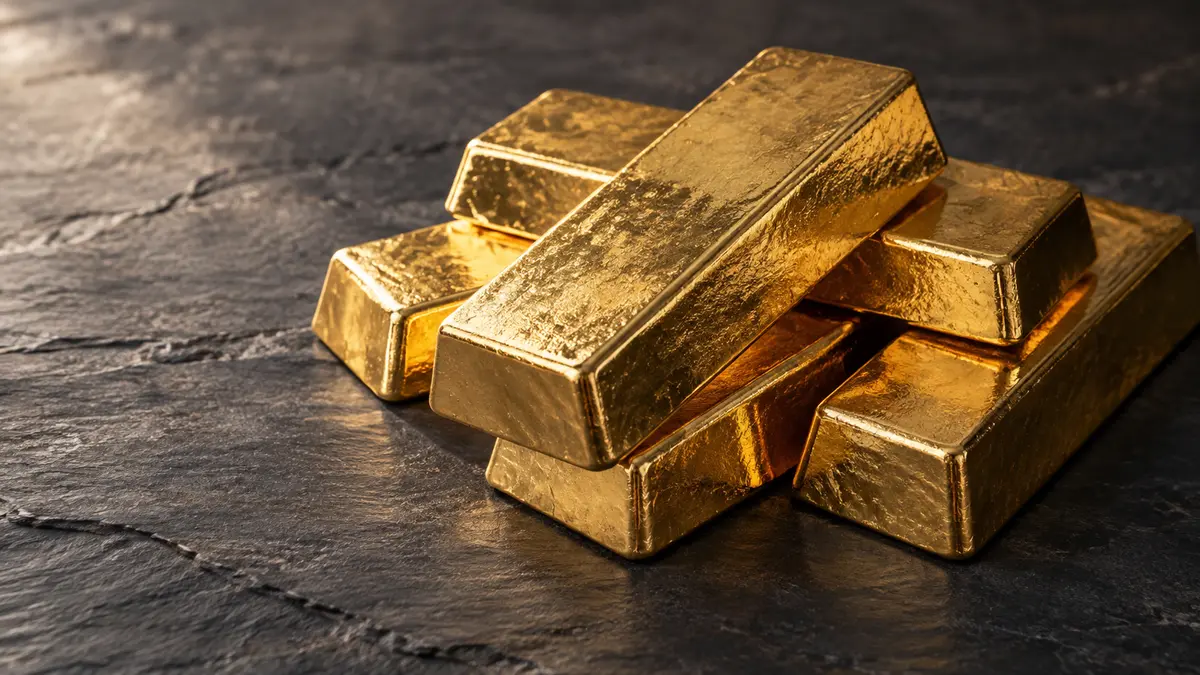
Gold finished 2024 as one of the standout asset classes of the year, and the annual report of the World Gold Council (WGC) published in early February 2025 puts hard numbers behind that claim. Total global demand for the metal reached a record 4,974 tons in 2024, up from 4,899 tons in 2023, when over-the-counter (OTC) investment is included. The increase came from two directions at once: official-sector buying by central banks, which kept its extraordinary pace for a third consecutive year, and a sharp revival of investment demand from private investors, who returned to gold exchange-traded funds (ETFs) and physical bars and coins in force.
'In 2024, global gold demand surged to a new quarterly high and a record annual total bolstered by heightened geopolitical and economic uncertainties,' said Shaokai Fan, global head of central banks at the World Gold Council. The combination of geopolitical tension, shifting interest-rate expectations and a search for assets that do not depend on any single government's credit turned the yellow metal into a beneficiary of the year's anxieties. Prices reflected that demand: bullion notched 40 record highs during 2024 and carried that momentum into 2025, with gold futures on the New York Mercantile Exchange rising to $2,875.8 per ounce on 5 February, according to data from FactSet.
The report matters beyond the precious-metals market. Gold demand is a real-time gauge of how the world's savers, central banks and wealthy households are positioning against inflation, currency risk and geopolitical shock. The 2024 figures show a market in which official buyers set the floor, Western investment vehicles provided the marginal surge, Asian consumers supplied the physical backbone, and only one traditional segment — jewelry — bucked the trend.
Central banks: the insatiable buyers
The most striking feature of the 2024 report is the continued strength of official-sector demand. The World Gold Council described central banks' appetite for gold as 'insatiable' and said the sector achieved a 'significant milestone' by maintaining a consistently strong pace of buying: purchases surpassed 1,000 tons for the third consecutive year. A thousand tons is roughly a quarter of annual global mine production, which means official buyers alone absorbed a substantial share of everything the industry dug out of the ground.
Among individual central banks, the National Bank of Poland was the leading net purchaser, adding 90 tons to its reserves. Poland has been one of the most visible official buyers in recent years, steadily raising the gold share of its reserves as part of a broader strategy of diversification. The Central Bank of Turkey was the second-biggest net purchaser, raising its gold reserves by 75 tons. Turkey has long been both a major producer and a major official holder of gold, and its central bank's purchases continued a pattern of building buffers against currency volatility. The Reserve Bank of India ranked third, buying gold consistently every month of the year except December. India is one of the world's two largest gold markets, and its central bank's steady accumulation underscores how official demand and retail demand reinforce each other in the same economy.
Why do central banks keep buying? Gold pays no interest and yields no dividend, which for decades made it an unattractive reserve asset compared with interest-bearing government bonds. But it has compensating virtues that have grown more valuable in the current environment. Gold carries no counterparty risk: it is an asset that is no one else's liability, so it cannot be frozen, defaulted on or devalued by a policy decision of another government. It is highly liquid in the world's major financial centres, and it has historically held its purchasing power over very long periods. For central banks managing reserves measured in the trillions of dollars, even a modest allocation to gold provides a hedge against exactly the risks — sanctions, currency crises, loss of confidence in reserve currencies — that dominated the geopolitical headlines of 2024.
The scale of official buying also changes the market's structure. When central banks are consistent buyers, they create a durable floor under demand that is largely insensitive to short-term price moves. That is one reason the 2024 rally could persist through periods that would normally have triggered selling: the official sector simply kept accumulating.
Investment demand: a 25% jump to a four-year high
If central banks provided the floor, private investors provided the surge. Annual overall investment demand for gold climbed 25% in 2024 to reach 1,180 tons, the highest level in four years, and the World Gold Council attributes the increase largely to gold exchange-traded funds. ETFs are the main vehicle through which institutional and retail investors in developed markets gain exposure to the metal without storing physical bars, and their flows are a sensitive barometer of Western investor sentiment.
The mechanics of the ETF channel are worth understanding because they explain why investment demand can swing so violently from year to year. A gold ETF holds physical bullion in a vault and issues shares that trade on a stock exchange; when investors buy shares, the fund must acquire more gold, and when they sell, it must sell. In years of rising rates and strong equity markets, ETFs typically see outflows as the opportunity cost of holding a non-yielding asset rises. In years of rate-cut expectations, geopolitical stress or equity volatility, the flows reverse. The 25% jump in 2024 indicates that the balance of those forces shifted decisively toward gold.
Demand for physical bars and coins remained firm as well, lifted by strong buying in China and India. In China, the report states that 'investors faced a dearth of alternative assets in which to invest'. A mix of domestic economic uncertainty, persistent equity market volatility and record-low government bond yields pushed Chinese households toward gold. With property — traditionally the dominant store of household wealth in China — under pressure and deposit rates low, gold became one of the few accessible assets that promised both safety and the prospect of price appreciation.
In India, gold demand was lifted after the government reduced gold import duties from 15% to 6% in July. Import duties matter enormously in India because the country produces very little gold of its own and imports almost all of what it consumes; a nine-percentage-point cut in the duty translated directly into lower retail prices and stronger volumes. The timing of the cut, in the middle of the year, gave the second half of 2024 a visible demand boost.
The investment revival was not confined to the two giants. Gold investment demand grew across all ASEAN markets in 2024, with Singapore, Indonesia, Malaysia and Thailand all reporting double-digit increases year on year. Singapore has positioned itself as a regional hub for gold storage and trading, while Indonesia, Malaysia and Thailand have deep cultural traditions of gold saving. Double-digit growth across the entire bloc suggests that the 2024 investment boom was a genuinely regional phenomenon rather than a story of one or two markets.

The OTC market: quiet but steady
A third pillar of 2024 demand was the over-the-counter market, which remained stable over the year. OTC transactions take place directly between two parties, unlike trading conducted on an exchange, and this segment is where large institutions and high-net-worth individuals typically operate. The World Gold Council said the stability of OTC demand reflects wealthy investors looking to hedge geopolitical and economic risks — buying gold quietly, in size, without moving the quoted price on an exchange.
The OTC market is often described as the 'invisible' part of gold demand because its transactions are not captured in exchange volume data, yet it is one of the largest segments of the global market. Its stability in 2024, alongside record official buying and surging ETF flows, means that every major category of buyer except jewelry consumers was either growing or holding firm. That breadth of demand is unusual and helps explain why prices could set 40 record highs in a single year without the kind of speculative blow-off that typically ends rallies.
Jewelry: the only segment in decline
Against the strength everywhere else, jewelry stood out as the only outlier. Demand in the jewelry sector, which has been pressured by higher prices, was subdued, with consumption falling 11% year on year. Jewelry has historically been the single largest category of gold demand worldwide, driven by cultural traditions in India, China and the Middle East, so an 11% decline is a significant shift in the market's centre of gravity.
The cause is straightforward: price. When bullion trades near record highs, the cost of a finished piece of jewelry rises with it, and consumers — for whom jewelry is partly an adornment and partly a store of value — respond by buying less weight, choosing lighter pieces, or postponing purchases. The World Gold Council's analysts expect jewelry demand to stay weak in 2025 as well, since consumer spending power remains dampened by higher prices and soft economic growth. In effect, record prices that thrilled investors priced a large part of the traditional consumer base out of the market.
This substitution between investment and jewelry demand is a recurring feature of gold markets. In years of low prices, jewelry volumes swell and investment flows are modest; in years of soaring prices, the pattern reverses. The 2024 report is a textbook example of that rotation: investment demand up 25%, jewelry consumption down 11%, and total demand still rising to a record because the investment side grew faster than the jewelry side shrank.
Prices: 40 record highs and a momentum that carried into 2025
The demand picture was mirrored in the price tape. Bullion prices were 'on a tear' through 2024, notching 40 record highs during the year and going on to hit fresh highs in early 2025. On Wednesday 5 February, gold futures traded on the New York Mercantile Exchange rose to $2,875.8 per ounce, according to FactSet data. For context, gold had spent most of the previous decade trading in a broad range, and the sequence of records in 2024 marked a decisive break from that pattern.
Several forces converged to drive the price. Central bank buying removed a large share of supply from the market regardless of price. ETF inflows added a flow-sensitive layer of demand that amplified moves. Geopolitical uncertainty — the report cites 'heightened geopolitical and economic uncertainties' as the backdrop — sustained safe-haven interest. And the prospect of lower interest rates reduced the opportunity cost of holding a non-yielding asset, a point the World Gold Council makes explicitly: overall investment demand is likely to remain healthy in 2025 because expected lower interest rates reduce the opportunity cost of holding gold.
The interest-rate channel is the classic lever in gold pricing. Because gold pays no yield, holding it means forgoing the interest that could be earned on bonds or deposits. When rates are high, that forgone interest is large and gold is less attractive; when rates fall, the opportunity cost shrinks and gold becomes relatively more appealing. The expectation of easing by major central banks in 2024 and 2025 was therefore a direct tailwind for the metal, independent of any geopolitical premium.
What the council expects next
Looking ahead, the World Gold Council sees the official sector remaining the dominant force. 'In 2025, we expect central banks to remain in the driving seat and gold ETF investors to join the fray, especially if we see lower, albeit volatile interest rates,' said Louise Street, the council's senior markets analyst. The phrasing captures the two engines of the current market: structural buying by central banks that is likely to persist, and cyclical buying by ETF investors that depends on the path of interest rates.
For investors weighing gold in 2025, the report implies a market supported from below by official demand but still sensitive to rate volatility. A steady easing cycle would likely keep ETF flows positive; a surprise return to tightening or a sharp rise in real yields could trigger the kind of outflows that have ended past rallies. The council's overall message is that investment demand is likely to remain healthy, but the word 'volatile' in Street's quote is a reminder that the path will not be smooth.
Key takeaways from the 2024 gold report
- Total global gold demand, including OTC investment, reached a record 4,974 tons in 2024, up from 4,899 tons in 2023.
- Central bank purchases surpassed 1,000 tons for the third consecutive year; the National Bank of Poland led with 90 tons, followed by Turkey's central bank with 75 tons and the Reserve Bank of India in third place.
- Overall investment demand climbed 25% to a four-year high of 1,180 tons, largely fueled by gold ETFs, with bars and coins firm on strong Chinese and Indian buying.
- India cut gold import duties from 15% to 6% in July, lifting demand in the second half of the year.
- Investment demand grew across all ASEAN markets, with Singapore, Indonesia, Malaysia and Thailand posting double-digit year-on-year increases.
- OTC demand remained stable, reflecting high-net-worth hedging of geopolitical and economic risks.
- Jewelry consumption fell 11% year on year — the only declining segment — pressured by record prices and soft consumer spending power.
- Gold prices set 40 record highs in 2024 and kept rising into 2025, with NYMEX futures at $2,875.8 per ounce on 5 February.
Why this matters for the wider financial landscape
Gold's record year is more than a story about one commodity. It is a signal about how the global financial system is adapting to a more fragmented, more uncertain world. Central banks buying over 1,000 tons a year are, in effect, voting with their reserves for an asset that sits outside the conventional system of government bonds and reserve currencies. Households in China and India redirecting savings into bars, coins and ETFs are expressing the same preference at the retail level. And the stability of OTC demand shows that the wealthiest investors are quietly doing the same thing.
For portfolio managers, the 2024 data reinforces the case for gold as a diversifier that behaves differently from both equities and bonds in periods of stress. For policymakers, it is a reminder that the credibility of reserve assets is a competitive question: when official and private buyers simultaneously reach for gold, it reflects a judgment about the relative safety of the alternatives. And for consumers, the 11% drop in jewelry demand is a concrete illustration of how record prices ration demand — the metal that cultures have worn for millennia becomes, at $2,800 an ounce, a luxury that many households choose to defer.
The World Gold Council's annual report thus closes the books on a year in which gold confirmed its oldest role — a store of value in uncertain times — while revealing a new configuration of demand in which central banks, not jewelers or even ETF investors, are the marginal buyers setting the market's tone. Whether that configuration persists will depend on the two variables the council itself highlights: the pace of official accumulation and the path of interest rates. On the evidence of 2024, both point in gold's favour.
Source: CNBC; World Gold Council.
















Leave a comment
Your comment is awaiting moderation.