Globalisation is not dead, but it is fading: why 'glocalisation' is becoming the new mantra
The mood at Davos in January 2024 was 'not bad, but not great'. Behind that verdict lies a deeper shift: after the pandemic, supply-chain bottlenecks, an inflation surge and war in Europe, the global economy is moving from frictionless free trade towards 'glocalisation' — shorter supply chains, rebuilt domestic manufacturing and a more strategic role for the state, with industrial policy no longer a dirty word.
When the World Economic Forum wrapped up in Davos in January 2024, the verdict on the state of the global economy was summed up in five words: not bad, but not great either. Not bad, because most countries had outperformed the gloomy expectations of a year earlier. Not bad, because sharply rising interest rates had failed to plunge the United States, the eurozone and the United Kingdom into recession. Not bad, because the war in the Middle East had failed to send oil prices shooting above $100 a barrel. Yet not great either, because central banks still face a delicate balancing act between cutting rates too quickly and reigniting inflation, and keeping them too high and pushing their economies into recession. Not great, because the early weeks of 2024 had already brought a wider Middle East conflict with implications for one of the world's main trade routes. And not great because, as Davos made clear, the global economy is deeply fractured.
Behind that mixed verdict lies a deeper story, one that has been building since the arrival of the coronavirus pandemic and that is now reshaping how governments, companies and investors think about the world economy. The death of globalisation, it turns out, has been much exaggerated. Multinational companies and banks still flock to Davos, and the rapid growth of artificial intelligence is part of a technology revolution that cuts across borders and leaves national regulators floundering in its wake. A year before the forum, the chatbot ChatGPT was still in its infancy; by January 2024, artificial intelligence was central to the Davos debate, with enthusiasts hailing its potential to help solve pressing problems such as the climate crisis ranged against sceptics warning of its risks. Globalisation is not dead, nor even on its last legs. But it is no longer the dominant force it once was. Peak globalisation — along with what might be called peak Davos — happened a while ago, around the time of the global financial crisis of 2008. What has changed since is the dynamic, and the repeated shocks since 2020 have accelerated that change into something that looks like a new paradigm.
What 'glocalisation' actually means
Some call the new paradigm de-globalisation. Others, perhaps more accurately, call it glocalisation. It is an ugly term, but a useful one, because it captures something that is neither the old global free market nor autarky — the condition in which a nation operates in a state of self-reliance — but something in between. Glocalisation involves shorter supply chains, an emphasis on rebuilding domestic manufacturing capacity, and a more strategic role for government. As with any form of mixed economy, the degree of glocalisation varies from country to country: no two national economies are making the same choices, and none is turning its back on the world entirely.
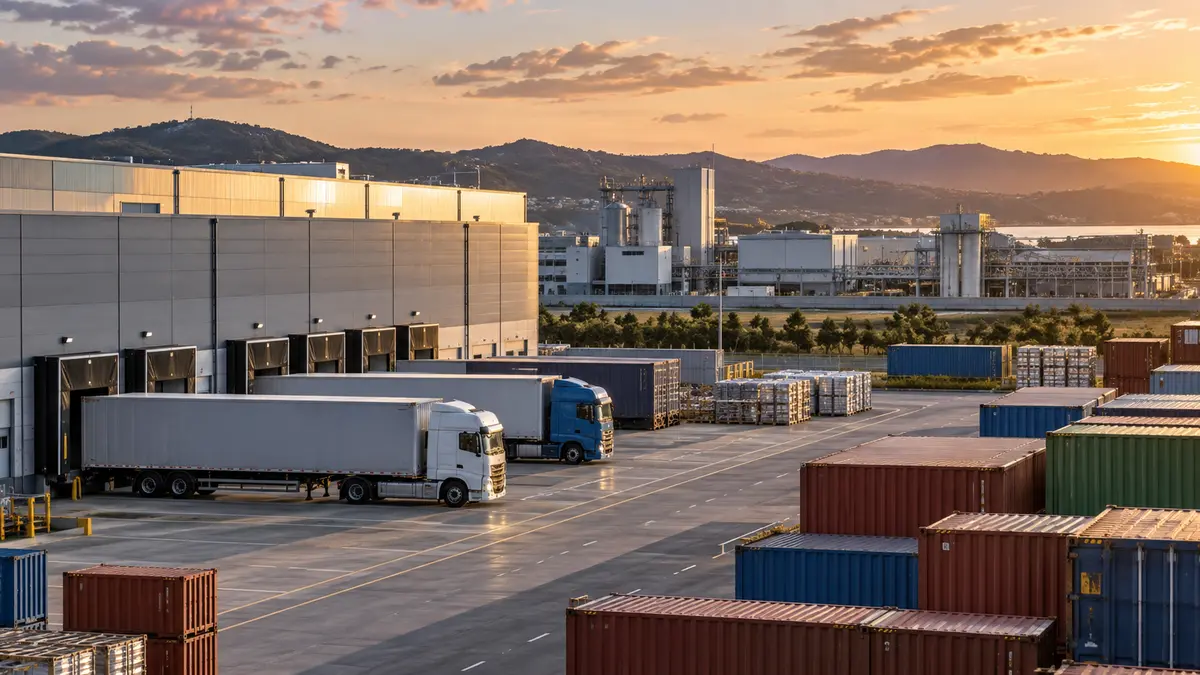
The shift is easiest to see in attitudes. Where Davos once lionised frictionless supply chains stretching from China to the developed countries of Europe and North America, there is now a recognition that low cost is not everything. Governments increasingly want to know that they will not run short of vaccines, protective equipment, computer chips or energy when the next crisis hits. The attacks on cargo vessels in the Red Sea, which have forced ships onto much longer journeys around the Cape of Good Hope, are the latest example of how vulnerable long supply chains have become. As Christine Lagarde, the president of the European Central Bank, told the final Davos session: "We were relying on efficiency over security a little too much." A bit of rebalancing, she noted correctly, is no bad thing.
That rebalancing is not merely a matter of corporate logistics. It touches the deepest questions of economic policy: how much risk should a nation accept in exchange for cheaper goods? How much should the state pay to keep critical production at home? And who decides where the line is drawn? These are questions that, for decades, were answered almost automatically by the logic of the free market. Now they are being reopened, one industry at a time.
Why the change happened
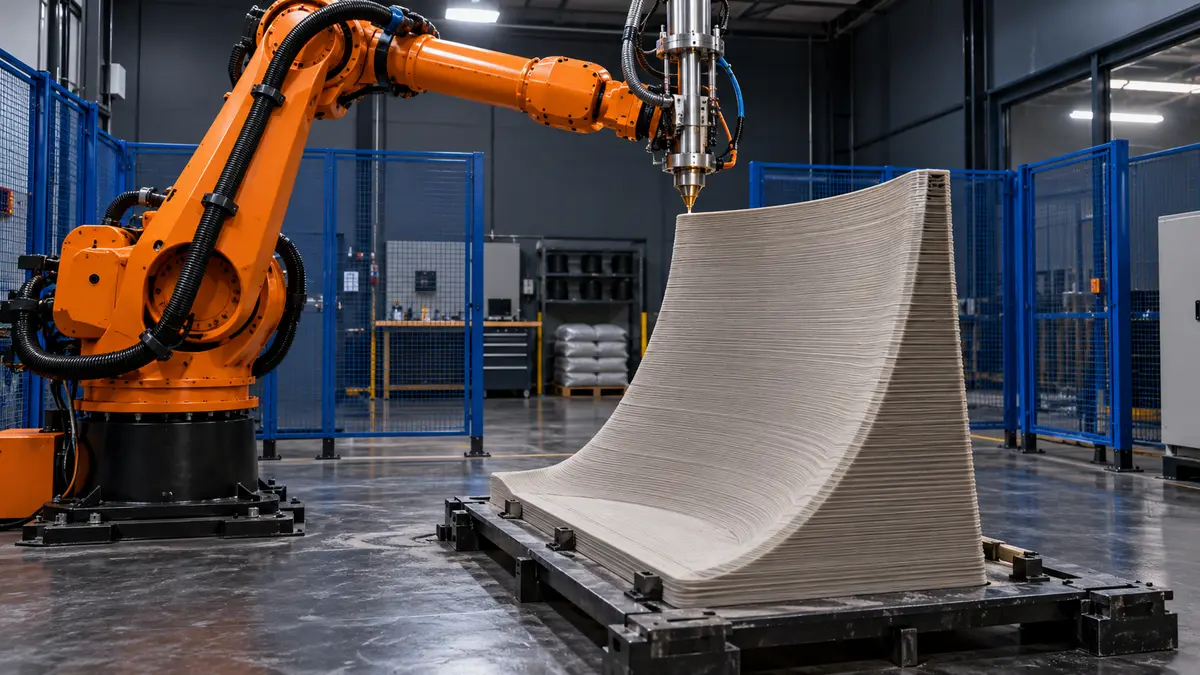
The long-term causes of glocalisation lie in the increasingly fractious relationship between the United States and China — a relationship that has been deteriorating since Washington woke up to the threat posed by China's rapid growth and its clearly signalled plan to use its economic power to challenge American global hegemony. The US Chips Act and the Inflation Reduction Act are both examples of American determination to rebuild its industrial base through active government intervention: subsidies, tax incentives and targeted support designed to bring strategic production back onto domestic soil or to friendly shores.
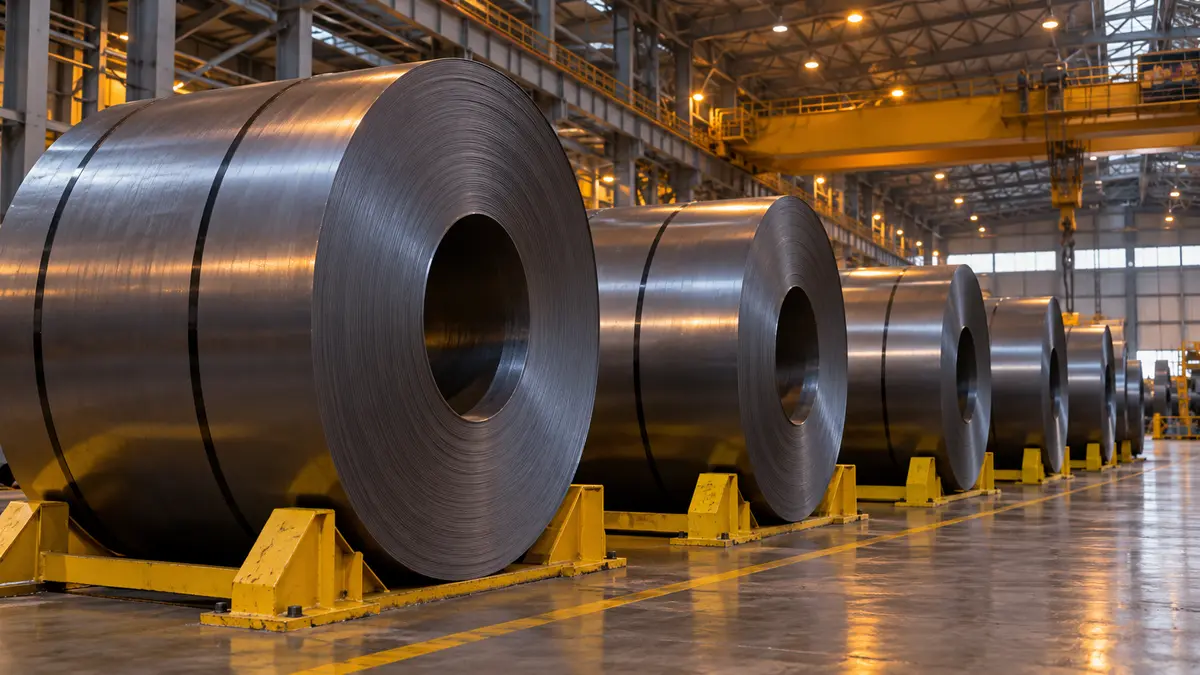
But while the shift towards onshoring previously outsourced production would have happened anyway, it has certainly been accelerated by the events of the past four years. The sequence is now familiar to anyone who has followed the world economy: first a pandemic that shut down factories and ports across Asia and beyond; then supply chain bottlenecks as demand snapped back faster than production could follow; then a surge in inflation as scarce goods, energy and shipping capacity collided with released consumer demand; and then a full-scale war in Europe that turned energy markets upside down. Each shock taught the same lesson: efficiency built on long, lean, single-source supply chains is fragile when the world stops working normally.
Businesses learned that lesson in their order books. A company that once bought a critical component from the cheapest supplier on the other side of the planet now asks whether it can survive a month without that component. A government that once assumed the market would deliver whatever it needed now asks whether it can count on deliveries in a crisis. The answer, in both cases, has been to pay a premium for resilience: to hold more stock, to qualify more than one supplier, to locate production closer to home. None of this means the end of international trade. It means that the calculus of trade has changed, and that the cheapest option is no longer automatically the best one.
Industrial policy is no longer a dirty word
The upshot is that industrial policy — the deliberate use of state resources to shape the structure of the economy — is no longer a dirty word, even in Davos. For decades, the fashionable view among economists and policymakers was that governments should get out of the way, let markets allocate resources, and confine themselves to setting the rules of the game. The financial crisis of 2008 dented that consensus; the pandemic shattered it. Today, governments in the United States, China, the United Kingdom and across the European Union are all, in their different ways, picking priorities, subsidising industries and trying to steer investment towards what they consider strategic.
There was plenty of interest at the World Economic Forum, for example, in what the UK Labour Party's plans to boost the supply side of the British economy amounted to. The question of how to raise growth without reigniting inflation is now central to economic policy in the United Kingdom, and the answer being explored involves exactly the kind of targeted, state-backed investment that would have been dismissed as heresy not long ago.
Germany, too, is part of the story, though from a different angle. The country's finance minister, Christian Lindner, raised eyebrows when he said his country was the tired man of Europe — a striking admission from the economy that had long been the continent's industrial engine. Weak productivity and squeezed living standards have left the developed world's liberal democracies on the defensive, even as the reach of their multinational companies shows that global capitalism is far from finished. The contrast is instructive: there are good reasons why there are no pictures of asylum seekers trying to get into Russia or China, and those reasons have as much to do with economics as with politics.

The green growth sweet spot
One of the most interesting threads at Davos concerned where glocalisation and climate policy might intersect. Nick Stern, author of the seminal report on the economics of climate change, thinks there is a potential sweet spot where the demands for stronger growth and the fight against global heating meet. Artificial intelligence, he argues, can act as an accelerator, helping developing countries both with climate change mitigation and with adaptation to the changes already under way. He is not blind to the pushback by the fossil fuel industry against steps to combat global heating, but he thinks the positives outweigh the negatives.
Stern insists that investing in good green projects would be good for growth and fiscally responsible. That is, in effect, a green light for the green growth plans being developed in the United Kingdom and elsewhere — and glocalisation in action. The logic is straightforward: if governments are going to spend money rebuilding industrial capacity anyway, spending it on clean energy, batteries, grids and efficiency is a way of killing two birds with one stone. It builds domestic industry, it reduces dependence on imported fuels, and it addresses the climate problem at the same time. Whether that sweet spot can actually be found in practice, rather than in conference halls, remains to be seen. But the fact that it is being discussed seriously at the highest levels is itself a sign of how far the debate has moved.
What this means for businesses and consumers
For businesses, glocalisation means a different kind of risk management. The old model rewarded those who squeezed every last unit of cost out of their supply chains; the new model rewards those who can absorb shocks without stopping. That has concrete consequences:
- Supply chains are getting shorter and more regional, with production located closer to the markets it serves.
- Inventory is rising, as companies accept the cost of holding stock in exchange for the safety of having it.
- Suppliers are being diversified, so that no single country or factory can bring production to a halt.
- Governments are becoming active participants, using subsidies and rules to steer where investment goes.
- Energy security has joined cost and quality as a first-order consideration in industrial decisions.
For consumers, the trade-offs are more ambiguous. Shorter, more resilient supply chains are less likely to empty supermarket shelves or leave factories idle, as happened during the pandemic years. But resilience is not free. Rebuilding domestic capacity, holding more stock and qualifying extra suppliers all cost money, and those costs tend to show up, eventually, in prices. The era of ever-cheaper goods delivered by ever-longer supply chains may be giving way to an era of somewhat more expensive but somewhat more reliable ones. Whether that is a good trade depends on what a society values more: the lowest possible price, or the assurance that the goods will actually be there when they are needed.
The risks that remain
None of this means the path ahead is smooth. One leading global policymaker, speaking privately in Davos, said that the repeated blows since 2020 meant it would be wise to be braced for the next surprise shock. Only the most incurable optimist would quibble with that. Washington and Beijing remain locked in a grim struggle for economic supremacy. The gap between the world's rich north and its poorer south is widening. Liberal democracy is being challenged by a new breed of autocrats. And the planet continues to heat up, adding a physical constraint to every economic calculation. In a week that marked the 100th anniversary of Lenin's death, there were once again competing visions of what constitutes progress and success — a reminder that the question of how economies should be organised is never settled for good.
The central banks, meanwhile, face their own version of the glocalisation dilemma. Cutting rates too quickly risks reigniting inflation, especially if supply chains become structurally more expensive; keeping rates too high risks plunging economies into recession. The balancing act is made harder by the fact that the old assumptions — about cheap energy, cheap shipping and frictionless trade — no longer hold. Monetary policy, like trade policy, is being written for a world that looks different from the one that produced the rulebooks.
So globalisation is not dead. The multinational companies, the cross-border flows of capital and ideas, the technology revolution that ignores frontiers — all of it continues. But the world economy that emerges from the shocks of the early 2020s will not look like the one that entered them. It will be more regional, more state-shaped, more security-conscious and, in all likelihood, somewhat more expensive. Glocalisation is not a slogan; it is a description of where the world economy is actually heading. The task for policymakers, businesses and citizens is to decide what kind of glocalisation they want — and to accept that the age of assuming the market would sort everything out, by itself, is over.















Leave a comment
Your comment is awaiting moderation.