Inside Boeing's Largest Factory: 'Panic Mode', Quality Fears and the Battle for the Production Line
Workers and union officials at Boeing's Everett plant describe a factory in 'panic mode' amid the safety crisis triggered by January's 737 Max 9 door plug blowout: managers accused of hounding staff over quality concerns, a 787 verification backlog, a new FAA investigation into possible falsified inspection records, and a deepening dispute over whether cost-cutting and union containment lie at the heart of Boeing's quality problem.
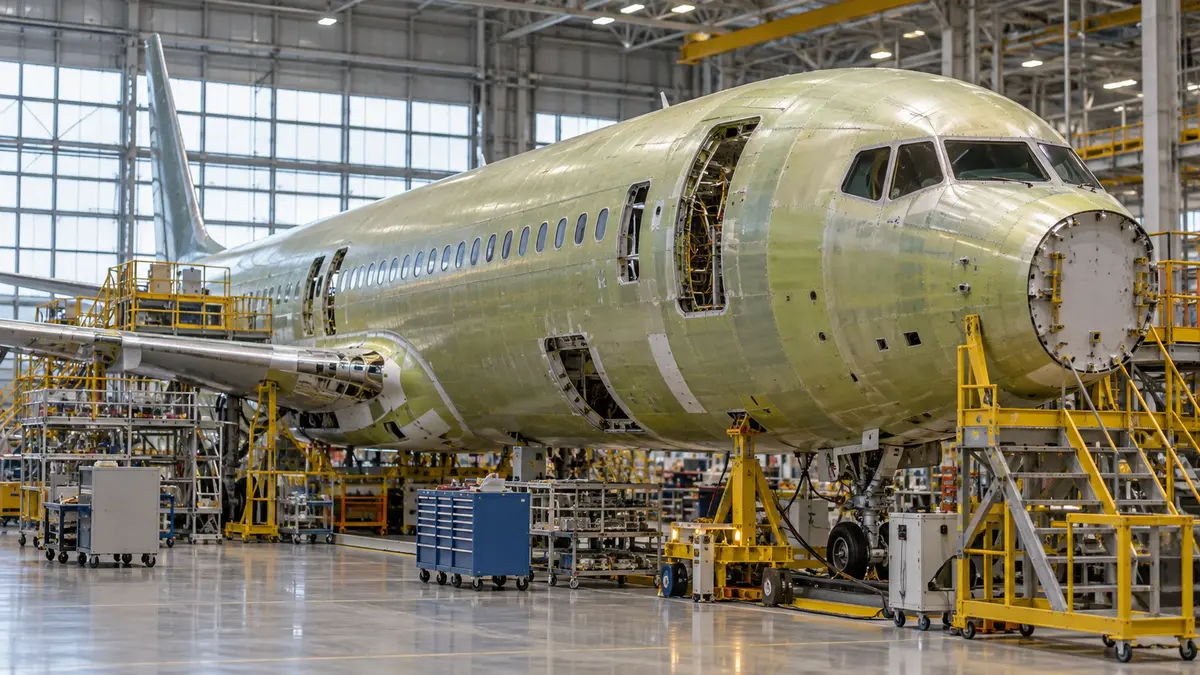
Boeing's largest factory is in 'panic mode', according to the people who work inside it. Mechanics and union officials at the company's Everett complex in Washington state — the site long hailed as the world's biggest manufacturing building — describe a production floor gripped by fear, where managers allegedly hound staff to keep quiet about quality concerns and where a backlog of jets awaits inspection and repair. The account, gathered by the Guardian from workers and union representatives, lands at a pivotal moment in the deepest crisis the United States planemaker has faced in decades.
The crisis was sparked in January, when a cabin panel blew out during a flight aboard a brand-new 737 Max 9 jet. The blowout triggered a sweeping investigation by the Federal Aviation Administration, a six-week audit of Boeing's production line that found multiple failures to comply with manufacturing quality-control requirements, and a 90-day deadline for the company to present an action plan. By late May, Boeing had submitted its proposed plan to the FAA and said it 'welcomed' the 53 recommendations of an expert panel appointed by the regulator after the two fatal Max crashes of 2018 and 2019 that killed 346 people. The FAA administrator, Mike Whitaker, told reporters that Boeing had accepted them all. Yet the testimony from Everett suggests that, whatever the company's formal commitments, the culture on the factory floor has not caught up with the promises made in boardrooms.
What the workers describe
At the centre of the workers' account is a veteran mechanic with more than three decades at Boeing, who claims the Everett complex is 'full of' faulty 787 Dreamliners that need fixing. Many of those jets were flown in from Boeing's South Carolina site, where the company moved final assembly of the 787 in 2021 in what was characterised as a cost-cutting measure. 'There is no way in God's green earth I would want to be a pilot in South Carolina flying those from South Carolina to here,' the mechanic, who asked for anonymity for fear of retaliation, told the Guardian. 'Because when they get in here, we're stripping them apart.'
The same worker alleges that managers at Everett 'will hound mechanics' to keep quiet about quality-assurance concerns and potential repairs, prioritising speed and efficiency over safety. 'Boeing has to look in the mirror and say: We're wrong,' the mechanic added. Another employee, also speaking anonymously, described the atmosphere in blunt terms: 'Right now, we're in panic mode in Everett,' because managers 'finally figured out that they got more people that have no idea what's going on, than people that do.'
Boeing did not comment on the claims that staff have been pressured not to raise quality concerns. Work on the 787s at Everett is taking place as part of an established verification program, the company said. A spokesperson added that all undelivered 787s would go through a join verification program to ensure every airplane conforms to the company's engineering specifications before delivery, and that jets assembled since 2022 do not require that additional work. In mid-2023, Boeing announced it would relocate all join verification efforts to Everett so its South Carolina team could focus on new production positions — a plan the company says has not changed.
The regulatory squeeze: audits, action plans and a new investigation
The worker testimony arrives against a backdrop of intense regulatory scrutiny. After January's blowout, the FAA's six-week audit of Boeing's production line uncovered multiple failures to comply with manufacturing quality-control requirements, and the agency gave Boeing 90 days to outline an action plan and address the expert panel's findings. The company met with US regulators in late May to discuss how it plans to address quality-control issues, and executives have recently described how workers have been emboldened to speak up since January, with submissions to an internal portal for safety and quality concerns up 500%.
Earlier this year, the expert panel appointed by the FAA after the two fatal 737 Max crashes of 2018 and 2019 — which killed 346 people — described a 'disconnect' between Boeing's leadership and its workforce on safety, and made 53 recommendations to resolve its concerns. Boeing submitted its proposed plan to the FAA on Thursday and said it welcomed the recommendations; Whitaker confirmed that Boeing had accepted them all.
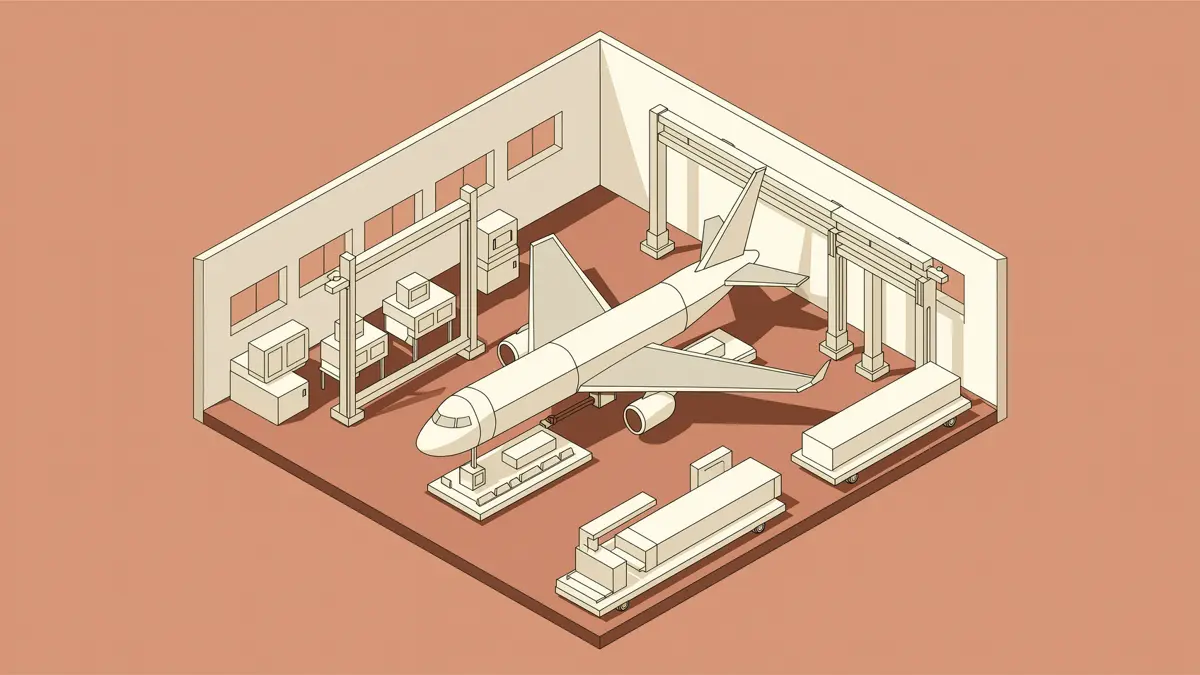
The pressure has not stopped there. The FAA launched another investigation in May into production of the 787 Dreamliner, scrutinising whether Boeing workers in South Carolina completed required inspections on the jet and whether they 'falsified aircraft records', after Boeing informed the watchdog that it 'may not have completed' all checks. In April, Sam Salehpour, an engineer at Boeing, testified before Congress that the 787 was riddled with quality defects and called for all 787s to be grounded for inspection. Boeing denied his allegations and said it was 'fully confident in the safety and durability' of the plane. The mechanic who spoke to the Guardian described how 'giant failures' in the 787 production line had put enormous pressure on the company as it scrambles to reassure regulators, airlines and passengers.
The 1997 merger and the erosion of a safety culture
To understand why a company that once defined American engineering excellence finds itself in this position, many observers point to a decision taken more than a quarter of a century ago. Najmedin Meshkati, a professor of civil and environmental engineering at the University of Southern California who served on the FAA's expert panel, said Boeing's safety culture has 'eroded' over the past two decades in the wake of its merger with McDonnell Douglas in the late 1990s — 'under the direct watch of its leaders and board of directors, who have been complicit in and ultimately responsible for its present problems'.
Meshkati's diagnosis is widely shared among analysts of the company. 'Boeing's most valuable asset is its highly dedicated and skilled workforce, and, fortunately, most of its systems-related problems are fixable,' he said in an interview before the company presented its plan. 'However, Boeing's corporate governance and its perpetually cloned board needs to be overhauled and diversified.' He suggested the company should move its headquarters back to Seattle and 'systematically' implement all the panel's recommendations. The argument is that a management culture shaped by financial engineering and shareholder returns gradually displaced the engineering-first culture that had built Boeing's reputation — and that the consequences of that shift are now playing out on factory floors and in regulatory filings.
The historical pattern matters because it frames the current crisis not as a single failure but as the culmination of a long drift. When a company's identity shifts from building great machines to managing a portfolio of businesses, the metrics that matter change: quarterly earnings, cost targets, production rates. The people who once set the pace — the most senior, experienced factory workers — lose influence to managers whose incentives are financial. That is precisely the transition veteran workers at Everett describe, and it is the transition regulators are now trying to reverse through audits, deadlines and formal action plans.
Union containment: the other front in the crisis
The second thread running through the workers' account is labour relations. Some workers at Everett characterise the shift of 787 production from Washington to South Carolina as an anti-union move: Washington has a union for mechanics, while Boeing's plant in South Carolina is non-union and was the site of a contentious union-organising drive several years ago. Another Boeing employee at Everett drew a contrast between productivity at the Washington complex and the North Charleston factory in South Carolina, where final assembly of the 787 was moved but where no union mechanics were hired. 'We would build 10 to 12 planes a month, while South Carolina would build just over two, almost three a month,' the employee said. 'I don't see them ever getting to 10 a month.'
Rich Plunkett, director of strategic development for the Society of Professional Engineering Employees in Aerospace (Speea), which represents 17,000 employees at Boeing and supplier Spirit AeroSystems, argues that a 'very robust union-containment strategy' at Boeing is partly responsible for the company's broader safety problems. In addition to not hiring union mechanics in South Carolina, Plunkett says Boeing has significantly reduced the number of workers who write instructions for machinists in recent years, through outsourcing, voluntary resignations and layoffs. 'The existing employees are not the enemy,' he said. 'They're your solution. And you need to engage them collectively.'
Plunkett's prescription is direct: 'Boeing has to implement meaningful non-retaliation policies, demonstrate by walking the talk, and quit threatening their workforce that if they can't do everything they can cheaper that they're going to send the work abroad. Because Boeing's globalization is continuing, if not expanding, in the midst of Boeing telling the free world they're changing the culture.' The tension he describes — between a company that publicly pledges cultural change and privately continues to shift work to lower-cost, non-union locations — is one of the central contradictions of Boeing's recovery effort.
Recently, disagreements between Boeing and unions have stalled talks over the creation of a program for employees to raise safety concerns to regulators without fear of retaliation. Speea claimed last month that Boeing wanted to control the flow of information to regulators; Boeing said it had offered the union the same deal it had signed with another union, the International Association of Machinists and Aerospace Workers, and was willing to negotiate. The standoff matters because a channel through which workers can report problems directly to the FAA — without going through management — is precisely the kind of safeguard the expert panel's recommendations point toward.
The team-leader problem: experience displaced by management
A third, more granular complaint from veteran union employees concerns how the factory itself is organised. Some draw a link between Boeing's current issues and a move more than two decades ago to introduce 'team leader' managers, replacing a previous system in which the most senior, experienced factory workers were in charge. 'The team leader isn't picked by his skill on the airplane — he is picked by his relationship with another manager or another person,' said the mechanic. 'Now we don't have team leads who know what's up.'
Today, the managers 'doing the thinking have never done physical labor before', the worker added. 'There's no way you can learn how to build an airplane in a school on the third floor. There are a lot of things you can learn in the classroom, but building an airplane is not one of them.' The complaint goes to the heart of what makes aircraft manufacturing different from most industries: the tacit knowledge accumulated on the line, the ability to spot a problem before it becomes a defect, the instinct for what 'right' looks like when a part does not quite fit. When that knowledge is pushed to the margins and replaced by managers whose authority comes from their position in a hierarchy rather than from their skill on the airplane, quality becomes a function of paperwork rather than of craft.
Boeing's response emphasises that it values experience alongside other factors — skill set, performance and leadership — in making team lead selections, and that its team leads help develop employees while the company's overall training builds knowledge and skills as teammates advance in their careers. The disagreement is less about the facts of the selection process than about its consequences: workers say the change removed the people who knew the airplanes best from the positions where their judgment mattered most.
Why this matters beyond Boeing
The Boeing crisis is not merely a corporate story; it is a case study in what happens when a flagship industrial company loses the thread between its engineering culture and its financial culture. The planemaker sits at the centre of a supply chain that spans thousands of suppliers and employs hundreds of thousands of workers indirectly. Airlines have grounded fleets, delayed deliveries and restructured growth plans because of Boeing's production problems. Regulators have had to reinvent their oversight relationship with a company they once trusted to police itself. And the labour movement has found in Everett a vivid illustration of its long-standing argument: that the workers who build complex products are not a cost to be minimised but a source of knowledge that cannot be replaced by management systems.
The broader lesson concerns the limits of financial engineering in complex manufacturing. Cost-cutting, outsourcing, relocation to non-union sites and the thinning of experienced workforces all look rational on a spreadsheet. Each one reduces a line item. But in an industry where a single missed inspection can ground a fleet and where the tacit knowledge of veteran mechanics is the last line of defence against defects, the cumulative effect of those rational decisions can be catastrophic. The 737 Max crashes of 2018 and 2019, the January door plug blowout, the 787 inspection questions — each episode is different in its details, but each points back to the same underlying question: whether the company's systems, incentives and culture are aligned around building safe airplanes or around meeting financial targets.
What to watch next
Several developments will determine whether Boeing's action plan is the beginning of a genuine recovery or another round of promises:
- The FAA's assessment of the action plan Boeing submitted in late May — whether the regulator accepts it as sufficient or demands more.
- The outcome of the new investigation into 787 production in South Carolina, including the question of whether inspection records were falsified.
- Whether the join verification program at Everett clears the backlog of 787s without further delays or discoveries.
- The resolution of the standoff with unions over a non-retaliation channel for reporting safety concerns directly to regulators.
- Changes to corporate governance — board composition, leadership accountability and the location of the company's headquarters — that the expert panel recommended.
- The trend in submissions to Boeing's internal safety and quality portal, which executives say have risen 500% since January — a sign either of genuine empowerment or of accumulated problems finally surfacing.
For now, the picture from Everett is one of a company caught between two realities. On paper, Boeing has accepted every recommendation of the expert panel, submitted an action plan to the FAA, and pledged to put safety first. On the factory floor, workers describe panic, pressure and a management culture that has not yet changed. The distance between those two realities is the measure of how far Boeing has to go — and the reason the crisis, five months after the door plug blowout, is far from over.
The stakes could hardly be higher. Boeing is not just a company; it is a national industrial champion, a pillar of the aerospace supply chain, and a test case for whether a great engineering firm can recover from a crisis of its own making. The workers of Everett, the regulators in Washington and the airlines waiting for their jets all have a reason to hope the answer is yes. But hope, as the mechanic put it, must begin with a company willing to look in the mirror and say: 'We're wrong.'















Leave a comment
Your comment is awaiting moderation.