Bitcoin Breaks $100,000: How Politics, Wall Street and Fifteen Years of Chaos Built the Record
On 5 December 2024 Bitcoin passed $100,000 for the first time, hours after President-elect Donald Trump named former SEC commissioner Paul Atkins to run the Wall Street regulator. The price was up 40% from US election day and more than double its start-of-year level, with spot Bitcoin ETFs launched in January 2024 by firms including BlackRock, Fidelity and Grayscale pulling in billions. Behind the milestone lie seven wild moments in the cryptocurrency's history, from the 2010 pizza purchase to the fall of the 'Crypto King'.
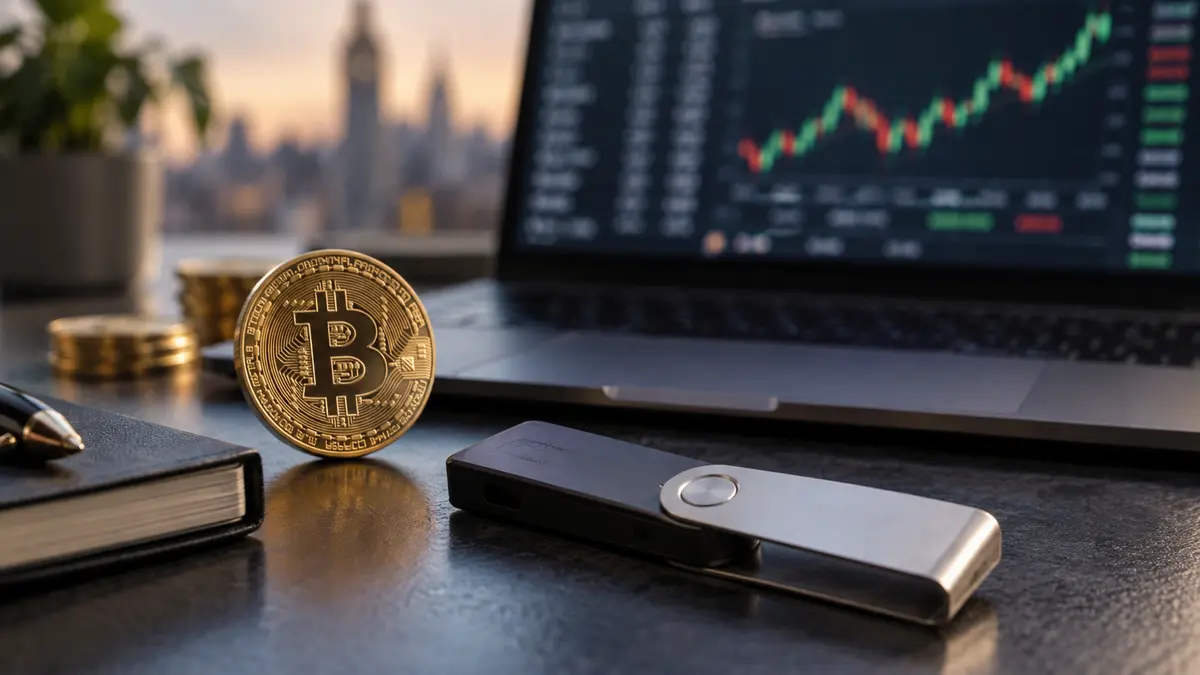
On 5 December 2024 the price of Bitcoin, the world's biggest cryptocurrency, broke past the $100,000 mark for the first time ever, setting a fresh record high. The milestone was reached in the United States trading hours that followed a piece of political news: only hours earlier, President-elect Donald Trump had said he would nominate former Securities and Exchange Commission (SEC) commissioner Paul Atkins to run the Wall Street regulator. Atkins is widely seen as far more pro-cryptocurrency than the current SEC head, Gary Gensler, and the market treated his nomination as confirmation that the hopes surrounding Trump's election victory — that Washington would turn crypto-friendly — were about to be cashed in.
The value of the world's largest cryptocurrency had already been boosted for weeks by expectations that Trump would adopt policies friendly to digital assets, and the six-figure threshold crowned that run. For cryptocurrency fans around the world, $100,000 prompted open celebration. Bitcoin's wildly fluctuating value has always attracted interest, with its backers reacting with delight whenever it passed previous price thresholds — and with defiance during its slumps. But this particular landmark, as the BBC noted, had been especially keenly anticipated.
A threshold the crypto world treated as a holy grail
For weeks before the breakthrough, charts, memes and predictions had swirled around social media about when the price would hit the figure thought to be one of the holy grails of the crypto world. The anticipation was not confined to trading terminals. Millions of viewers tuned in to online watch parties as the price hovered close to $100,000, turning what would once have been an obscure market tick into a mass spectator event. Few market landmarks arrive with that kind of built-in audience; the round-number psychology of six figures turned a price level into a story in itself.
The scale of the industry behind that single price line is easy to underestimate. The value of a single bitcoin has become one of the barometers of optimism across the whole cryptocurrency industry, which analysis firm Coin Market Cap estimated to be worth $3.3 trillion at the time of the record. Bitcoin now underpins a cryptocurrency sector measured in trillions rather than billions, and its price is watched far beyond the community of enthusiasts who once tracked it on niche internet forums. That is part of why the $100,000 mark mattered beyond bragging rights: it was read as a verdict on whether the industry's optimism had a durable foundation.
It is worth pausing on the volatility itself, because it is the defining feature of the asset. A valuation of $100,000 represented a 40% increase on the price on US election day and more than double the price Bitcoin started the year at. Those are gains most traditional assets cannot deliver in a single year, let alone a single quarter — and the same mechanism that produces such climbs has, in Bitcoin's history, produced equally dramatic collapses. The rally into six figures did not change that character; it reconfirmed it, and the debate around the record is as much about risk as about reward.
The politics behind the price
The catalyst for the latest surge was Trump's election victory in November 2024. The president-elect has vowed to make the US "the crypto capital of the planet" — a remarkable turnaround given that as recently as 2021 he was calling Bitcoin a "scam". The reversal is itself instructive: within roughly three years, the largest cryptocurrency went from being publicly dismissed by a former president to being central to his economic pitch, and the price rallied hardest exactly when the political outlook for regulation turned friendliest.
The Atkins nomination showed how tightly the market now reads personnel decisions in Washington. As head of the SEC, the agency that polices Wall Street, Atkins would shape the enforcement posture toward crypto businesses that developed under Gensler. Investors did not wait for any actual rulebook change; the expectation of a friendlier regulator moved the price within hours. In effect, a regulatory appointment functioned as a macroeconomic event for a global asset — something that would have been unthinkable for Bitcoin in its early years.
Two distinct political channels fed the rally. The first is regulatory: a pro-crypto SEC leadership promises fewer enforcement fights for exchanges, issuers and funds. The second is symbolic: a declared intention to make America the crypto capital of the planet signals to firms worldwide that the deepest capital markets intend to host, not fight, this industry. Both channels run through Washington, which means both can reverse with the political winds — a structural vulnerability that the celebratory mood of December 2024 tended to gloss over.
There is also an accountability question embedded in the record. The SEC's job is investor protection, and Bitcoin's history — described below — includes frauds of historic scale. A regulator seen as "far more pro-cryptocurrency" will be judged, eventually, on whether friendliness to the industry is compatible with policing it. The $100,000 milestone put that tension at the centre of the market's attention, even as prices were rising.

Wall Street arrives: the ETF turning point
The political story, however, sits on top of a structural one that began earlier in the same year. In January 2024, some of the biggest financial firms in the world added Bitcoin to their official asset lists as spot Bitcoin ETFs. These products are like stocks and shares: their value is linked to the value of Bitcoin, but investors do not have to personally own any coins. That packaging removed much of the friction — custody, security, technical know-how — that had kept mainstream portfolios away.
The response was immediate and enormous. Customers poured billions into these brand-new products. Companies including BlackRock, Fidelity and Grayscale have also been buying up Bitcoins in their thousands, pushing the value to record highs. For an industry that spent its first decade outside the formal financial system, having the largest asset managers accumulate the asset by the thousand units was a qualitative change in the market's structure: demand now flows through regulated, familiar vehicles that can be sold by ordinary brokers to ordinary clients.
The ETF channel also explains why the rally's character differed from earlier ones. Previous Bitcoin booms were driven largely by retail enthusiasm; this one combined retail excitement — the watch parties, the memes — with sustained institutional buying tied to listed funds. Some fans believe that with the ETFs, Bitcoin is finally being taken as seriously as its mysterious inventor Satoshi imagined. Whatever one makes of that claim, the January 2024 approvals walled the biggest names in traditional finance to the crypto market, and by December that wall of capital had helped carry the price to six figures.
Seven wild moments in Bitcoin's history
The road to $100,000 ran through more than fifteen years of twists, turns, fortunes made and lost. The BBC's account of the seven wildest moments in Bitcoin's tumultuous history gives the record its necessary context:
- The mysterious creator. No one actually knows who invented Bitcoin. The idea was posted on internet forums in 2008 by someone calling themselves Satoshi Nakamoto, who explained how a peer-to-peer digital cash system could let people send virtual coins over the internet as easily as sending an email. Satoshi built a complex computer system that processes transactions and creates new coins through a huge network of self-appointed volunteers using special software and powerful computers — and then never revealed their identity. In 2014, a man named Dorian Nakamoto was pursued by reporters who thought he was the elusive creator, but it proved a false lead caused by mistranslated information. In 2016, computer scientist Craig Wright claimed he was Satoshi; after years of legal battles, a High Court judge concluded he was not. Earlier in 2024, Canadian Bitcoin expert Peter Todd strongly denied being Satoshi, and in London in December a British man, Stephen Mollah, claimed he was — but no one believed him.
- Making history with pizza. The first recorded transaction using Bitcoin was the purchase of food. On 22 May 2010, Lazlo Hanyecz offered $41 worth of Bitcoin on a crypto forum in return for two pizzas; a 19-year-old student obliged, and the date went down in the community's history as #BitcoinPizza day. It showcased Bitcoin's core promise — internet money that could genuinely buy items — and became an endless source of memes, since holding those coins would have made them worth hundreds of millions of dollars by the time of the $100,000 record. Criminals were watching too: within a year, the first darknet marketplace was launched, selling drugs and other illegal goods in exchange for Bitcoin.
- Becoming legal tender. In September 2021, President Nayib Bukele made Bitcoin legal tender in El Salvador, alongside the US dollar. Hairdressers, supermarkets and other shops had to accept it by law. Enthusiasts and reporters visited, briefly boosting tourism, and Bukele hoped the move would increase investment and cut costs for citizens exchanging money. It did not become as popular as he hoped, and the dollar still remains king. Bukele also controversially bought more than 6,000 bitcoins, spending at least $120 million of public money at various prices hoping to profit for his cash-strapped country. By December 2023 his stash had skyrocketed in value for the first time; a tracking website built by software engineer Elias Zerrouq estimated the coins had risen 98% in value.
- Kazakhstan's mining boom and bust. In 2021 Kazakhstan became a hotspot for Bitcoin mining — crunching the complex calculations that underpin crypto transactions, done these days in warehouses full of the latest computers running all day and night, with brand-new bitcoins as the reward. Mining needs enormous power, and businesses moved to Kazakhstan, where electricity was abundant thanks to huge coal reserves. The government first welcomed the investment, but too many miners arrived and put huge strain on the electricity grid, putting the country at risk of blackouts. Within a year the industry went from boom to bust as the government imposed restrictions and increased taxes. Worldwide, the Bitcoin network is estimated to use as much electricity as a small country, raising concerns about its environmental impact.
- Bitcoins in the rubbish dump. The irreversibility of crypto cuts both ways. In the United Kingdom, James Howells of south Wales says he accidentally threw away a hard drive containing the login details to a crypto wallet worth more than $100 million (£78 million). With no banks involved, there is no customer-support helpline and no password reset; recovery is not easy. His local council in Newport refused to let him search the landfill site, even after he offered to donate 25% of the stash to local charities. "It was a penny dropping moment and it was a sinking feeling," he told the BBC.
- The Crypto King fraudster. No one has lost as much Bitcoin as former billionaire crypto mogul Sam Bankman-Fried. The founder of the massive crypto firm FTX was nicknamed the Crypto King and loved by the community; his empire was worth an estimated $32 billion. Then everything came crashing down within days, after journalists discovered the company was financially shaky and had been illegally transferring FTX customer funds to prop up his other company, Alameda Research. Just before his arrest in December 2022 he told the BBC: "I don't think I committed fraud. I didn't want any of this to happen. I was certainly not nearly as competent as I thought I was." Extradited to the US, he was found guilty of fraud and money laundering and jailed for 25 years.
- The investment bank boom. Despite all the turmoil, Bitcoin continues to attract investors and big companies — culminating in the January 2024 launch of spot Bitcoin ETFs by some of the biggest financial firms in the world, the billions poured into them, and the thousands of coins bought up by the likes of BlackRock, Fidelity and Grayscale on the way to record highs.
What the $100,000 mark actually tells us
Read together, the record and the history behind it frame the state of Bitcoin at the end of 2024 with unusual clarity. The six-figure price is real, institutional and politically lubricated; the same asset remains capable of punishing volatility, irreversible loss and historically large frauds. Both halves of that sentence are supported by the events of a single year.
- Institutionalisation is the story of 2024. The spot ETFs of January turned the largest asset managers into accumulators of Bitcoin and gave ordinary investors a regulated wrapper. Billions flowed in, and thousands of coins were bought by firms whose participation would have been unimaginable in Bitcoin's first decade.
- Politics is now a price driver. An election victory and a regulator nomination moved the market within hours. A 40% gain since election day and a doubling since the start of the year were tied as much to expectations about Washington as to fundamentals — which also means the rally carries political risk in both directions.
- The old dangers did not disappear. A wallet worth over $100 million lost to a landfill, an exchange empire worth $32 billion that collapsed within days, a national legal-tender experiment that never caught on: these are not ancient history relative to the record — they happened between 2010 and 2024.
- Scale brings scrutiny. A $3.3 trillion industry estimated by Coin Market Cap, and a mining network that consumes as much electricity as a small country, cannot stay outside the frame of regulators and governments. Kazakhstan's restrictions and taxes showed how quickly policy can clamp down when the physical footprint becomes a problem.
- The founder's absence still defines the asset. Sixteen years after the 2008 forum post, false claimants and court rulings still cannot settle who Satoshi Nakamoto was. Bitcoin reached six figures without anyone being able to ask its inventor what they think of it.
None of this resolves the argument about Bitcoin's ultimate role — store of value, speculative vehicle or, as its fans hope, genuinely serious money of the kind Satoshi imagined. What December 2024 established is narrower but harder to dispute: the cryptocurrency industry, worth an estimated $3.3 trillion, now has a price signal that the mainstream financial system watches in real time, products that Wall Street's biggest firms are willing to sell, and a political environment in the world's largest economy that has flipped from hostility to embrace within a single election cycle. Few would bet against more wild moments as the Bitcoin story continues to unfold — the record itself arrived only hours after a regulatory appointment, in a market that has learned to treat Washington as part of its order book.

















Leave a comment
Your comment is awaiting moderation.