South Korea's GDP Growth Halves to 1% in 2025 as Semiconductor Exports Offset Construction Slump
South Korea's real GDP grew just 1.0% in 2025, halving from 2.0% the previous year, as a construction slump and weak facility investment dragged the economy down despite a 13.2% surge in semiconductor output. The fourth quarter contracted 0.2%, capping a volatile year in which exports grew 4.2% led by chip demand, according to Bank of Korea data reported by The Korea Herald.
South Korea's economy grew by just 1.0% in real terms in 2025, half the 2.0% expansion recorded the previous year, as a deep construction slump and weak business investment outweighed strong semiconductor exports, according to Bank of Korea data reported by The Korea Herald. The fourth quarter contracted 0.2% quarter on quarter, underscoring the fragility of the recovery.
Key data
- Full-year 2025 real GDP growth: 1.0% (down from 2.0% in 2024)
- Q4 2025: −0.2% quarter on quarter
- Quarterly path: Q1 −0.2%, Q2 +0.7%, Q3 +1.3%, Q4 −0.2%
- Exports: +4.2% year on year, led by semiconductor demand (decelerating from +6.8% in 2024)
- Semiconductor output: +13.2% in 2025
- Non-chip manufacturing: slipped into contraction
- Per-capita GNI: $36,963, up just 0.3%
- Construction investment: sharp decline, the primary drag on growth

The semiconductor trap
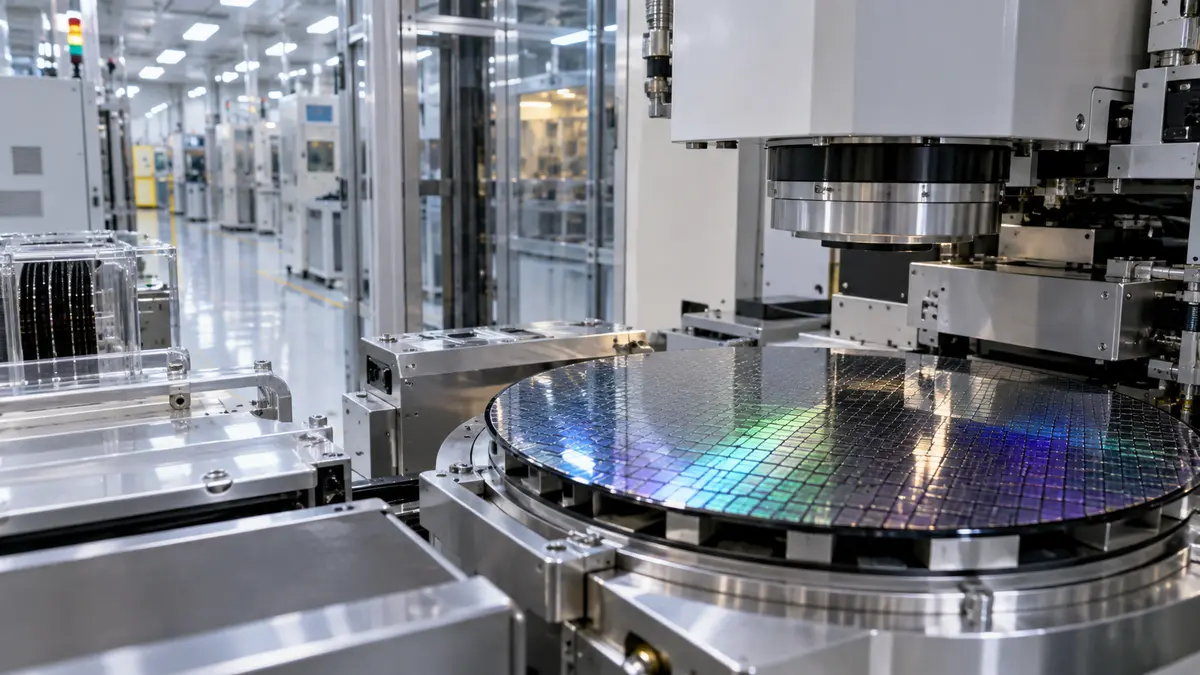
The data reveals an economy increasingly dependent on a single sector. Semiconductor output surged 13.2% in 2025, and chips contributed an estimated 0.9 percentage points to export growth. However, non-chip manufacturing slipped into contraction, a divergence that Korean commentators have dubbed the country's "silicon trap" — strong headline export numbers masking broad-based weakness in the rest of the industrial economy.
South Korea's construction sector was the primary drag, with investment falling sharply as the property downturn that began in 2022 continued to suppress new projects. Facility investment also weakened, reflecting corporate caution amid global trade uncertainty and elevated borrowing costs.
Outlook
The government's Ministry of Economy and Finance projected 2% growth for 2026, betting on a continued semiconductor supercycle and a rebound in construction investment of +2.4% after the 2025 decline of −9.5%. The Bank of Korea raised its 2026 forecast to 2.6% in May 2026, citing the chip upturn, though it warned that prolonged Middle East conflict could push growth below that estimate. Early 2026 data supported the optimistic view: Q1 2026 GDP grew 1.7% quarter on quarter — the fastest in five and a half years — with semiconductor manufacturing accounting for nearly half of the expansion.
















Leave a comment
Your comment is awaiting moderation.