Russia's Industrial Production Posts Record 4.6% Growth in 2024: What Drove the Boom and What Comes Next
Russia's industrial output grew 4.6% in 2024, the strongest result in thirteen years outside the post-pandemic rebound, according to Rosstat data published on 5 February 2025. Manufacturing led the charge with 8.5% growth, driven not only by defence-related orders but also by consumer-facing industries such as furniture, clothing, food and beverages. Yet economists warn that capacity constraints, personnel shortages and cooling consumer demand point to a sharp slowdown in 2025.
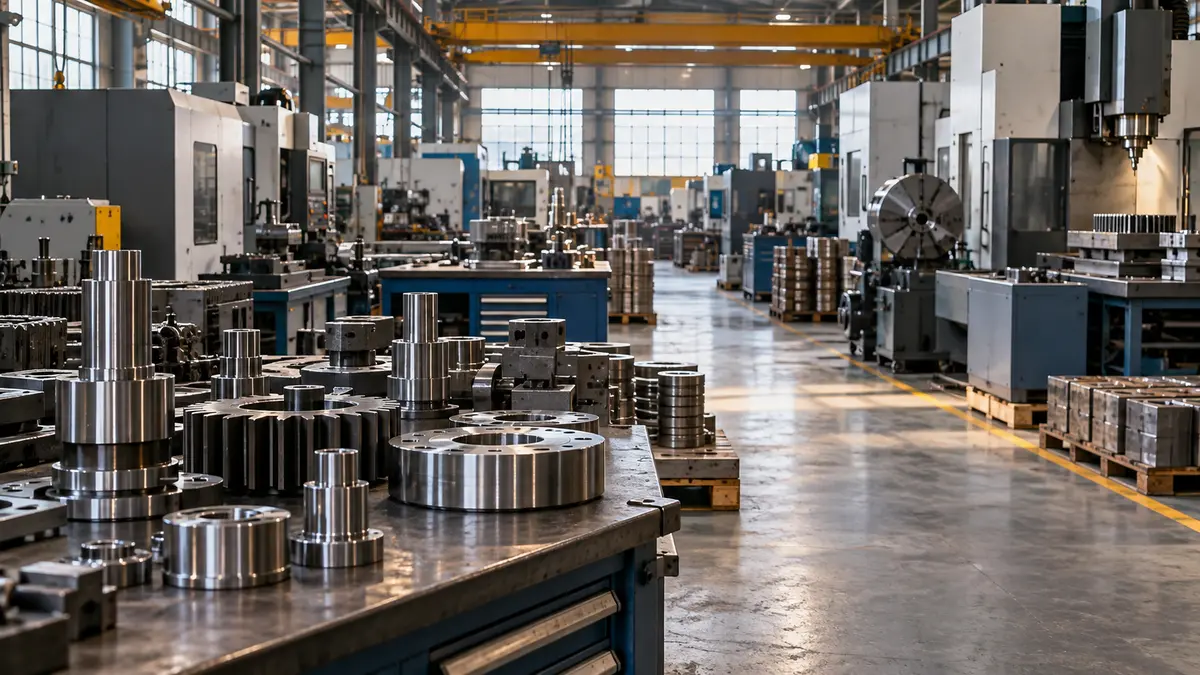
Russia's industrial production grew by 4.6% in 2024, according to figures published by Rosstat on 5 February 2025. The result was the strongest in thirteen years if one excludes the post-pandemic rebound of 2021, when output jumped 6.3% as factories recovered from lockdown-era disruptions. The December figure alone — an 8.2% year-on-year surge — was the highest monthly reading since January 2022, a month that still carried the momentum of the previous year's recovery. The numbers surprised most forecasters, who had expected full-year growth of around 4% based on the macroeconomic development plan drawn up in autumn 2024, and they raise a question that will define Russian economic policy in 2025 and beyond: how much of this boom reflects a durable structural shift in the economy, and how much is a cyclical peak that is about to give way to a pronounced slowdown?
The answer matters far beyond statistical interest. Industrial production is the backbone of Russia's non-energy economy, employing millions and generating a substantial share of federal and regional tax revenue. A thirteen-year record suggests that the combination of state defence spending, import substitution policies and recovering household demand has produced a genuine expansionary moment. But the same data also reveal deep fissures: sectors that contracted, capacity limits that are already binding, and economists who unanimously expect the pace to collapse in the coming year. Understanding the composition of the 2024 record is therefore essential to judging whether Russia's industrial economy is on a sustainable path or merely enjoying a temporary surge that will leave structural problems unresolved.
A manufacturing-led surprise that exceeded every forecast
The headline growth was driven overwhelmingly by manufacturing, which expanded by 8.5% over the year, following an 8.7% gain in 2023. This was the second consecutive year of near-identical expansion in the processing sector, a streak that has no parallel in the post-Soviet industrial record outside the oil-driven boom of the mid-2000s. Within manufacturing, three sectors stood out for their extraordinary growth rates, all of which are closely associated with the defence-industrial complex and the state's military procurement programme:
- Finished metal products (excluding machinery and equipment): +35.3% in 2024, after +27.8% in 2023. This category covers a wide range of fabricated metal goods, from structural components to specialised parts, and its sustained expansion at more than a third per year reflects the enormous volume of state defence orders flowing through the supply chain.
- Other transport vehicles and equipment: +29.6%, after +25.5%. This broad classification encompasses military vehicles, specialised transport and related equipment, and its growth trajectory mirrors the metal products sector.
- Computers, electronic and optical products: +28.8%, after +32.8%. Although the rate slowed slightly from the previous year, it remained extraordinary by any standard, driven by both defence electronics and the broader import-substitution push in information technology.
Boris Kopeikin, chief economist at the Stolypin Institute of Growth Economics, told Expert that the results were "noticeably higher than what was expected in autumn and built into the macroeconomic development forecast of 4%." Crucially, he added, growth was not confined to sectors serving the special military operation: "Industries oriented toward domestic consumer demand — furniture, clothing, beverages and food products — also grew actively. A certain improvement in the dynamics of extractive sectors also speaks to decent export prospects for 2025."
Oleg Abelev, head of the analytical department at the investment company Rikom-Trust, pointed to business activity indicators that are now at their highest levels in several years. "Sectors receiving additional domestic orders have begun to stand out," he noted. "This is evidenced by the fact that business activity indicators over the last few years are at maximum levels." The convergence of defence spending and consumer recovery created a uniquely favourable environment for manufacturers, one that few observers predicted at the start of 2024.
Capacity limits and the defence sustainability question
Vladimir Salnikov, deputy director general of the Centre for Macroeconomic Analysis and Short-Term Forecasting (CMASF), offered the most cautious reading of the data. While confirming that the three fastest-growing sectors include many defence-industrial enterprises, he warned that sustaining such rates would be difficult: "It is unclear whether there will be demand for further increases in their output: volumes are already very high, and maintaining such growth rates over the long term is not easy." The implication is that the defence-industrial complex has already absorbed a large share of available capacity, and further expansion would require either new investment in plant and equipment or a reallocation of resources from other sectors — both of which take time and carry opportunity costs.
Salnikov argued that growth would continue but at a slower pace: "After such a powerful surge, a slowdown is inevitable. Enterprises are running into both production and personnel constraints." The personnel issue is particularly acute: Russia's unemployment rate has been near historic lows throughout 2024, and manufacturers compete with the defence sector, logistics and services for a shrinking pool of available workers. Wage growth has been the primary mechanism for attracting labour, but it also feeds into production costs and, ultimately, consumer prices.
The capacity issue extends beyond defence. Abelev estimates that the economy is currently running at roughly 80% utilisation and is approaching its technological production ceiling. "If new production capacity can be built in Russia, there will be no overheating," he said. "But as long as there is a physical shortage of output in certain industries, deficits arise, and with them, price growth." This is the central dilemma facing Russian industrial policy: the boom has revealed how little spare capacity exists, and building new capacity requires investment that is itself constrained by high interest rates, sanctions on technology imports and the crowding-out effect of defence spending.

Consumer-facing industries join the rally
The fourth sector to post double-digit growth for the second consecutive year was motor vehicles, trailers and semi-trailers, up 16.5% in 2024 after 13.6% in 2023. The caveat is that this remains a recovery story rather than a genuine expansion: the segment collapsed by 44.7% in 2022 when Western automakers suspended operations and exited the Russian market. Even after two years of double-digit growth, output remains well below pre-2022 levels. Salnikov expects the recovery to slow in 2025 as consumer credit cools and the easy gains from restarting idle assembly lines are exhausted.
Pharmaceuticals and medical materials surged 18% in 2024, a dramatic reversal from the slowdown to just 1.9% the previous year. Salnikov attributed the rebound to both successful import substitution — as Western pharmaceutical companies scaled back their Russian operations — and rising household incomes that allowed consumers to spend more on healthcare. The sector had previously posted growth of 8.6% in 2022 and 11.5% in 2021, suggesting that 2024's 18% represents an acceleration rather than a simple return to trend.
The same income effect supported a broad range of consumer goods industries. Clothing production rose 5.9%, food products 3.5% and beverages 9.4%. The dairy industry offers a particularly vivid illustration of the consumer recovery. The National Union of Milk Producers (Soyuzmoloko) reported that demand growth driven by rising real disposable incomes continued through 2024, with the processing sector maintaining positive dynamics. Ice cream led the charge: consumption of that category grew 30% over two years, a figure that speaks to both rising purchasing power and a shift in consumer preferences toward premium products.
Wood processing returned to confident growth at 4.2% in 2024, after contracting 0.2% in 2023 and plunging 12.5% in 2022 when Western markets closed to Russian timber. Salnikov noted that the industry is recovering from the sanctions shock by finding alternative supply channels — primarily in Central Asia, the Middle East and East Asia — and by benefiting from growing domestic demand for construction materials and furniture. Paper production rose 5.6% and furniture 7.7%, both reflecting the same combination of import substitution and domestic consumption growth.
The chemical industry maintained steady growth of 3.1%, following 4.6% in 2023. Salnikov observed that performance could have been stronger were it not for logistical difficulties caused by sanctions and the June 2023 explosion of the Tolyatti–Odesa ammonia pipeline, which disrupted a major export route for Russian fertilisers. He sees good potential for further growth as new port capacities currently under construction across the country come online, which would reduce the industry's dependence on pipeline infrastructure vulnerable to disruption.
The lagging sectors: mining, refining and metallurgy
Not everything grew. Mining continued its slow contraction, falling 0.9% in 2024 after a 1% decline in 2023. The sector faces a convergence of constraints: voluntary OPEC+ production limits that cap oil output, sanctions that restrict access to Western technology and financing, and growing competition in global energy markets. Salnikov expects little change in 2025, citing both the OPEC+ framework and competitive risks: "We see risks of tighter trade restrictions against our country, as well as growing competition in global markets. For example, US oil supply is expected to rise under President Donald Trump's policy of stimulating extraction."
Coke and petroleum products fell 2.1%, largely because of drone strikes on refining infrastructure that forced several major plants to curtail operations for extended periods. The attacks exposed a vulnerability in Russia's downstream energy sector: while crude production is concentrated in remote fields, refining capacity is distributed across European Russia within range of unmanned aerial vehicles.
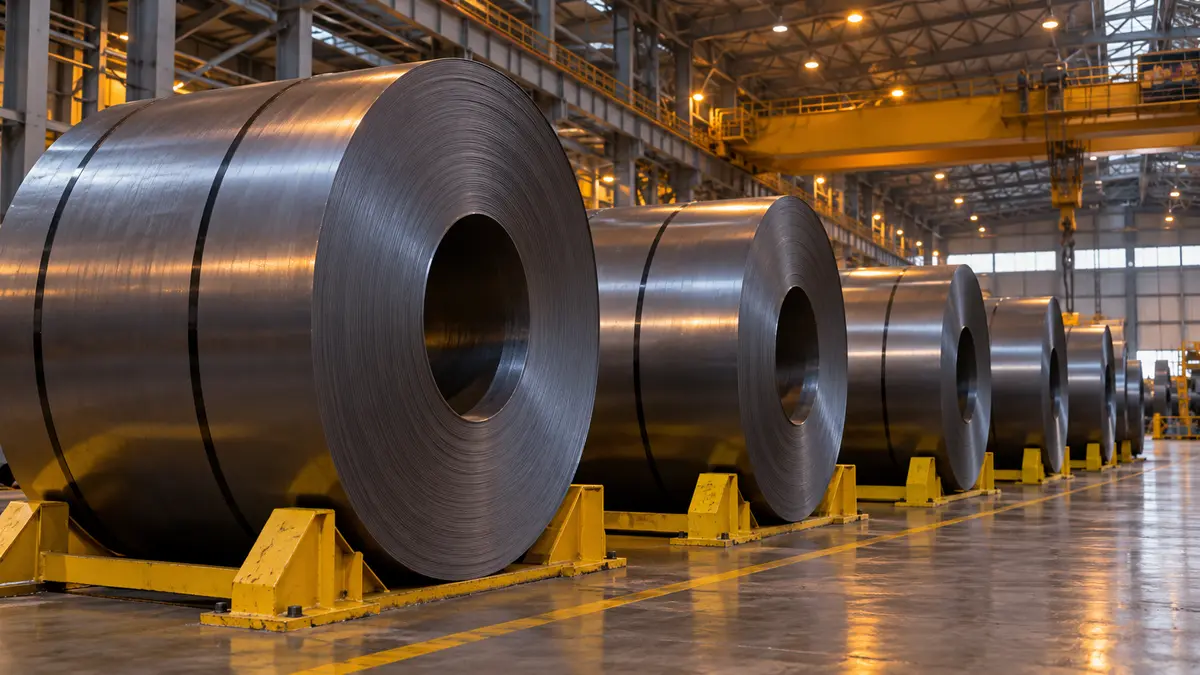
Metallurgy declined 1.2%, primarily due to sanctions on external markets and a global surplus driven by China, where domestic supply exceeds demand and excess capacity is exported at competitive prices. "External demand for metallurgical products is currently very weak," Salnikov noted. "The surplus building up in China exerts pressure: supply there exceeds domestic demand. And it is easy for China to dominate global markets — their metallurgy is an order of magnitude larger than ours by volume."
He expects continued pressure in 2025 from the domestic side as well: the cancellation of subsidised mortgage programmes will inevitably slow construction, one of the main sources of internal demand for steel and other metallurgical products. The remaining hope lies in machine-building, where import substitution is generating orders beyond the defence sector, and where the government has signalled continued support for domestic equipment manufacturers.
What 2025 holds: consensus on slowdown, disagreement on scale
The consensus among the economists quoted in the Expert report is that 2024's pace cannot last. Salnikov's forecast is the most sobering: "Given the factors that exist today, the likely rate for the current year is around 1%, and in individual months and quarters we can expect negative dynamics." A drop from 4.6% to roughly 1% would represent one of the sharpest year-on-year decelerations in recent Russian industrial history, and it would have significant implications for employment, investment and regional budgets that depend on industrial tax revenue.
He also expects consumer demand growth to decelerate, which would remove the second pillar of the 2024 boom alongside defence spending: "Enterprises have less and less income to raise wages at the same pace as before. Until recently there was still a cushion of profit, but that potential has been exhausted." If wage growth slows, the consumer-facing industries that contributed so much to 2024's record — food, beverages, clothing, furniture — will lose their primary driver.
Abelev is more optimistic, at least for import-substituting industries: "Until the end of the year we can expect more or less positive development forecasts in import-substituting sectors. Especially if new production capacities appear, which are currently lacking." His caveat is important: the optimistic scenario depends on investment that has not yet materialised, and that faces high borrowing costs, technology import restrictions and competition with defence spending for limited capital.
The food industry shares that conditional optimism. Soyuzmoloko insists that production growth across key food categories will continue in 2025 as demand rises, but the union stresses that this requires sustained investment — new farms, modernisation of existing livestock complexes, and productivity improvements at operating sites. "Given the long payback periods and high capital intensity of these projects, accessible credit and other government support measures for the raw-material sector are vital," the union said. The message is clear: the consumer-driven component of industrial growth is not self-sustaining and requires policy support to continue.
Assessing the record in context
The 4.6% industrial growth figure is real, verified by Rosstat, and remarkable in historical context. But its composition tells a more nuanced story than the headline suggests, and understanding that composition is essential to judging the sustainability of Russia's industrial expansion:
- Defence remains the primary engine. The three fastest-growing manufacturing sectors — metal products, transport vehicles and electronics — are all closely tied to the defence-industrial complex. Their combined weight in the industrial index is significant enough to lift the headline by more than a percentage point on their own. But their growth rates of 25–35% per year are unprecedented in peacetime and cannot be sustained indefinitely without massive new investment in capacity and personnel.
- Consumer industries are recovering, not booming from a standing start. Furniture, clothing, food and beverages grew because real incomes rose and because Western brands withdrew, creating space for domestic producers. With wage growth expected to slow and the profit cushion exhausted, the consumer-driven component of industrial growth faces a natural ceiling in 2025.
- Extractive and heavy sectors are a structural drag. Mining, petroleum refining and metallurgy all contracted in 2024. Sanctions, OPEC+ limits, drone strikes on refineries and Chinese competition in steel are structural headwinds that will not reverse quickly. These sectors together account for a substantial share of industrial output and employment, and their weakness partially offsets the manufacturing boom.
- Capacity is the binding constraint on future growth. At 80% utilisation, the economy is close to its technological ceiling. Without new investment in plant and equipment, further growth requires either efficiency gains — which take years to implement — or a reallocation of resources from lagging sectors to growing ones, which carries social and political costs.
- The 2025 slowdown is already priced into forecasts. Estimates range from around 1% (CMASF) to cautiously positive (Rikom-Trust), but no economist quoted in the Expert report expects anything close to a repeat of 4.6%. The question is not whether growth will slow, but how sharply and whether the slowdown can be managed without triggering a broader economic contraction.
The thirteen-year record, then, is best understood as the product of a unique convergence: massive state defence spending that injected demand into manufacturing, a post-sanctions import-substitution push that created new markets for domestic producers, recovering consumer demand supported by wage growth, and a low base in several sectors that had contracted sharply in 2022. Each of those forces is weakening as 2025 begins. Defence spending cannot grow at the same rate indefinitely; import substitution has captured the easiest opportunities; wage growth is slowing as the profit cushion is exhausted; and the base effects that flattered 2024's comparisons will not repeat.
The question for Russian industrial policy in 2025 is therefore not whether growth will slow — it will — but whether the economy can manage the transition from a boom driven by state orders and catch-up demand to a more balanced expansion without tipping into contraction. That transition requires investment in new capacity, productivity gains, and a rebalancing toward sectors that can compete internationally without relying on state procurement. None of those things happens quickly, and all of them compete for resources with the defence budget. The 2024 record shows what Russia's industrial economy can achieve when demand is abundant and constraints are temporarily relaxed. The 2025 outcome will show what happens when those conditions change.













Leave a comment
Your comment is awaiting moderation.