The Real Reason Reeves Is Making You Pay More Tax: Anatomy of a Budget in Two Halves
The OBR accidentally published its Budget forecast before Rachel Reeves presented it, revealing that the government's finances were not as bad as feared — and that she could have met her fiscal rules without freezing income tax thresholds until 2031. BBC economics editor Faisal Islam's analysis explains why the chancellor still chose to tax hard: a Budget in two halves, a doubled £22bn fiscal buffer, a year of market instability to forget, and an unspoken bet that growth beats the 1.5% forecast.
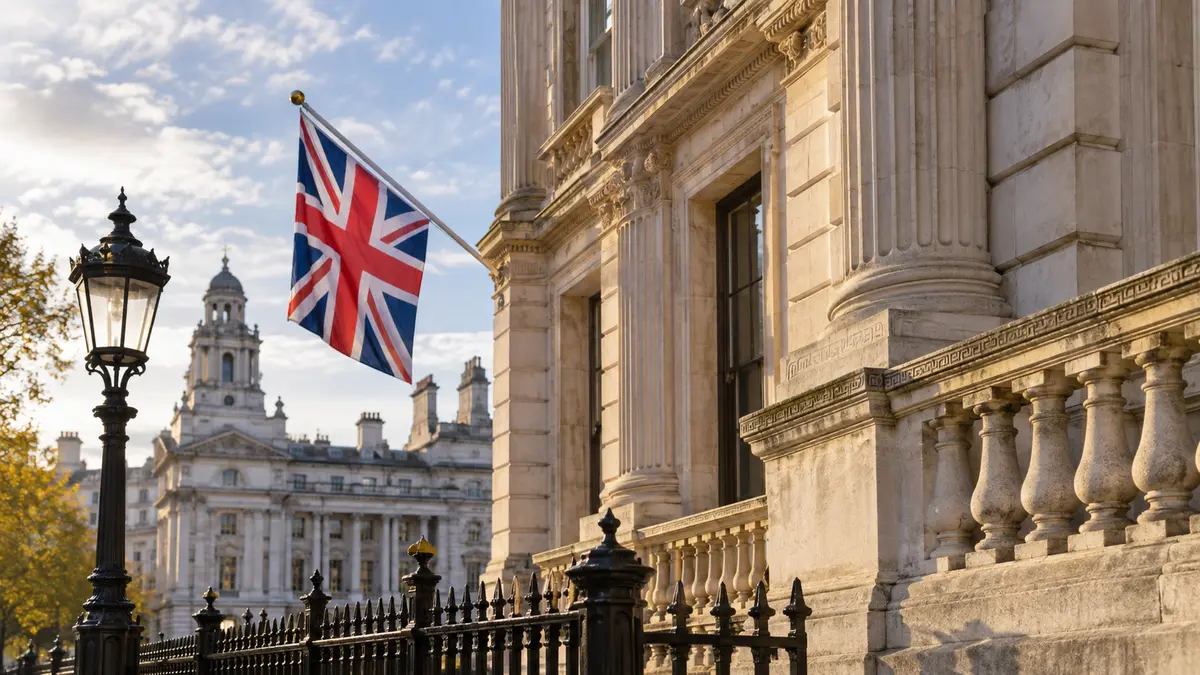
Britain's November 2025 Budget will be remembered as the moment when Chancellor Rachel Reeves chose to tax harder than the arithmetic strictly required — and, according to one of the most forensic readings of the day, she did so deliberately. In his analysis for BBC News, economics editor Faisal Islam argued that the government's financial position going into the Budget was not as bad as weeks of pre-Budget speculation had suggested, and that on the Office for Budget Responsibility's own forecasts the chancellor could have met her fiscal rules without freezing income tax thresholds at all. Yet the freeze was extended by three more years, running to 2031, taxes are forecast to rise to new records by 2028, and almost one in four taxpayers is set to be dragged into the higher-rate bracket. This article reconstructs Islam's argument step by step — the accidental leak that set the scene, the better-than-feared starting position, the productivity downgrade lurking behind the headline numbers, the politics of a Budget in two halves, the calm market verdict, and the unspoken bet on growth that will decide whether the strategy works.
The leak that reframed Budget day
The drama began before Reeves had even delivered her speech. The Office for Budget Responsibility (OBR), the independent watchdog whose economic and fiscal forecasts underpin every Budget, accidentally published its projections ahead of the chancellor's presentation to Parliament. As Islam noted, there is no precedent for such an early publication. For a few extraordinary hours, the country's most closely guarded fiscal numbers were in the open while the political theatre had not yet begun.
The consequences were more than procedural. Normally, a chancellor controls the narrative arc of Budget day: the grim inheritance, the difficult but necessary decisions, the stable foundations for the future. The leak stripped that arc away. Journalists, economists and opposition MPs could compare the forecast starting position with the tax and spending decisions being announced, in real time, without waiting for the government's framing. And the comparison produced the central puzzle of the Budget: the numbers suggested the chancellor had more room to manoeuvre than she had let the country believe. Why, then, did taxes still have to rise so hard? Islam's analysis supplies an answer that is less about accounting necessity and more about political and economic strategy.
A better starting point than feared
The first building block of that answer is the starting position itself. According to the leaked forecasts, the government's finances were not as bad as suggested in the run-up to the Budget. Two forces had been quietly improving the picture. The first was outperformance: the economy had done better this year than forecasters had expected, and earlier figures had been upgraded. Growth in the near term had a habit of surprising on the upside, and each upward revision improves the tax base from which the Treasury funds public services.
The second force was subtler and, for taxpayers, more painful: inflation itself had become a revenue machine. Years of high price growth had pushed up nominal wages, and higher wages meant higher income tax and National Insurance receipts for the Treasury. Workers were paying more tax not because rates had been raised, but because pay increases — largely compensating for inflation — were lifting them through the tax system. This is the least visible form of taxation there is, and Islam's point is that by Budget day it had already been doing heavy lifting for the public finances. The combination of an upgraded recent past and inflation-fed receipts meant Reeves arrived at the despatch box with a better hand than the autumn's doom-laden commentary had implied.
The productivity downgrade behind the numbers
If the starting point was better than feared, however, the destination was worse. The same OBR forecasts that improved the near-term picture also lowered the assessment of the economy's long-run potential. Long-term productivity — the amount of output the economy can generate per worker and per hour — was downgraded, and with it the forecast for how fast the economy can grow in the years ahead without generating inflation. The economy, in the watchdog's view, is now expected to grow more slowly over the forecast horizon than previously assumed.
This matters more than any single tax line in the Budget. Productivity is the ultimate constraint on living standards: it determines how much a country can consume, how much tax it can raise sustainably, and how generous its public services can be without permanent borrowing. A downgrade shaves potential output from every future year of the forecast, shrinking the fiscal space available to any chancellor, this one or the next. It is the reason a government can find itself raising taxes to record levels even while the current accounts of the recent past look better than expected: the past improved, but the future was marked down.
There is one striking caveat embedded in the forecasts, and Islam singles it out as one of the quiet pivots of the Budget. The OBR judged that artificial intelligence could boost productivity by a notable and growing amount by the end of the decade. In effect, the watchdog's downgrade comes with an asterisk: if AI delivers the productivity gains its proponents promise, the long-run picture improves materially, the tax base widens, and some of the painful decisions taken in November 2025 could eventually prove to have been over-cautious. No chancellor can bank on that in a forecast — but a government deciding how hard to tax can certainly hope for it.
The fiscal rules and the road not taken
To understand the choices Reeves made, it helps to be precise about the rules she was trying to satisfy. Her fiscal framework rests on two commitments: the government should borrow only to invest, not to fund day-to-day spending; and day-to-day spending should be covered by tax receipts. Within that framework, the chancellor also targets a buffer of headroom — a margin of safety so that an economic shock does not immediately put her in breach of her own rules.
The most revealing detail in Islam's analysis concerns exactly this point. On the OBR's forecasts, Reeves could have met her fiscal rules without freezing income tax thresholds. The freeze that will drag most people into paying more tax was, in strict arithmetic terms, not a necessity imposed by the rules — it was a choice to build a bigger buffer than the rules demand. And there is a further counterfactual: without the government's summer U-turn on welfare reforms, the chancellor would have been close to meeting her target before making any of the Budget's tax and spending changes. The welfare savings that were announced and then abandoned over the summer had been doing real work in the fiscal arithmetic; when they disappeared, the hole they left had to be filled by something else. What filled it was the deepest tax-raising package of the parliament so far — including a threshold freeze longer than anyone had anticipated.
The freeze to 2031: a tax rise by another name
The centrepiece of the package is the decision to freeze income tax thresholds for a further three years, extending the freeze to 2031. The mechanics are worth spelling out, because they explain how a government can raise taxes on millions of people while changing no published rate. Tax thresholds are the points at which income starts to be taxed, and at which it starts to be taxed at the higher rate. When thresholds are frozen while wages rise — and wages have been rising, largely because of inflation — an ever-larger share of each paycheck is captured by the tax system year after year. People get pay rises and find themselves with less take-home progress than the headline number suggests; enough time passes and a salary that was comfortably basic-rate becomes a higher-rate salary.
Islam's summary of the consequences is blunt. The freeze will drag most people into paying more tax. It will pull almost one in four people into the higher-rate tax bracket. And cumulatively, taxes are forecast to rise to new records in 2028. This is the resolution of the Budget's central paradox: the chancellor did not need the freeze to satisfy her rules, but she chose it because it raises a great deal of money with no vote on any visible rate — and because, in a year when every fiscal announcement was being stress-tested by bond markets, she wanted the largest possible buffer between herself and a breach.

A Budget in two halves
Islam's most memorable framing is that this was a Budget in two halves. The first half is near-term and expansive: the government borrows to spend on its political priorities now. The second half comes later in the decade: taxes rise hard, and the additional revenue is used to reduce borrowing in the final years of the forecast. Spend now, consolidate later — with the tax rises front-loaded enough, and the buffer big enough, to convince markets that the later consolidation is real.
The purpose of the two-halves structure, in this reading, is to buy political and economic breathing space. Politically, it lets the government deliver the spending its supporters voted for in the near term, while the pain of the tax rises is distributed across years and much of it arrives through the invisible mechanism of the freeze. Economically, it shortens the period during which fiscal policy is tightening at the same time as the Bank of England may be able to loosen monetary policy — a sequencing that matters for growth. The strategy is not without risk: it assumes the government of the later half of the decade — which may be this government, and may not — actually delivers the consolidation the forecasts promise. But the immediate effect is to take the pressure off the here and now.
The politics of spending
The first half of the Budget is where the politics lives. Islam observes that borrowing to spend helped secure the government's parliamentary position and reduced doubts about passing the Budget at all. Support from Labour's left had never been guaranteed, and it was linked to a specific set of spending measures:
- spending to alleviate child poverty;
- lower energy bills for households;
- a freeze on rail fares;
- a freeze on prescription charges.
Each of these speaks to a different part of the coalition that put Labour in power, and each costs money the Treasury does not obviously have. By choosing to borrow for them now and tax harder later, Reeves turned a potential rebellion into a deliverable package. The reading of the Budget as pure fiscal arithmetic misses this: the shape of the package — what is spent now, what is taxed later, what is frozen rather than raised — is at least as much a document about parliamentary management as it is about the public finances of the United Kingdom.
Headroom, credibility and a year of instability
The tax rises have a precise target: to double Reeves's fiscal headroom — the margin by which she clears her borrowing targets — to £22bn a year. That number is the answer to the question the leak made unavoidable. The chancellor did not tax harder because the rules forced her to in the narrow sense; she taxed harder because she decided that a thin buffer was itself the problem.
The preceding year explains why. Speculation over whether the government would miss its borrowing targets had caused instability and a lack of credibility throughout the year before the Budget. Every data release was read as a portent of fiscal breach; every interview that failed to rule out a policy change moved markets. That instability ultimately contributed to the U-turn on welfare cuts over the summer — a government with a comfortable buffer does not need to reverse welfare reform under pressure, and a government without one discovers the price of thin headroom in real time. The £22bn target is best understood as a reaction to that experience: Reeves decided she would rather over-insure than spend another year at the mercy of speculation. Changing the frequency of the test was part of the same package of credibility-building — the fiscal rules will now be checked annually rather than twice a year, reducing the number of scheduled moments at which markets can interrogate the government's compliance.
How the markets read it
The verdict of bond markets arrived quickly, and it was favourable. Despite a volatile day — the leak alone guaranteed that — markets reacted calmly to the Budget. The effective interest rate on government bonds fell across the board, and at times the rate on key government bonds fell by 10 basis points, or 0.1%. For a government whose year had been defined by speculation about fiscal credibility, that was the clearest possible signal: the strategy of a bigger buffer, harder taxes and annual rule-checks had done what it was designed to do.
The fall in gilt yields matters beyond sentiment. The government is one of the largest borrowers in the economy, and the interest rate on its bonds feeds through to mortgage pricing and business credit. A sustained decline in borrowing costs eases the very pressures — on households and on the public finances — that made this Budget necessary in the first place. It also hands the chancellor a political argument: the tough stance on her rules, the critics called needless, is the stance the markets have just rewarded.
The unspoken bet on growth
The final layer of Islam's analysis is the one the government itself will never say out loud. There is an unspoken strategy behind the hard taxing: the government hopes growth will exceed the forecast of 1.5%. Everything about the Budget's two-halves structure makes more sense once that hope is visible. If growth comes in stronger than forecast, tax receipts rise with it, the headroom grows beyond £22bn, and the extended income tax threshold freeze may not be needed in full — a future chancellor could even end it early and take the credit for a tax cut. The freeze, on this reading, is not only a revenue-raiser; it is an insurance policy that the government would be happy never to cash.
There are reasons to think the bet is not reckless. Islam points to real space in the economy for growth to improve: business investment has room to pick up, and older consumers who have been saving rather than spending could begin to spend. On the monetary side, the government hopes the Budget's choices — fiscal credibility restored, inflation risk contained — will allow the Bank of England to cut interest rates further, lowering the cost of mortgages and business borrowing and supporting exactly the investment and consumption the strategy needs. None of this is guaranteed. But the combination of a bigger fiscal buffer, calmer bond markets, potential rate cuts and an AI-related upside to productivity gives the government more paths to a good outcome than it had before Budget day.
Not a guaranteed success — but a stabler backdrop
Islam's conclusion is deliberately measured, and it is the right place to leave this analysis. The Budget is not a guaranteed success: it raises taxes to record levels, drags most people into paying more and almost one in four into the higher-rate bracket, and rests on a growth outperformance that no forecast can promise. Its productivity downgrade is a genuine mark-down of Britain's long-run potential, only partly offset by the hope attached to artificial intelligence. What it does achieve, in this reading, is something narrower but still valuable: it creates room for a more stable economic backdrop. The doom loop of speculation about the fiscal rules has been interrupted by the largest buffer in the parliament, calmer bond markets, and a rules regime tested less often. Whether that stability is enough to unlock the investment, the consumer spending and the growth on which the whole strategy depends is the question that will be answered over the rest of the decade — one that the chancellor, by taxing harder than she needed to, has bought herself the time to face. The full argument is set out in Islam's analysis for BBC News.
















Leave a comment
Your comment is awaiting moderation.