Gen Z turns against private equity's restaurant takeover: what the Los Tacos No 1 backlash reveals about the battle for American dining
When beloved New York taqueria Los Tacos No 1 accepted undisclosed funding from private equity firm TSG Consumer in September 2026, social media declared it 'the beginning of the end'. The backlash, amplified by TikTok lists of restaurants to avoid, exposes a deeper collision: an industry where PE firms invested $94.5bn between 2014 and 2024, where almost half of 2024 restaurant bankruptcies were PE-backed, and where a younger generation of consumers now treats ownership structure as a quality signal.
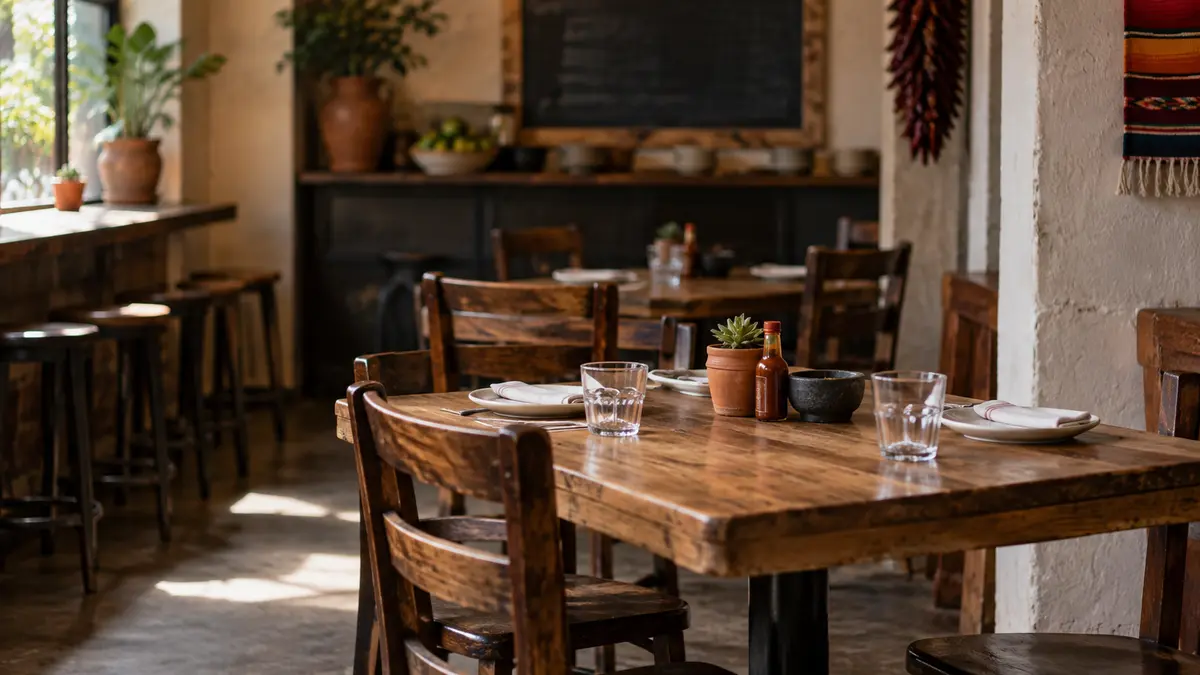
Los Tacos No 1 is a classic New York success story. After the Mexican-style taco joint opened in 2013, it quickly became a critic's pick in the city's paper of record, drawing long lines and a devoted lunchtime crowd. As word spread about its juicy al pastor and handmade tortillas, the chain expanded to nine locations across the city. It was the kind of business that food-loving New Yorkers felt personally protective of — a taqueria that had earned its queues rather than bought them. Then, in September 2026, the news landed that many regulars had quietly dreaded: Los Tacos No 1 had received an undisclosed amount of funding from private equity firm TSG Consumer.
According to the company's press release, the cash would help Los Tacos pursue what it called 'thoughtful, founder-led growth'. Customers were not so sure. Social media posts quickly declared 'the beginning of the end' for the chain, half-jokingly anticipating tiny portions of bad food. The reaction was less about this one taqueria than about what it symbolised: the steady advance of institutional investment money into the independent restaurant scene of America's most famous dining city, and the growing willingness of young consumers to name that advance and resist it in public. As The Guardian reported, the episode has become the latest front in a much wider argument about who owns the places where Americans eat.
Faced with such eulogies, the co-founders tried to reassure their customers directly. 'No, we're not going to start charging extra for guac. We're not switching to horse meat. And no, we're definitely not messing with the tacos,' they promised. This, too, was met with skepticism and ire — a sign of how deeply the mere presence of a private equity investor on the cap table has come to read, for a segment of diners, as a predictor of decline. The firm did not disclose how much stake it now holds in the brand.
The 'same-ification' of the city
Critics bemoaning the 'same-ification' of New York — the idea that a once lively and creative city has devolved into a suburban strip mall — often blame the same villainous force: private equity. The business model involves firms investing in privately owned companies to grow and restructure them, in the hope of selling later at a profit. Across the United States, private equity has hooks in an ever-increasing variety of industries, from hospitals and veterinary clinics to clothing lines and cutlery brands. Now, some New Yorkers are ringing the death knell for one of their favourite activities: eating out.
The food sector's turn came into sharp focus this year. 'Big Money Is Betting on Bagels,' read a New York Times headline in April about private equity investing in the breakfast staple. Baked goods, too, according to the worker-owned food publication Ravenous, which examined what it called 'the curious case of the soulless private equity cookie', pointing at chains such as Crumbl and Levain Bakery. The pattern is easy to see once you look for it: single-product formats with simple operations, strong brand recognition and heavy foot traffic.
According to Jaya Saxena, a writer and worker-owner at Ravenous, attractive concepts for private equity investment tend to be restaurants serving food that can be made easily and on the cheap. 'Cookies, bagels, ice-cream all work really well, because you don't need to be a professionally trained chef to scoop ice-cream or put premade frozen cookies in an oven,' she said. That operational simplicity cuts both ways: it makes these businesses scalable and margin-friendly for investors, and it makes them, in critics' eyes, easier to degrade without customers immediately noticing the loss of craft.
The queues suggest customers have not fully noticed yet. Diners will literally line up for these eats, as they did this summer in the West Village for Myka's Greek yogurt and at Blank Street Coffee's new shop in Philadelphia. Both franchises have received private equity funding. Scarcity aesthetics and social-media-friendly formats keep demand high even as ownership structures professionalise behind the scenes.
But other diners stay far away from the queue, believing that restaurants funded or owned by private equity are destined to cut costs, sling slop and adhere to an aesthetic devoid of personality. You know them when you see them, the critics say: sleek but sterile, and lacking any cultural cohesion with the neighbourhood. Cashiers replaced by touchscreen ordering stations. Prices high enough to induce buyer's remorse, leaving you wondering why you just paid twenty dollars for a disappointing sandwich.
A TikTok revolt against 'PE slop'
The conversation recently hit TikTok, where a user who goes by the handle @thedilligentdiva compiled a list of such New York restaurants to avoid, 'so you don't have to spend $20 on an acai bowl'. The creator was not available for an interview, but her crusade seems to have stemmed from eating that twenty-dollar acai bowl at Pura Vida, which she described as low quality and 'pure sugar'. The list functioned as both consumer advice and political statement — a crowd-sourced map of which neighbourhood favourites had, in the eyes of young diners, been absorbed into the machine.
Commentators chimed in, listing other places owned by private equity and lamenting its presence in the industry. The consensus was grim: 'It's sad once you realize it's really hard to find real mom and pop,' wrote one user; another concluded, 'So we cooking and eating at home.' At times the critiques veered into paranoia. 'Tbh any spot that has more than 2 locations is suspicious,' one user wrote — a heuristic that would condemn many perfectly independent small chains, but that captures the mood of an audience that increasingly equates scale with soullessness.
Using Beli, an app for tracking and rating restaurants, TikTokers suggested alternatives to what @thedilligentdiva called 'PE SLOP'. Pop Up Bagel has received capital from multiple investors, so users recommended Apollo Bagels and Tompkins Square Bagels. Instead of the fast-casual chain Dig Inn, the creator suggested the health-food spot ThisBowl — though a fact check complicated the purity test: ThisBowl has received partial funding from Stripes, a private equity company. The taxonomy of ownership is getting so tangled that even the anti-PE lists need footnotes.
The most striking moment came when the list itself lost an entry. Los Tacos No 1 had been listed as an alternative to rival taco spot Tacombi, which has received private equity money — that is, until Los Tacos No 1 announced its own TSG Consumer investment. 'Guys we lost another one LITERALLY TODAY,' @thedilligentdiva wrote in a comment. For a movement built on curating safe havens, the steady attrition of those havens is the central anxiety.
Why quality rarely comes first
Diners do have cause for concern when private equity gets involved in a beloved business, says Megan Greenwell, a journalist and author of 'Bad Company: Private Equity and the Death of the American Dream'. 'Quality is generally the furthest thing from its mind,' she said. 'What they are trying to do above all else is increase profits.' And for the consulting class that advises these deals, 'increasing profits' usually means cutting corners.
The mechanics are well understood by anyone who follows the industry. 'You're laying off people, cutting down on staff, or spending less money on development and training,' Greenwell said. More often than not, this affects the product or service. 'It now has become a kind of meme where everything gets worse as soon as it's bought by private equity.' The meme status matters: it means the reputation of the asset class now travels ahead of any individual deal, shaping consumer expectations before a single menu changes.
Greenwell argues that younger people may be more likely to sound the alarm. 'In some ways, gen Z folks are more conscious consumers than older generations,' said Greenwell, who teaches journalism to high school and college students. 'I work with a lot of teenagers, and I don't even think they could articulate what private equity is. But they'd say, oh, I wouldn't eat at a chain owned by it.' That is a remarkable inversion: a generation that may not be able to define the financial structure nevertheless applies it as a reputational filter.
Despite interest in the TikTok list, Greenwell says she has not seen a meaningful, sustained backlash to private equity in food — unlike in healthcare, where the politics have hardened. Congressional Democrats introduced a bill that would ban the corporate takeover of physician offices in the same week the Guardian article was published. The contrast raises a strategic question for consumer brands: restaurant ownership has not yet attracted legislative scrutiny, but it has attracted cultural hostility, and cultural hostility shows up directly in queues and reviews.
The industry's official channels remain silent. The National Restaurant Association, the leading food-service trade association in the US, declined to comment on private equity in restaurants; a representative said it is not something the group 'tracks closely'. Meanwhile, increasingly on social media, users deploy 'private equity' as a derogatory — if not always factual — term for businesses that seem overly corporate or lacking in charm. 'I've also seen so many posts where people are like, apparently this place is not private equity, but it might as well be,' Greenwell said. The label has escaped its financial meaning and become a synonym for sterility.

The economics behind the takeover
Scarr Pimentel, owner of the New York pizza joint Scarr's and a critic of the food industry, called out some restaurants in a January video for the online series Subway Takes. 'A lot of them are fronts for like VC and private equities that people don't realize,' Pimentel said, adding that the days of opening up a truly independent spot are waning. He listed 'telltale signs' of investor-backed venues: a restaurant having merch and an Instagram account that is 'too perfectly curated off the rip' — when the doors are not even open and they already have a hype train behind them.
Pimentel called on local politicians to help small businesses out, so that keeping a restaurant open in New York without corporate funding remains feasible. His argument touches the uncomfortable truth at the centre of this story: the villain narrative and the survival narrative are both true at the same time.
The restaurant industry is notoriously brutal for owners, especially in a cutthroat market such as New York. Rents, insurance and the cost of labour are high, and tariffs continue to drive up the price of ingredients. For a first-time operator, the balance sheet is hostile before the first customer walks in, and the failure rate of independent restaurants has long outstripped that of most other small businesses.
'You have a lot of restaurant owners who have been pretty open about the fact that it feels impossible to open up a restaurant without some sort of backing, whether that's via having a bunch of really wealthy friends invest or actively seeking out private equity,' said Saxena, the Ravenous worker-owner. 'It's not surprising to me that a lot of places are looking toward private equity, but it's extraordinarily depressing that this often leads to a less flavorful environment.' In other words, the capital that saves the restaurant may also be the capital that flattens it.
Private equity proponents say the business model helps to grow small businesses. 'Founders and businesses choose to partner with private equity because it provides long-term capital and industry expertise that helps them to grow, build, and innovate,' Will Dunham, CEO of the industry group American Investment Council, said in a statement. 'Eighty-five percent of private equity funding supports small business, allowing them to hire more workers and compete against much larger companies.' It is a reminder that the asset class sees itself as a professionaliser of fragmented, undercapitalised markets — and restaurant ownership is among the most fragmented there is.
The scale of the money involved is hard to overstate. According to figures reported by CNBC, private equity firms invested $94.5bn in bars and restaurants between 2014 and 2024. That kind of deployment changes the character of the sector: it professionalises back offices and supply chains, but it also imposes debt discipline and exit timelines on businesses that were once run as crafts. And the record is mixed at best — almost half of bars and restaurants that filed for bankruptcy in 2024 were backed by private equity.
That statistic is not an accident of bad luck. Private equity is known for leveraged buyouts: the model of borrowing money to buy a company and then passing the debt from that sale down to the new acquisition. A restaurant chain carrying the debt of its own purchase has less slack for a bad quarter, a rent increase or an ingredient shock — precisely the risks that define the industry. When the cycle turns, the leverage that amplified returns on the way up accelerates failure on the way down.
Jersey Mike's, Panera and the scoreboard
The case for the model has its own showcase. In 2024, Blackstone acquired a stake in the sandwich chain Jersey Mike's. This week, the company went public, which has been hailed as a success for private equity. Jersey Mike's recently dethroned Chick-fil-A as the top-rated quick-service restaurant according to the American Customer Satisfaction Index; the fried chicken franchise had previously spent eleven years ranked in first place. For proponents, that combination — institutional capital, expansion, a market listing and customer-satisfaction leadership — is the rebuttal to the slop narrative.
The sub shop is just one familiar chain that has been taken over by private equity: Dunkin', Subway, Arby's, Baskin-Robbins and Buffalo Wild Wings are other examples that most consumers encounter daily without thinking about ownership at all. The TikTok generation's project is, in a sense, to make that ownership visible again — to reattach a name and a cap table to every storefront.
But the case of Panera Bread tends to particularly upset customers who remember its salad days of the 1990s, when the bakery-cafe was known for its cozy atmosphere and delicious bread. The Nation wrote in 2024 that the chain's acquisition by private equity tells 'the story of late capitalism': 'In expanding, the charm faded, and then vanished.'
Over the years, Panera tried to reclaim its former reputation as a 'conscious' chain, but those efforts were clumsy at best. In 2010, the brand launched a 'Pay What You Can' offshoot of its cafes to ease financial burdens on low-income customers. They were such a flop that cafe workers started telling customers that they would have to work in exchange for a 'free' lunch. These days, Panera may be best known for its 'charged' lemonade, a caffeinated drink that was discontinued after multiple lawsuits alleged it was unsafe to drink. Two people died and others faced permanent cardiac injuries after consuming the beverage; Panera said it 'stands firmly by the safety of our products'. For critics, that arc — from neighbourhood bakery to litigation headline — is the whole argument in miniature.
What this signals for consumer brands
Taken together, the Los Tacos No 1 episode and the TikTok lists point to a shift that extends well beyond restaurants: ownership structure is becoming part of the consumer proposition. For most of the modern retail era, shoppers judged products on price, quality and convenience, and the identity of the owner was invisible. Social media has made cap tables legible to anyone with an app and an opinion, and a generation fluent in platform research now treats corporate backing as a quality signal in its own right — usually a negative one.
For the industry, the implications are concrete and uncomfortable:
- Brand authenticity has become a measurable asset. A 'perfectly curated off the rip' Instagram presence, once a marketing win, now reads to savvy consumers as evidence of investor backing and triggers suspicion rather than appetite.
- Transparency pressure is rising. Undisclosed stakes generate more damage than disclosed ones: the Los Tacos founders' reassurances landed badly partly because the investment amount and stake size were never made public.
- Operational cost-cutting has a reputational price. Staffing, training and ingredient decisions that once showed up only in margins now show up in review threads, boycott lists and viral videos.
- The scoreboard is genuinely mixed. Jersey Mike's ascent to the top of the customer-satisfaction index coexists with the fact that almost half of 2024's bar and restaurant bankruptcies carried private equity backing — both facts belong in any honest assessment.
- Regulatory risk is migrating sector by sector. Healthcare has already drawn a bill targeting corporate ownership of physician offices; food has so far drawn only cultural hostility, but the sequence is visible.
The prospect of losing a comfort dish or local staple can feel personal, and that is exactly why this story resonates. Greenwell, a native Californian who lives in New York, loves Los Tacos No 1. When the investment was announced, she thought: 'Oh no, this is so terrible for me, because I like their tacos, and I don't like that many tacos in New York City.' It is a small, funny, honest sentence — and it captures the stakes better than any market analysis. The battle over who owns dinner is not only about returns and exit multiples. It is about whether the places people love can stay the places people love after the money arrives.





Leave a comment
Your comment is awaiting moderation.