Europe's Factory Floor Is Quietly Changing Hands: Why the Fight Over Supply Chains Decides the Fate of 300,000 Jobs
Eurometal, the leading European metals trade body, warns that EU manufacturing could lose 300,000 jobs in the rest of 2026 as Chinese component makers embed themselves in industrial supply chains. With a record €1bn-a-day trade surplus against the bloc and a €360bn annual imbalance, the pressure is forcing Brussels to weigh tariffs, talks and the real cost of carbon pricing for energy-intensive plants.
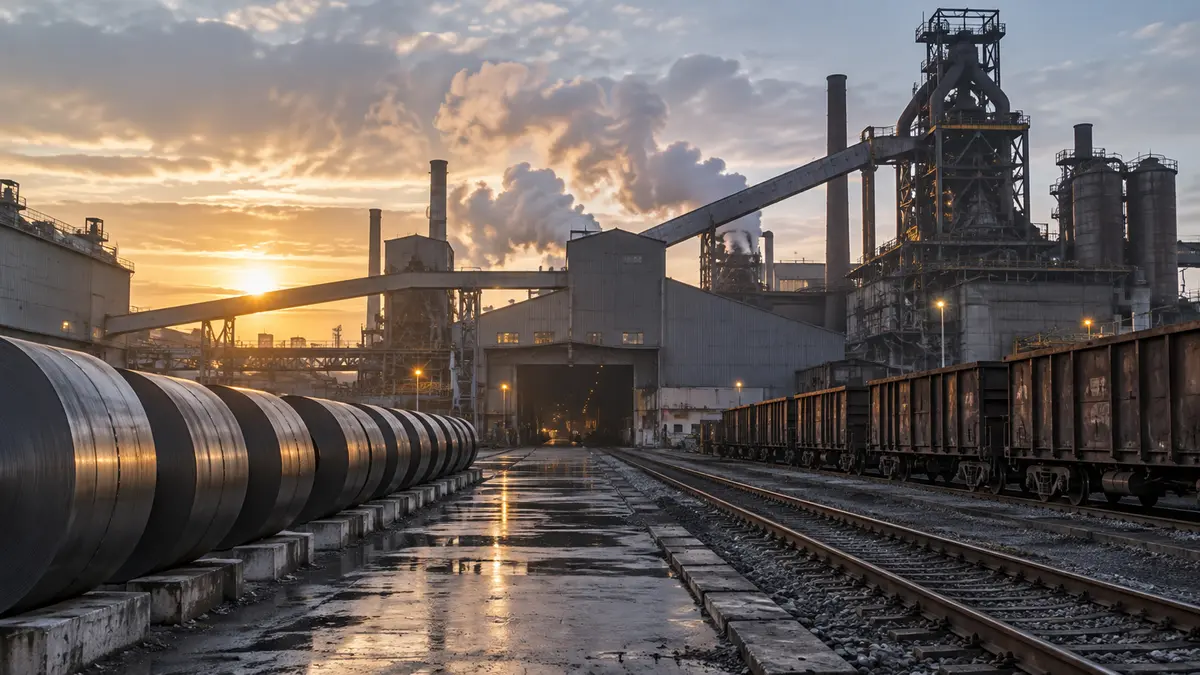
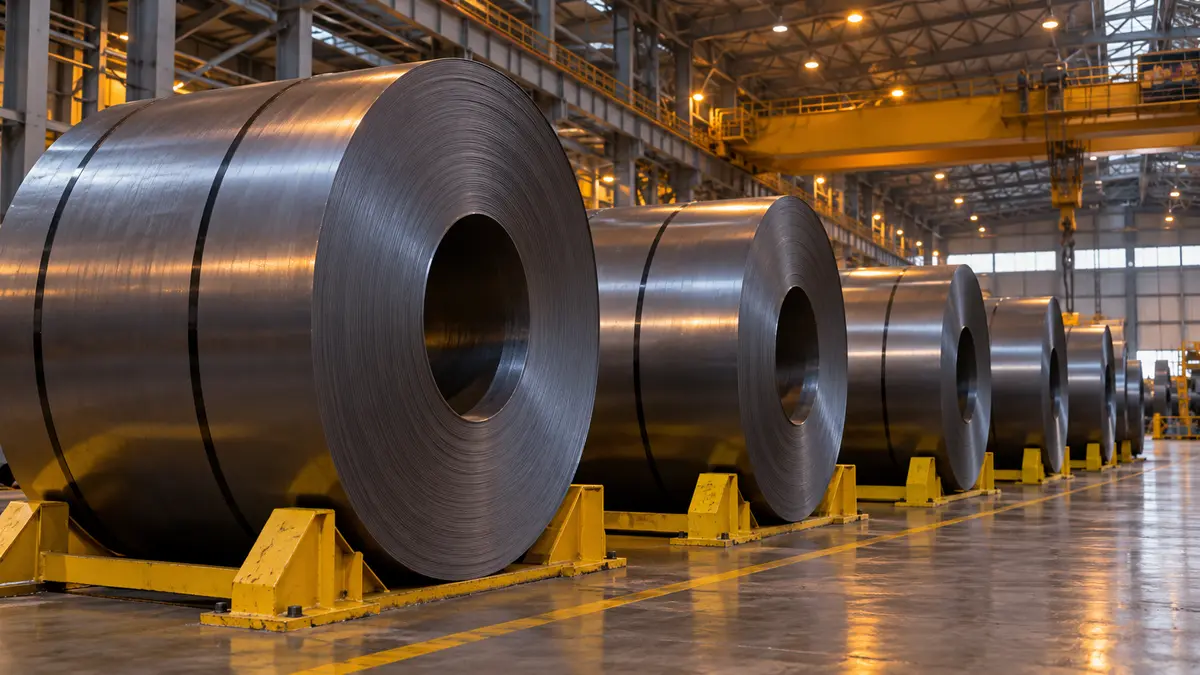
For decades, the story of European manufacturing was told in terms of productivity, engineering excellence and export strength. Today it is increasingly told in terms of survival. A warning from Eurometal, the leading trade body for Europe's metals industry, has put a number on the anxiety: unless Brussels acts to stop what the industry calls the "colonisation" of its supply chains by Chinese component manufacturers, the EU could see 300,000 manufacturing jobs disappear in the remainder of 2026. The figure is not an abstract projection. It is a forecast built on what producers see on their own order books, on their own cost lines, and on the relentless expansion of Chinese rivals who now enjoy a record €1bn-a-day trade surplus with the bloc.
The warning lands at a moment when the political mood in Brussels is already shifting. The European Commission has imposed tariffs on Chinese electric vehicles, and in June it introduced higher tariffs on imports of foreign steel. The bloc's trade commissioner, Maroš Šefčovič, has called the EU's €360bn (£310bn) annual import/export imbalance with China "not sustainable", and both sides have agreed to hold three months of talks, ending in October, to try to avert a trade war. Yet for the metals industry, the problem is no longer only about finished goods crossing a border. It is about the components, the metals and the chemicals that sit inside almost everything a factory makes — and about who controls them.
A protest in coffins
On the Monday after the warning was published, Eurometal staged a protest in Belgium, using ten symbolic coffins in a procession around the European Commission headquarters in Brussels. The coffins were marked with phrases such as "EU competitiveness", "industrial jobs" and "European factories". The imagery was deliberately stark: the industry is not asking for sympathy, it is claiming that parts of European manufacturing are already dying, and that the cause is not a lack of demand but a loss of the industrial base itself. The choice of a funeral procession as a lobbying device is itself a signal of how far the mood inside the sector has moved. Trade associations normally argue with position papers, economic studies and carefully worded amendments; they do not carry coffins past the Berlaymont building unless they believe the conventional channels have stopped being heard. For Eurometal, the theatrical gesture was a way of forcing the commission to look at the problem as an emergency rather than as another item on a long agenda of industrial complaints.
European manufacturers fear that the commission is not fully alive to the cannibalisation of their industries as China becomes embedded in supply chains through the sale of components. Finished-product tariffs are visible and politically legible; component-level dependence is quieter and harder to reverse. Once a carmaker, a machinery builder or a construction-products group has re-qualified its supply chain around a cheaper imported input, switching back takes years, re-certification, and capital that many mid-sized suppliers simply do not have.
"They want to own the complete value chain"
Alexander Julius, the president of Eurometal, put the industry's case to the Guardian in blunt terms. "China has made no secret of what it is doing. It is in their five-year plan," he said. "China doesn't want to be a raw material supplier, it wants to be a finished product supply. They want to be in key product supply chains because they know that once they control the supply chain, they own the complete value chain."
That sentence is the analytical core of the whole dispute. Control of a supply chain is not merely about selling a part at a lower price; it is about setting the terms on which an entire downstream industry operates — its lead times, its specifications, its pricing power and, ultimately, its capacity to invest. Julius wants the commission to understand fully the impact of Chinese exports at component level, including metals and chemicals used in 90% of manufacturing. If that estimate is anywhere near correct, the exposure is not confined to a few politically sensitive sectors such as steel or cars; it runs through virtually the whole industrial base.
This is where the familiar economics of globalisation meet a new reality. In the classic model, cheap imported inputs were a gift to downstream European manufacturers: lower costs, better margins, more competitive exports. That model assumed the supplier would remain a supplier. What Eurometal describes is a supplier that is systematically climbing the value chain, converting component dominance into finished-product dominance, and doing so with the explicit support of state planning. The five-year-plan reference matters: it signals that the strategy is not the result of market spontaneity but of coordinated industrial policy, with financing, capacity building and export discipline aligned behind it.
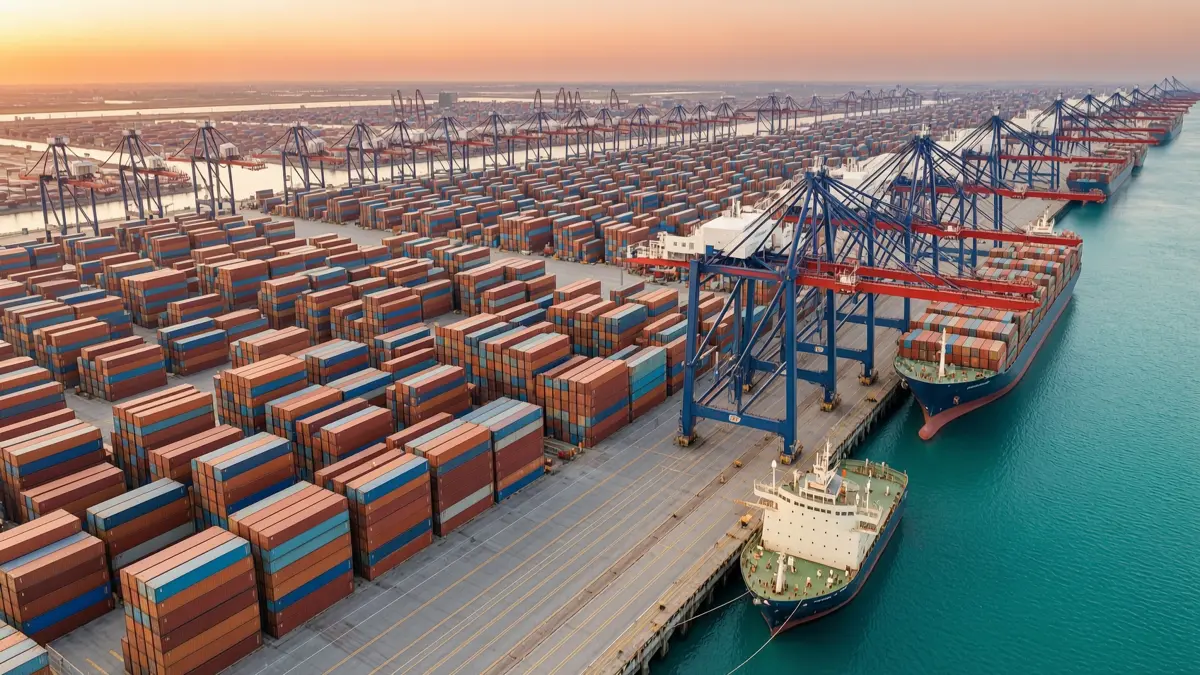
How dependence hardens
Understanding why the industry sounds the alarm requires understanding how modern supply chains actually work. A component is not bought off a shelf. Before a supplier's part enters a production line, it goes through qualification: audits of the factory, sample testing, trial runs in real production, and documentation that can withstand a customer's or a regulator's scrutiny. In sectors such as automotive or energy equipment, this process can take months or years. Once a component is qualified, it is designed into the product — its dimensions, its tolerances, its certifications. The supplier is no longer interchangeable; it is embedded.
That embedding is precisely what makes component-level competition so decisive. If a Chinese supplier wins the qualification round on price and delivery reliability, the European rival does not merely lose an order; it loses the next product generation, and probably the one after that. Each design cycle locks the dependence in deeper. Engineers design around the specifications of the components they can source; procurement teams build relationships and logistics around the suppliers they use; quality systems certify the parts that are in the product. Over time, the entire organisation reorganises itself around the imported input. Reversing that is not a purchasing decision — it is a re-engineering project, with all the cost and delay that implies.
Scale compounds the problem. A supplier that feeds a vast domestic market can spread its fixed costs over enormous volumes, invest in the latest equipment, and still price aggressively for export. European mid-sized suppliers, serving a smaller and slower-growing home market, cannot match that arithmetic. The result is a ratchet: with each product generation, the share of components sourced from abroad rises, the domestic supplier base thins, and the cost of reversing course grows. This is the quiet mechanism behind the word the industry uses — colonisation. It does not require conquest; it requires only that each individual purchasing decision looks rational, while the aggregate outcome is the hollowing-out of the industrial base.
The virus and the symptoms
Julius used a medical metaphor to describe the policy failure he sees. "You look at the job losses stacking up in industries in places like Germany. The media, the politicians can see the consequences, but they don't go after the virus that is causing it," he said. "They don't see why it is happening or ask why companies are either relocating to China or India or going bust."
The metaphor is precise. Job losses, plant closures and relocations are symptoms. The "virus", in his account, is the combination of forces that makes European production uncompetitive at the margin: the increasing costs borne by European metal manufacturers with tariffs on steel imports and carbon emissions taxes for those high-energy sectors. Components manufactured in China face none of those levies, and that, combined with the undervaluation of the Chinese currency, the yuan, makes it challenging to compete with Chinese rivals.
Each of these pressures is individually defensible. Tariffs on steel imports are meant to protect the bloc's own producers from dumped or subsidised metal. Carbon pricing is meant to internalise the climate cost of energy-intensive production. Currency undervaluation is a classic trade-distortion complaint with a long history. But applied simultaneously, they create a pincer: European producers pay more for inputs and for energy, while their Chinese competitors face neither burden and enjoy a cheaper currency. The result is not a level playing field tilted slightly — it is a structural cost gap that no amount of engineering excellence can close on its own.
There is also a timing problem. Carbon costs in Europe are designed to rise over time, pushing plants toward cleaner but capital-intensive technology. For a profitable, fully-utilised plant, that transition is an investment decision. For a plant already squeezed by cheap imported components, it is an existential threat: the money that should finance decarbonisation is being spent on staying solvent, and the rational response is to relocate production to where energy is cheaper and carbon constraints looser — or to close. This is exactly the relocation dynamic Julius points to, and it explains why the industry sees the job-loss forecast as a trajectory rather than a one-off shock.
What Brussels can actually do
The policy toolbox is not empty, but every instrument carries trade-offs. The EU has already used tariffs twice in this dispute: on Chinese electric vehicles in 2024, and on foreign steel in June 2026. Tariffs are the most direct response to a price gap, but they raise costs for downstream users, invite retaliation, and do nothing to fix the component-level dependence that Eurometal highlights. The three months of talks agreed with Beijing, ending in October, are the diplomatic channel: they can produce managed outcomes — voluntary export restraints, price undertakings, sector-specific deals — but they also buy time during which the structural gap keeps widening.
A second instrument is trade-defence action at component level: anti-dumping and anti-subsidy investigations into specific imported inputs rather than finished goods. This is closer to the industry's actual complaint, but it is slower, legally demanding, and politically delicate, because it means taxing inputs that European downstream manufacturers have come to rely on. A third instrument is industrial policy itself: state support for energy-intensive sectors, faster permitting, cheaper clean power, and procurement rules that favour European-made components. The commission has moved in this direction with its broader competitiveness agenda, but the metals industry's point is that the pace of support is slower than the pace of erosion.
- Tariffs on finished goods protect the final product but leave component dependence untouched.
- Carbon pricing internalises climate costs but raises production costs that Chinese rivals do not bear.
- Currency undervaluation widens the price gap across the board, from raw inputs to finished exports.
- Talks can manage the conflict, but they do not rebuild a supply chain once it has been re-qualified around imports.
There is a fourth, less-discussed dimension: demand-side policy. Public procurement, infrastructure programmes and defence spending all buy enormous quantities of steel, aluminium and fabricated metal products. Rules that favour European-made components in public contracts would create a guaranteed floor of demand for domestic producers — a form of industrial policy that does not require new tariffs and does not distort private markets. Several member states have moved in this direction, but at the EU level the approach remains fragmented. For an industry facing a structural cost gap, a stable, predictable home market is not a luxury; it is the precondition for making the long-term investments that decarbonisation demands.
A mirror for other industries
The metals industry's warning is a mirror held up to the rest of European manufacturing. The same logic plays out, sector by sector. In automotive, the visible battle is over finished electric vehicles — the EU imposed tariffs on Chinese imports in 2024 — but the deeper contest is over batteries, motors, power electronics and the steel and aluminium that go into every chassis. In machinery, the critical inputs are specialty alloys and precision components; in construction, it is steel sections and reinforcement; in chemicals, it is energy-intensive basic products that feed into almost everything else. Eurometal's estimate that metals and chemicals are used in 90% of manufacturing means that a cost disadvantage at this base layer propagates everywhere, quietly raising the price of European industrial output as a whole.
This is also why the dispute has become a test case for the EU's entire industrial strategy. The commission's competitiveness agenda rests on the idea that Europe can combine climate ambition with industrial strength — that carbon pricing will drive innovation rather than deindustrialisation. The metals industry's complaint is that, in the transition period, the policy mix is doing the opposite: raising European costs while rivals outside the system face none of them. If the base industries — metals, chemicals, energy-intensive materials — shrink, the downstream sectors that depend on them lose not only a supplier but a partner in innovation, because process knowledge lives on the factory floor, not in a design office.
Why this matters beyond metals
The metals industry sits at the bottom of almost every industrial supply chain: construction, automotive, machinery, energy equipment, consumer durables. If its cost base is structurally higher than that of its Chinese competitors, the pressure transmits upward through every sector that buys steel, aluminium, copper or specialty alloys. That is why the 300,000-job figure should be read as a leading indicator for European manufacturing as a whole, not as a sectoral grievance. It is also why the dispute has moved from the trade desk to the heart of the EU's industrial strategy.
There is a deeper question here about what kind of economy Europe wants to be. The classic answer was: a high-value, high-wage, high-regulation economy that competes on quality and innovation rather than price. That answer remains valid, but it presupposes that the industrial base survives long enough to keep innovating. A supply chain that is progressively re-qualified around imported components does not just lower today's costs; it erodes the ecosystem of suppliers, skills and process knowledge on which tomorrow's innovation depends. Once the ecosystem thins out, re-industrialisation becomes far more expensive than protection would have been.
It is worth noting what the industry is not asking for. Eurometal's warning is not a plea for permanent protection or a retreat from open trade. It is a demand that the rules of competition be applied where the competition actually happens — at the level of components, inputs and cost structures — and that the EU's own policies be assessed for their cumulative effect on the producers they are meant to sustain. The distinction matters, because the political debate tends to collapse into a binary: free trade versus protectionism. The reality the industry describes is more granular: a set of individually reasonable policies whose combined effect is to price European production out of existence, one component at a time.
The October deadline for the EU-China talks gives this story a near-term hinge. If the talks produce a managed outcome — limits on the most damaging component flows, or a framework for addressing the cost asymmetry — the 300,000-job forecast may prove too pessimistic. If they produce only a pause, the trajectory Eurometal describes will continue: more plants relocating, more suppliers going bust, more coffins in the procession. The industry's warning is ultimately about time. Supply chains, once lost, take a generation to rebuild — and the five-year plan on the other side of the table is not waiting.
What the wave of cuts reveals
The factory closures and announced reductions are not isolated incidents but symptoms of a broader squeeze on European manufacturing. Energy-intensive industries remain exposed to power costs that, even after the peak of the crisis, sit above those of competitors in other regions. At the same time, a surge of cheaper imports - most visibly electric vehicles, batteries and solar panels from China - has eroded the pricing power of European producers in exactly the segments where the continent once led. When demand at home is weak and export markets are contested, the arithmetic of a high-cost plant becomes difficult to defend, and management teams respond by consolidating production, idling lines and cutting shifts.
The supply-chain dimension sharpens the problem. Years of effort to diversify away from single-source dependence have collided with the reality that many components, raw materials and intermediate goods still flow through a small number of hubs, several of them in China. Reducing that exposure is costly and slow: qualifying alternative suppliers, rebuilding logistics and retraining workforces take years, not quarters. In the interim, firms face a choice between absorbing higher input costs and passing them on to customers who are themselves under pressure.
For policymakers the dilemma is familiar but acute. Subsidies and trade measures can shield specific industries, yet they risk entrenching uncompetitive capacity and provoking retaliation. The deeper challenge is whether Europe can lower the structural costs of production - energy, regulation, skills - fast enough to keep advanced manufacturing viable without resorting to permanent protection. The job cuts announced this year are, in that sense, a referendum on whether the industrial model can adapt to a world of cheaper rivals and dearer inputs.













Leave a comment
Your comment is awaiting moderation.