Can Fish and Chip Shops Survive? The Economics Behind Britain's Fading Chippy
Soaring fish prices, shrinking quotas, VAT and labour costs, and changing consumer tastes are squeezing Britain's fish and chip shops, with about a fifth of owners planning to quit within a year. Yet a new generation of owners is reinventing the trade — raising the question of whether the better shops can survive while the rest disappear.
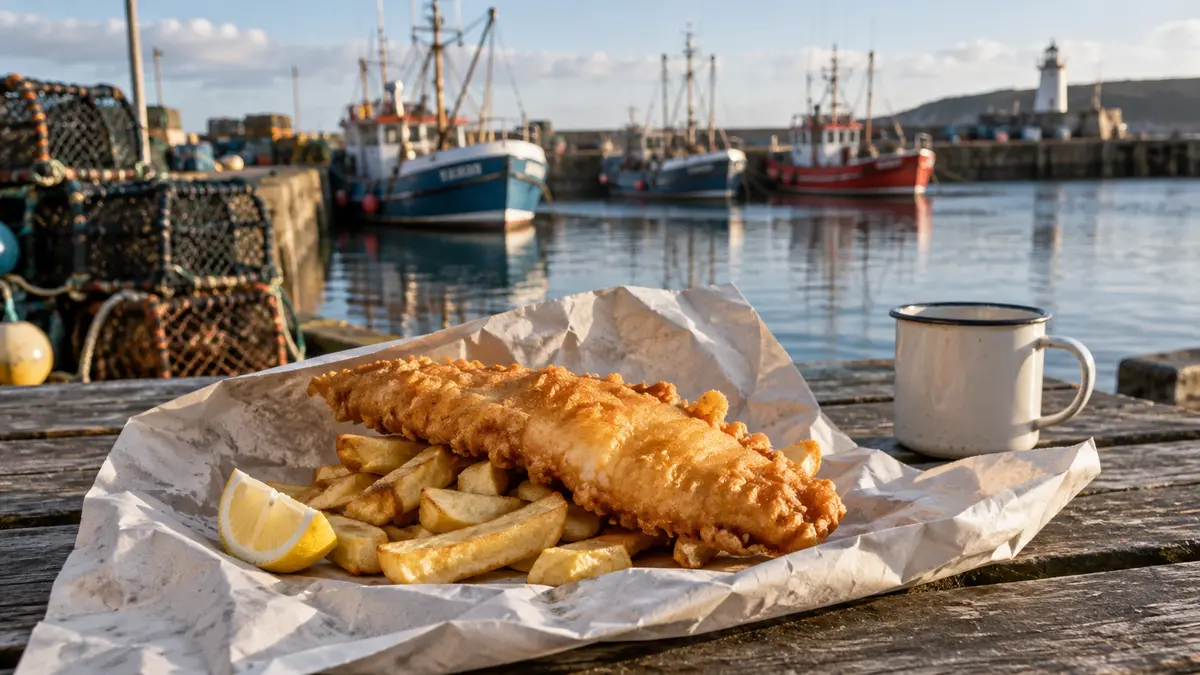
The fish and chip shop is one of the most recognisable symbols of everyday life in the United Kingdom. For generations it has been the default Friday-night meal, the seaside souvenir, the working-class institution that survived wars and recessions alike. Yet the trade that once numbered tens of thousands of outlets is now shrinking week by week, and a growing share of owners openly doubt whether their businesses can continue. The story of one family-run shop in Cheshire, which closed after nineteen years because it simply stopped making money, has become emblematic of a much wider crisis: soaring fish prices, reduced fishing quotas, tax and regulatory pressure, and a younger generation of customers who no longer walk through the door.
The closure of the Plaice Station, a chippy set up in 2007 in a converted stationmaster's house at Padgate station, illustrates how the pressures stack up. The business was a success from day one, winning local awards and building a loyal customer base, with the owner's son growing up peeling potatoes and later cooking at the range. But in March the owner told his son he believed the shop was going to fail: it was no longer making money and he could not see it carrying on. In April, after nineteen years, it served its last customer. In a farewell message the owner listed the forces that had destroyed what little margin remained — soaring fish prices, reduced fishing quotas, global political issues, and relentless demands on VAT among ever-increasing expenses. His conclusion was stark: the product of fish and chips itself is facing its toughest battle.
A sector in retreat
The Plaice Station is far from alone. According to research carried out in May by the National Federation of Fish Friers, the trade body for the industry, 47% of fish friers were "extremely worried" about the future of their business and a further 30% were "slightly worried". About 20% of respondents planned to quit within the next twelve months. The long-term trend is equally grim. There are still around 7,000 to 8,000 chippies in Britain, down from a peak of roughly 25,000 in the 1930s, and both the number of outlets and the number of servings are shrinking weekly. Even the big chains are feeling the pressure: Deep Blue, which owns the historic Harry Ramsden's brand, shut down nine of its restaurants last summer.
Customers cannot have failed to notice the problem. The average price of a takeaway portion of fish and chips has risen more than 60% over the past five years, from about £7 to £11.43 — a faster rise than for other takeaway foods. A family of four now pays nearly £50 for the meal. As the president of the National Federation of Fish Friers, Andrew Crook, who runs two chippies in Lancashire and has been in the trade for 27 years, puts it, that is a fair chunk of money and it has shocked people a little, so they cut back on the number of visits and volumes are going down as well. The result is a vicious circle familiar to any small business: higher prices depress demand, and lower volumes make it harder to absorb fixed costs.
Seasonality adds another twist. Recent hot weather has been good for coastal outlets, but inland shops have suffered. As Crook notes, when it is hot nobody wants fish and chips, and the shop itself becomes an unpleasant place to work — quiet, with temperatures of 40 to 50 degrees Celsius inside. For a business whose margins are already paper-thin, a bad summer can be the difference between staying open and shutting the doors.
The cost stack: fish, potatoes, oil and energy
Chippy owners are hostage to the prices of a very small set of basic ingredients, and almost all of them have been moving the wrong way. Fish prices have risen astronomically in recent years, especially for cod and haddock. The cod quota in the Barents Sea, where most of the fish comes from, has fallen from about one million tonnes in 2020 to just 285,000 tonnes this year, according to Undercurrent, a seafood industry data company. Inevitably, that scarcity has pushed up prices. Crook gives a concrete example: for an 18-kilogram case of cod fillets he was paying something like £160 three years ago and is now paying £330. Haddock quotas are slightly less affected, but the scarcity of cod has created knock-on demand for haddock, again affecting prices.
Geopolitics has compounded the problem. The Barents Sea is jointly managed by Norway and Russia, and in May 2025 the European Union sanctioned two Russian fishing companies, Murman SeaFood and Norebo JSC, over alleged surveillance and sabotage activities. That disruption rippled through the whole supply chain and again raised prices. It is precisely this kind of "political issue around the world" that the owner of the Plaice Station cited in his farewell message.
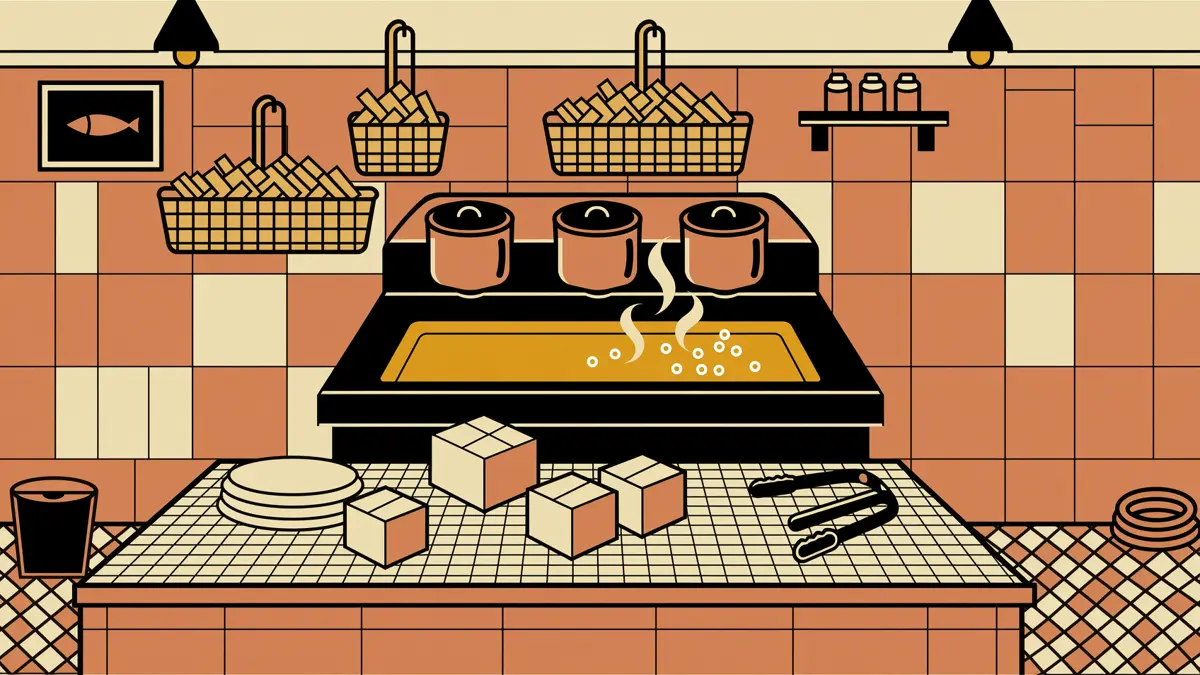
Potatoes are next in the line of fire. After heatwaves and droughts, this year's European harvest is expected to be one of the worst on record, which is likely to push up potato prices. Even cooking oil prices are rising. Then there is energy: the frying range has to be kept hot around the clock, and a great deal of freezing and refrigeration is required to store fish and potatoes safely. The equipment itself is not cheap — a new frying range can cost upwards of £10,000, a significant capital outlay for a small family business that may already be struggling with cash flow.
In short, the cost stack of a typical chippy looks like this:
- Fish — cod and haddock, whose quotas have been cut sharply and whose prices have roughly doubled in three years;
- Potatoes — facing one of the worst European harvests on record after heatwaves and droughts;
- Cooking oil — rising alongside other commodity prices;
- Energy — the range must be kept hot and large volumes of fish and potatoes need freezing and refrigeration;
- Equipment — a new frying range can cost upwards of £10,000.
On the administrative side, chippies have been hit hard by recent rises in VAT, which returned to 20% in April 2022 after a temporary pandemic-era reduction to 5% and then 12.5%, as well as by higher business rates, a higher minimum wage and mandatory sick pay. The government has introduced relief measures — lowering business rates for pubs and clubs in England and capping VAT on children's meals over the summer — but none of these benefits reach chippies. As Crook says, it feels like owners are being run by their business rather than running the business, and much of the fun has been taken out of the trade.
The VAT trap: why closing was more profitable than trading
The most counterintuitive part of the Plaice Station story is also the most revealing. Like many small businesses, the firm paid VAT under a flat-rate scheme at 12.5%. But in 2025 its accountant warned that it was approaching a limit: if annual turnover exceeded £230,000, the flat rate would no longer apply, and the shop would have to pay the full standard rate. The cost of crossing that threshold would have been tens of thousands of pounds.
The only way to stay under the limit was to earn less money. The family made the painful decision to close temporarily. As the owner's son puts it, as strange as it sounds, they made more money by closing for three weeks than if they had stayed open. To justify leaving the flat-rate scheme they would have had to generate an extra £2,000 of turnover a week — and after nineteen years you know where you are with your business; you cannot simply find an extra two thousand pounds a week. The episode is a perfect case study in how tax policy can distort the behaviour of small businesses: a scheme designed to simplify VAT ended up making growth financially irrational.
The emotional cost was just as real. The family felt they were doing everything they could to make the products as good as possible, only to see all the work done to grow the business ripped out from under their feet. That sense of futility — of doing everything right and still losing — is echoed across the trade.
Changing tastes and an ageing customer base
Costs are only half the story. Fish and chips also faces stiff competition from other takeaway options: pizzas, burgers, fried chicken, Indian, Chinese and Korean food, most of which use much cheaper ingredients. Deep-fried foods are also losing popularity for health reasons, since they contribute to obesity; the government recently banned them from schools in England. The dish that was once one of the few convenience foods available to the British public now competes in a crowded market where it is neither the cheapest nor the healthiest option.
The demographic picture is equally worrying. As the younger Sudlow observed, the traditional market is ageing — the traditionalists, the mums, the dads, the nans who grew up on fish and chips. But the 18- to 35-year-olds, the next generation of customers, are not interacting with the trade; they are not coming through the doors, a trend made all the more visible by online ordering and social media. An unnamed chip shop owner in his eighties, who is in the process of selling up, recalls starting out in his twenties in a small town in the north of England, when the only competition was the butcher's and the pie shop. For most of his career it was a good way to make a living, with his wife and children helping out and the family living above the premises. Today he is struggling to find a buyer. He notes that modern establishments look better but have not fundamentally changed — and cannot, because you cannot change the way you cook fish and chips.
That unchanging nature is both the dish's strength and its weakness. Many chippies have tried cheaper fish such as hake, plaice, rock or spurdog, or even tilapia, a freshwater fish farmed in southeast Asia. Many claim customers would not notice the difference, but the public remains wedded to cod and haddock. Others have expanded their menus with calamari, fishcakes, fried chicken, sausages, kebabs or loaded chips. Yet the core product — a battered fillet, thick chips, vinegar and salt — has barely changed in a century.
Reinvention: from chippy to sandwich shop
Some owners have responded by abandoning the format entirely. Three months after the Plaice Station closed, it reopened as Between Bread, a high-end sandwich shop. The fare is a cut above: locally sourced Japanese milk bread, fillings such as braised beef with chipotle sauce and spicy tuna with avocado, and prices between £8 and £12. The owner did his homework, researching food trends and visiting similar establishments around the country. Business is great, he says — turnover is much higher than it was as a chippy, which justifies the VAT change, and the shop is popular on social media and with young people. He also gets to be more creative as a chef.
Does he miss the chippy days? Personally, no. It got to a point at the end where running the shop was like fighting. It is an expensive product to buy in nowadays and even harder to sell. Staff training is a nightmare: few people grow up dreaming of cooking fish and chips, it is seen as a part-time job, and staff turnover is horrendous. It is a hard business to have. His pivot is a reminder that the skills, premises and customer base of a chippy can be redeployed — but only by giving up the thing that made it a chippy.
The new wave: doing it simply and well
Yet the great British chippy is not to be written off just yet. Cod and haddock quotas are expected to increase by about 10% next year, according to Undercurrent, which could help reduce prices, and the government is facing increasing pressure to deal with the VAT problems plaguing the hospitality industry. Most importantly, a new generation is embracing the chippy tradition and breathing new life into it — not by totally transforming it, but by doing it simply and well.
The Scrap Box, outside York, is one such example. Founded twelve years ago by brothers Aman and Gavin Dhesi, aged 37 and 33, sons of a local off-licence keeper who studied politics and economics at university, it won best takeaway this year at the National Federation of Fish Friers' National Fish & Chip awards. The brothers admit the venture began almost on a whim, and that one of them was never proud to be doing fish and chips. After the pandemic they reached a crossroads: do something else, sell out, or double down and improve every single aspect of the business. They chose the journey, researching every aspect of the trade and its history, carefully sourcing their supplies and letting the ingredients do the talking. Their fish comes from Iceland and is Marine Stewardship Council-certified; they fry in beef dripping from Ireland.
There is no secret formula. The fish is lightly seasoned; the batter is just flour and water with a bit of natural colouring, applied as thinly as possible, with nothing artificial added. The main thing, they say, is that it needs to be made often rather than all done in the morning, so that it retains its bubbles and its spikiness, and the batter should be cold so that when it hits the oil there is a bigger reaction and a nicer texture. On a Friday night the Scrap Box — a roadside hut on a layby that used to be a council toilet block — is buzzing, with six or seven people cooking at a huge range and a constant bustle of customers. The menu is classic: haddock and chips for £11.95, cod and chips a pound more, sides like curry sauce and mushy peas, and a few non-fish options. At the end of the shift the brothers have done about 650 portions. They have just returned from a trip to see the fishing in Iceland and are about to go to Japan, where they are doing pop-up stores in three cities. They are also looking at opening a branch in London.
There are other outlets doing similar things around the country. In Nottinghamshire, the Cod's Scallops chain includes fresh fish counters in its outlets; in Oxford, Harrisons's Fish & Chip Co has been diversifying its menu with a range of British fish. There are new young proprietors of established family chippies trying new things, and food trucks and mobile chippies such as Frosty's in Northumberland keeping prices down by minimising their premises.
An immigrant's dish, Britain's institution
Despite the union-jack-waving seaside cliches, what makes fish and chips quintessentially British is that it is interwoven with the country's history of immigration and internationalism. The technique of coating fish in flour and deep-frying it is thought to have been introduced by Jewish immigrants from Spain and Portugal in the seventeenth century, but fish and chips only caught on commercially in the mid-nineteenth century, starting in either London or Lancashire — the origin is disputed. In the days before British cuisine opened up to international influences, it was one of the few convenience foods, and it was one of the few meals not rationed during the Second World War, further cementing its patriotic connotations.
It is often immigrants who have run British chippies: Italians in Scotland, Chinese in Liverpool and the north-west of England, Indians and Pakistanis, Greeks and Turks. The fish recipe came from Sephardic Jews in Portugal; the potatoes often come from central Europe via South America; the fish comes from Iceland and Norway. The Scrap Box's founder, whose family has Punjabi roots, argues that this internationalism is precisely what makes the dish British — and why it can still evolve.
Outlook: fewer shops, better ones
The evidence points to a sector that will continue to shrink in number but may improve in quality. The structural pressures — fish prices, quotas, energy costs, VAT and labour — are not going away quickly, and the demographic headwind is real. Many of the 7,000 to 8,000 remaining outlets will not survive the next few years; the 20% of owners planning to quit within twelve months is a leading indicator of that. But the counter-examples matter. The Scrap Box shows that a chippy run with obsessive attention to sourcing, technique and consistency can thrive, win national awards, expand abroad and attract younger customers. The Sudlow family shows that the same premises, skills and work ethic can be redeployed into a different food business when the economics of the chippy no longer work.
The likely end state is a smaller, more polarised trade: a shrinking mass of struggling traditional outlets, a handful of ambitious operators raising the standard, and a steady flow of closures and conversions. As one of the Dhesi brothers puts it, the better shops will survive and prosper, but the dish itself is never going to die out. The other brother agrees, arguing that the industry needs to hark back to just how pure a dish it is and how great it is — and that, for where it has come from and the work that has gone into it, it is still a bargain. Whether that is enough to save the chippy as a mass institution is doubtful. Whether it is enough to keep the best of them alive is, on the evidence, a reasonable bet.
Key pressures in one list
- Energy bills: fryers and refrigeration run for long hours, so power costs hit margins directly.
- Ingredient costs: fish, potatoes and frying oil have all risen sharply since 2021.
- Labour: higher minimum wages and staffing shortages push up the cost of every shift.
- Competition: delivery platforms, supermarkets and ready-meal alternatives squeeze the traditional trade.
- Demand: changing eating habits and health concerns reshape what customers order and how often.











Leave a comment
Your comment is awaiting moderation.