The £235m Bill for Saving British Steel: What the Scunthorpe Rescue Says About the Return of the State
The UK government's takeover of British Steel has now cost taxpayers £235m, on top of £604m spent keeping the Scunthorpe works alive in 2019-20. With the plant reportedly losing £700,000 a day under Chinese owner Jingye, ministers are betting that higher output can restore profitability — even as a threatened 50% EU steel tariff looms over a sector that sends 78% of its exports to the bloc. The rescue is a test case for state intervention in heavy industry.
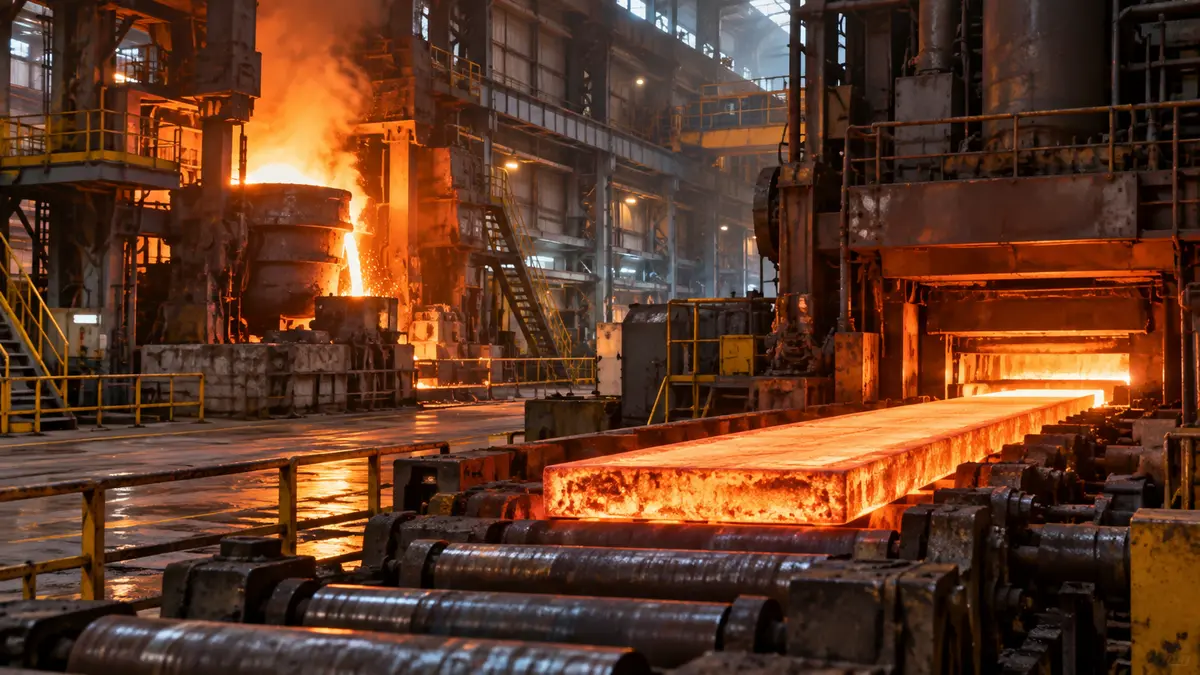
When the UK government pushed emergency legislation through parliament in April 2025 to seize control of British Steel, the move was described as unprecedented: a modern British government taking over a major industrial company to stop its blast furnaces going cold. Six months on, the bill for that decision is growing. According to a written statement to parliament from the industry minister Chris McDonald, the cost of taking control of the company has risen to £235m — money spent on working capital, covering items such as raw materials, salaries and unpaid bills, including sums owed to small and medium-sized enterprises in the supply chain. The figure sits on top of the £604m spent in 2019 and 2020 keeping the same Scunthorpe plant alive after it collapsed into insolvency under its previous owner, the private equity fund Greybull Capital, before being bought by China's Jingye in early 2020.
The takeover preserved the jobs of 3,500 workers at British Steel, but it has left the state footing the bill for a loss-making company. Jingye had claimed the Scunthorpe operation was losing £700,000 a day because of a global glut in steel, and had been preparing to walk away from the site. The government's strategy since then has been to try to increase the plant's output in order to raise profitability — a bet that scale, run more efficiently, can turn around a business that a private owner judged unsalvageable. That bet is now being tested against a second shock: the threat of EU tariffs on steel imports that could, the industry lobby UK Steel warns, pose an "existential threat" to the sector.
How a rescue became a running cost
The Scunthorpe works have a long history of financial distress, and the current rescue is only the latest chapter. In 2019 the plant — then owned by Greybull Capital — collapsed into insolvency, and the state spent £604m across 2019 and 2020 to keep it going until Jingye completed its purchase in early 2020. For five years the Chinese owner ran the site, but by 2025 it concluded the economics no longer worked: with a global glut of steel depressing prices, the company claimed losses of £700,000 a day and moved towards shutting the furnaces. Rather than accept the closure of one of the country's last major steelworks, the government passed emergency legislation in April and took control, preserving 3,500 jobs.
The cost of that intervention has kept climbing. The £235m disclosed in October 2025 covers working capital: raw materials, salaries and the settlement of unpaid bills owed to suppliers, including SMEs in the supply chain. In other words, the state is not merely a passive owner — it is the buyer of last resort for the entire operating cycle of the plant. Meanwhile the government's official receiver is also temporarily in control of Liberty Steel, another UK steelmaker that collapsed into administration, meaning the state's exposure to the sector now spans more than one company. For ministers, the argument is that the money is buying time to restructure; for critics, it is a subsidy with no clear exit.
There is a political dimension to the spending, too. Charlotte Brumpton-Childs, a national officer at the GMB union, argued that the investment was exactly what taxpayers' money should be used for, contrasting it with the previous government's £500m support for Tata, which ended with more than 2,000 redundancies at Port Talbot. She pointed to British Steel taking on more than 50 apprentices this year and supporting a further 180 people into employment as evidence the money was well spent. Whether the rescue ultimately vindicates that view depends on whether the plant can be made profitable — and that, in turn, depends on forces far beyond Scunthorpe's control.
The EU tariff threat over a Europe-bound trade
The biggest external risk to the government's strategy is the European Union's threat to raise tariffs on steel imports to 50%. UK Steel, the industry lobby group, has called the proposal an "existential threat" to the sector for a simple reason: 78% of all steel exports from Britain go to the EU. A 50% tariff would make British steel dramatically less competitive in its most important market, undermining the very output-led recovery the government is trying to engineer. Chris McDonald, himself a former steel executive, acknowledged that the tariff threat "will be highly concerning for many of our steel producers and their workers".
Ministers and officials have held talks with their EU counterparts in the hope of agreeing a quota for UK exports that would allow products to keep flowing into the bloc. The EU's tariffs are largely aimed at protecting its own producers from the global glut of steel that originated in China, and the UK is caught in the crossfire: it is not the source of the oversupply, but its exports could be taxed as if it were. The UK was also represented at a ministerial meeting on global excess capacity, which may eventually aim to combat dumping of cheap steel — but any meaningful coordination between the EU and the US on that front is considered unlikely while Donald Trump is president, given his administration's own tariff agenda.

China's glut: the root cause of the crisis
To understand why a steelworks in Lincolnshire needed a government rescue, you have to look at what has happened to the global industry over the past three decades. China has transformed from a minor player into the world's largest steel producer, responsible for more than half of global output in 2024. When its home economy slows — and the crisis in its property sector has hit construction demand hard — Chinese steelmakers look abroad to sell their products. That flood of exports has sent shock waves through global steel markets, causing crises across the developed world, and the UK is no exception.
The mechanism is straightforward. Steel is a globally traded commodity, and when the world's largest producer has excess capacity, prices fall everywhere. Producers in high-cost economies, where energy, labour and environmental compliance are expensive, are squeezed first. The Scunthorpe plant, with its ageing blast furnaces, was among the most exposed. Jingye's decision to walk away was, in effect, a private company's response to a structural market failure: the losses were too deep, and the glut showed no sign of clearing. The state stepped in where the market had stopped working, accepting the £700,000-a-day losses as the price of preserving a strategic capability.
That raises the classic question of industrial policy: is steel worth saving at any cost? The UK has shrunk from a world-leading steel producer to a country with a handful of major plants, and each rescue consumes public money that could be spent elsewhere. But steel is not an ordinary commodity. It underpins construction, infrastructure, defence and manufacturing supply chains, and losing domestic capacity means permanent dependence on imports — including from the very country whose oversupply caused the crisis. The government's bet is that a restructured, higher-output British Steel can survive in a world of cheap imports, especially if trade measures such as tariffs or quotas protect its home and European markets.
What the rescue says about the return of the state
The British Steel takeover is part of a broader pattern in which governments are rediscovering industrial intervention. After decades in which privatisation and market discipline were the default answers to struggling heavy industry, the combination of the pandemic, energy shocks, supply-chain fragility and great-power competition has changed the calculus. Strategic sectors — steel, semiconductors, energy, shipbuilding — are increasingly treated as matters of national resilience rather than pure commercial ventures. The UK's emergency legislation to seize British Steel, and its parallel receivership of Liberty Steel, are among the most direct examples of that shift in a Western economy.
Yet the Scunthorpe case also shows the limits of state power. A government can save a plant, preserve jobs and pay the bills, but it cannot set the global price of steel, clear China's excess capacity or guarantee that the EU will grant a favourable quota. The £235m bill may grow further if output targets are missed or if the 50% tariff materialises. The apprentices and the 180 people helped into employment are real achievements, but they are a social return on an investment whose financial return remains uncertain. The rescue has bought time; whether it buys a future for British steelmaking depends on negotiations in Brussels, on China's property market, and on the government's ability to run a steelworks better than its previous owners could.
For now, the furnaces at Scunthorpe are still hot, and 3,500 people still have their jobs. The question the next few years will answer is whether the £235m — added to the £604m already spent — was the price of a turnaround, or merely the cost of a slower decline. In either case, the British Steel saga will stand as the defining test of whether the state can make heavy industry work in the twenty-first century, or whether some industries are simply too exposed to global forces for any government to save.
The deal and its rationale
The transaction, valued at around £235 million, hands control of the steelmaker to a new owner at a moment when the economics of British steelmaking remain deeply challenged. For the buyer, the appeal lies less in immediate profitability than in securing industrial capacity, skilled workforces and a foothold in a market that governments on both sides of the Atlantic increasingly treat as strategically important. For the seller, the deal offers an exit from an asset that has consumed capital for years without delivering a reliable return, and a chance to redeploy resources elsewhere in the group.
The structure of the takeover matters as much as the price. Where the acquirer assumes existing liabilities - pension obligations, environmental clean-up, legacy contracts - the effective cost of the deal can be several times the headline figure. Conversely, where government support, tax incentives or guarantees accompany the transaction, the buyer's risk is materially reduced. The balance struck between these elements will determine whether the new owner can invest in modernising furnaces and shifting towards lower-carbon production, or whether it inherits a cost base that continues to erode margins.
A sector under pressure
British steel has been shrinking for decades, squeezed by high energy costs, global overcapacity and competition from producers in Asia that benefit from cheaper power and, in some cases, state support. The shift towards electric-arc furnaces, which recycle scrap rather than smelting iron ore, promises lower emissions and lower operating costs, but requires heavy upfront investment at a time when demand from construction and manufacturing remains uneven. The takeover therefore sits at the intersection of industrial policy, decarbonisation and commercial reality - a combination that has defeated several previous owners.
For the wider economy, the outcome carries weight beyond the balance sheet. Steel plants anchor regional employment and supply chains, and their closure or contraction ripples through local businesses and public finances. Whether the new ownership can stabilise output, retain skills and commit to the capital spending needed for a credible long-term future will shape not only the company's prospects but the broader question of whether primary steelmaking can survive in a high-cost, high-regulation economy.
Key points
- Takeover valued at around £235 million transfers control of the steelmaker to a new owner.
- Effective cost depends on assumed liabilities and any accompanying government support.
- British steel faces high energy costs, global overcapacity and Asian competition.
- Electric-arc furnaces offer lower emissions but require heavy upfront investment.
- The outcome will shape regional employment and the future of UK primary steelmaking.
Ultimately, the takeover is a bet that scale, investment and a clearer strategic mandate can reverse a long decline. Whether that bet pays off will depend on execution - on the speed of modernisation, the management of energy costs and the ability to win orders in a market where price and carbon intensity increasingly decide the winner. For workers and suppliers the key question is whether the new commitments will be backed by real capital spending rather than a change of signage and a reshuffling of debt. The history of British steel offers plenty of examples where a change of owner gave only a brief respite before a fresh round of cuts, which is why markets and local communities will watch the new management's first steps closely - the volume of pledged investment, the timetable for modernisation and the willingness to preserve jobs in regions where the plant is the economic anchor.















Leave a comment
Your comment is awaiting moderation.