Japan's Monetary Revolution: What the BOJ's March from Negative Rates to 1.25% Reveals About the End of Deflation
Between March 2024 and September 2026 the Bank of Japan took its policy rate from -0.1% to 1.25% — the highest since 1995 — completing the most significant monetary normalisation by any advanced-economy central bank in three decades. The journey reveals both the genuine achievement of exiting deflation and the structural fragilities that persist: an economy growing at just 1% outside semiconductor booms, a workforce shrinking by 800,000 per year, and a productivity problem that no interest rate can solve.
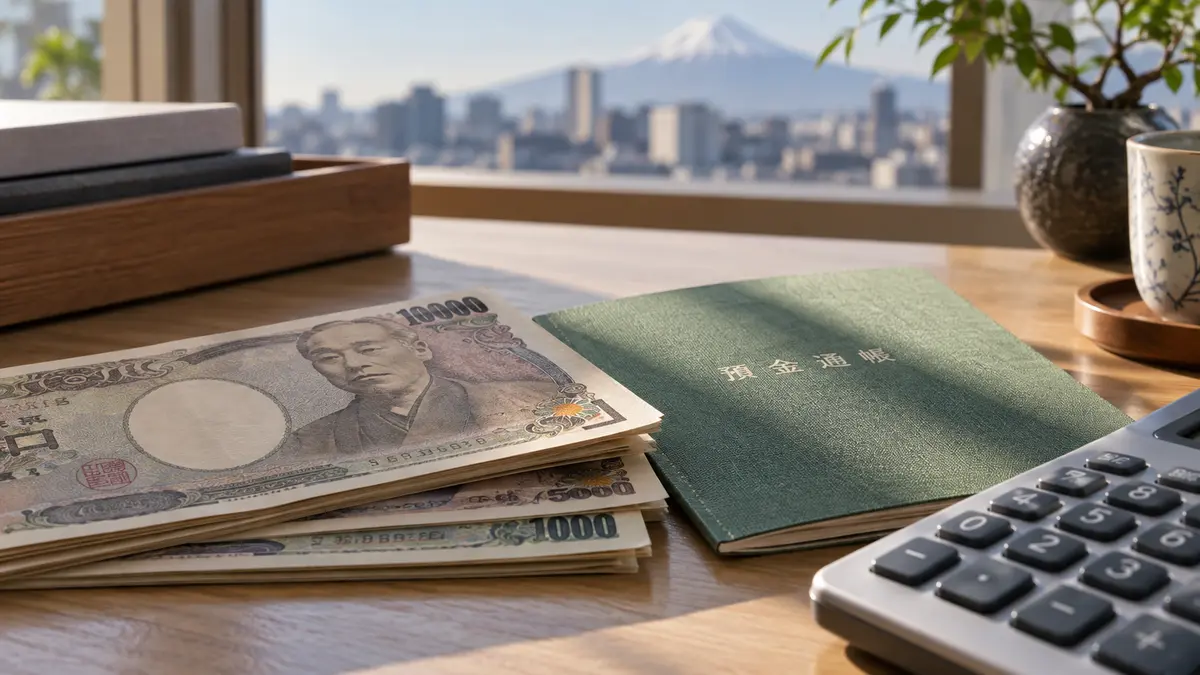
On 19 September 2026 the Bank of Japan raised its policy interest rate to 1.25% in a 7-2 board vote, completing a journey that began thirty months earlier when it became the last central bank in the world to abandon negative interest rates. Governor Kazuo Ueda described the decision as reflecting a "shift in the policy phase" — language that marked a fundamental break with the deflation-fighting paradigm that had governed Japanese monetary policy since the late 1990s. The rate now stands at its highest level since 1995, and the question facing economists, investors and policymakers is no longer whether Japan has exited deflation, but whether the exit is durable and what it reveals about the economy's underlying health.
The normalisation timeline
The BOJ's path from ultra-easing to normalisation was gradual but relentless, with each step calibrated to avoid shocking an economy that had known nothing but zero or negative rates for a generation:
- March 2024: Exit from negative interest rates; policy set at 0–0.1%, ending the world's last sub-zero rate experiment
- July 2024: First hike to 0.25%, citing sustained wage growth and inflation above 2%
- January 2025: Raised to 0.5% — highest since 2008
- December 2025: Raised to 0.75% — highest since 1995, first time in thirty years
- June 2026: Raised to 1.0%, crossing the symbolic threshold
- September 2026: Raised to 1.25% in a 7-2 vote, with two dissenters citing global trade uncertainty
Each decision was accompanied by language emphasising data-dependence and the absence of a predetermined path. Ueda repeatedly stated that the BOJ was "not on a predetermined path" and would adjust based on incoming evidence about wages, prices and growth. In practice, however, the direction was consistent: every meeting from March 2024 to September 2026 either raised rates or held them steady, never cutting. The cumulative tightening of 135 basis points over thirty months represents the most sustained normalisation cycle by any G7 central bank in the post-2008 era.

What ended deflation
The BOJ's normalisation was predicated on a specific diagnosis: that Japan had finally escaped the deflationary equilibrium that had trapped it since the asset bubble burst in 1991. The evidence for this diagnosis is substantial. Core inflation — excluding fresh food — has remained above the 2% target continuously since April 2022, the longest sustained period above target in four decades. The 2025 shunto spring wage negotiations delivered the largest pay increases in thirty-three years, with major manufacturers agreeing to raises averaging over 5%. Unemployment has hovered near 2.5%, close to what most economists consider full employment in a demographically declining society.
But the causes of Japan's inflation are instructive, because they reveal how much of the exit from deflation was imported rather than domestically generated. The initial trigger in 2022 was the global energy and food price shock following Russia's invasion of Ukraine, which raised import costs and broke three decades of price stagnation. The weak yen — which fell from approximately 115 to the dollar in early 2022 to below 160 by mid-2024 — amplified import inflation and boosted the yen-denominated value of overseas earnings for Japanese multinationals. Only subsequently did domestic wage-price dynamics begin to reinforce the initial external shock.
This sequencing matters for the durability question. If inflation was primarily import-driven, then a strengthening yen or a fall in global commodity prices could reverse it, trapping Japan back in low inflation or deflation. If, however, the wage-price spiral has become self-sustaining — if workers now expect annual raises of 3-5% and companies expect to pass through costs — then the exit is genuine. The BOJ's Outlook Report projects core inflation stabilising near 2% over the medium term, suggesting the bank believes the domestic dynamic has taken hold. But the projection has been wrong before, and the two dissenting board members in September 2026 explicitly questioned whether global trade uncertainty might undercut the domestic cycle.
The growth paradox
The most striking feature of Japan's economic performance during the normalisation period is the disconnect between monetary confidence and real growth. The BOJ raised rates six times because it believed the economy could withstand tighter conditions. Yet actual GDP growth was remarkably weak: 2.0% in 2024, just 1.0% in 2025, and a quarterly path in 2025 that oscillated between contraction and modest expansion. The economy grew at its fastest pace in five and a half years in Q1 2026 — but that "fastest pace" was 1.7% quarter on quarter, driven almost entirely by semiconductor exports.
This is the central paradox of Japan's normalisation: the BOJ is tightening into an economy that, outside one sector, is barely growing. The justification is that tightening addresses inflation rather than growth, and that leaving rates at zero would risk entrenching above-target price rises. But the risk is asymmetric. If inflation proves temporary — if the yen strengthens, if global energy prices fall, if the semiconductor cycle turns — the BOJ will have tightened into a weakening economy with no room to cut aggressively without returning to the zero bound it spent thirty years trying to escape.
Structural constraints on the new equilibrium
Three structural factors limit Japan's ability to sustain a normal monetary policy environment. First, demographics: the working-age population peaked in 1998 and the total population has been falling since 2008, now shrinking by approximately 800,000 people per year. By 2040 Japan will have 11 million fewer workers than in 2020. A shrinking workforce can generate wage inflation through scarcity, but it also means shrinking domestic demand, lower tax revenues and rising social security costs — all of which constrain fiscal space and ultimately growth potential.
Second, productivity: Japan's output per hour worked remains approximately 20% below the US level and has grown at barely 0.5% per year over the past decade. Without productivity gains, wage increases simply feed into higher prices without improving living standards — the cost-push dynamic that characterised much of 2023-2025. The semiconductor sector is highly productive, but it employs a tiny fraction of the workforce. The services sector, which employs the majority, remains fragmented, under-digitised and protected from competition.
Third, fiscal sustainability: Japan's gross government debt exceeds 250% of GDP, the highest in the developed world. For decades this was manageable because interest rates were zero and the debt was domestically held. Normalisation changes the arithmetic. At 1.25%, the cost of servicing existing debt rises gradually as bonds mature and are refinanced at higher rates. The Ministry of Finance estimates that each 1 percentage point increase in rates adds approximately ¥10-12 trillion to annual debt service costs over a decade. At current trajectory — with markets pricing 1.5% by mid-2027 — the fiscal burden of normalisation becomes a material constraint on government spending precisely when demographic pressures are increasing it.
International context and the yen
Japan's normalisation did not occur in isolation. The Federal Reserve held rates at 4.25-4.5% through most of 2025 and 2026, the ECB cut to 2% by mid-2025, and the Bank of England remained at 4.25%. The narrowing but still substantial rate differentials drove yen volatility throughout the period. The yen strengthened from its 2024 lows below 160 to the dollar but remained historically weak, supporting export competitiveness while importing inflation through energy and food costs.
For the global economy, Japan's normalisation carries significance beyond its own borders. Japanese investors hold approximately $5 trillion in foreign assets, and rising domestic yields create an incentive to repatriate capital. A sustained shift of Japanese institutional money back into domestic government bonds would raise yields globally, particularly in the US Treasury market where Japanese investors are the largest foreign holder. The BOJ's gradualism — 135 basis points over thirty months — was partly designed to avoid triggering such a shift abruptly. But the cumulative effect is nonetheless significant, and global bond markets remain sensitive to every BOJ signal about the terminal rate.
Assessment: a genuine achievement with unresolved risks
The BOJ's normalisation is a genuine policy achievement. No central bank in history has exited a three-decade deflationary equilibrium, raised rates from below zero to above 1%, and done so without triggering a recession or a financial crisis. Ueda's gradualism — always data-dependent, never pre-committed, always allowing the economy time to adjust — has been vindicated by the absence of adverse outcomes. Inflation is near target, employment is at record highs, and the financial system has absorbed the tightening without stress.
But the achievement is incomplete and potentially reversible. Japan's growth model remains dependent on a single sector — semiconductors — for its dynamism. Domestic demand is structurally constrained by demographics. Productivity growth outside manufacturing remains anemic. The fiscal position deteriorates with every basis point of rate increase. And the global environment — trade wars, geopolitical fragmentation, energy volatility — introduces risks that no domestic policy can control.
The honest assessment is that Japan has escaped deflation but has not yet arrived at a self-sustaining growth equilibrium. The BOJ has done its part: monetary policy is no longer the binding constraint. The next phase depends on structural reform — labour market flexibility, services-sector productivity, immigration at scale, digitalisation — that is politically far more difficult than changing an interest rate. Whether Japan's political system delivers those reforms in the window opened by the current semiconductor boom will determine whether the normalisation of 2024-2026 proves to be a durable new beginning or merely a pause before the next stagnation.
The corporate response: investment, wages and pricing power
Japanese corporations responded to the normalisation environment with a mixture of caution and adaptation. Business fixed investment grew modestly through 2024 and 2025 but remained below the levels needed to lift trend productivity, with the exception of semiconductor-related capital expenditure which surged as TSMC built its Kumamoto fabrication plant and the government-backed Rapidus project broke ground in Hokkaido on next-generation chip manufacturing. Outside technology, investment was constrained by uncertainty: the government shutdown in the United States, escalating trade barriers, and the absence of clarity about the BOJ"s terminal rate all made long-term planning difficult.
Wage settlements told a more encouraging story. The 2025 shunto negotiations produced the largest increases since 1992, with the Japanese Trade Union Confederation reporting an average raise of 5.28% across major companies. Smaller firms — which employ approximately 70% of the workforce — lagged at around 3.5%, but even that represented a historic shift in a country where 1% annual raises had been the norm for two decades. The wage-price dynamic was beginning to resemble a normal inflationary economy rather than a deflationary one, which was precisely the condition the BOJ required before it could sustain higher rates.
Corporate pricing behaviour also changed. For the first time in a generation, Japanese companies were passing through cost increases to consumers rather than absorbing them into margins. The pass-through rate — the proportion of input cost increases reflected in output prices — rose from approximately 30% in 2021 to over 60% by 2025, according to BOJ research. This behavioural shift, more than any single policy action, was the clearest evidence that the deflationary mindset was dissolving. Companies that had spent thirty years competing on price in a shrinking market were learning to compete on value in an inflationary one.
Financial system resilience and the yield curve
A critical question during any monetary normalisation is whether the financial system can absorb rising rates without stress. In Japan"s case, the answer has been broadly positive but with important caveats. Regional banks, which had suffered under negative rates that compressed net interest margins, saw profitability improve as the yield curve steepened. The ten-year Japanese government bond yield rose from approximately 0.7% in early 2024 to above 1.5% by September 2026, restoring a meaningful spread between short and long rates that allowed banks to earn a normal return on maturity transformation.
However, the transition created unrealised losses on existing bond portfolios held at the old zero-rate environment. The BOJ itself held approximately ¥580 trillion in government bonds — more than half of all outstanding JGBs — accumulated through a decade of quantitative easing. As yields rose, the mark-to-market value of these holdings declined, creating an accounting problem for the central bank that would eventually require resolution through either capital injection from the Ministry of Finance or gradual runoff as bonds matured. Neither option was costless, and the political economy of central bank losses in a country with 250% debt-to-GDP remained unresolved.
Life insurers and pension funds, the largest domestic holders of JGBs, benefited from higher reinvestment yields but faced duration mismatch risks on legacy policies written when guaranteed rates were above current market levels. The overall assessment was that the financial system was absorbing normalisation without acute stress, but that the full effects — particularly on the BOJ"s own balance sheet and on regional financial institutions with concentrated bond holdings — would take years to work through completely.


















Leave a comment
Your comment is awaiting moderation.